Yulin Medical · Since 1958
8 Factory-Direct Models for Simulation, Anatomy & Emergency Care
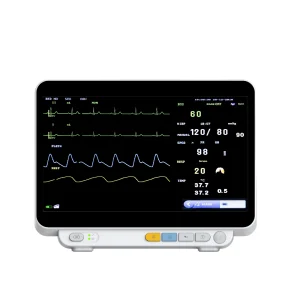
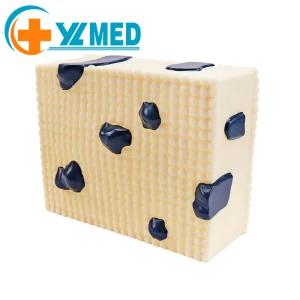
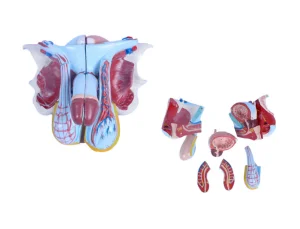
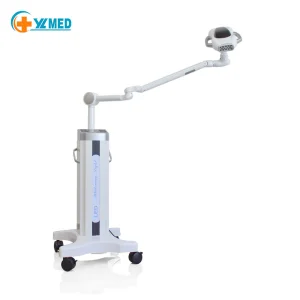
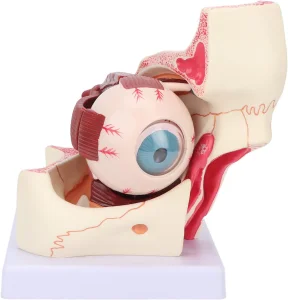
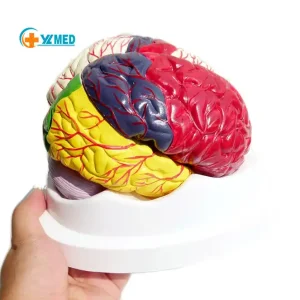
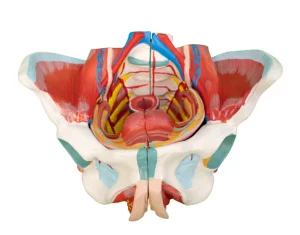
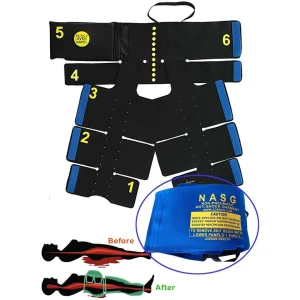
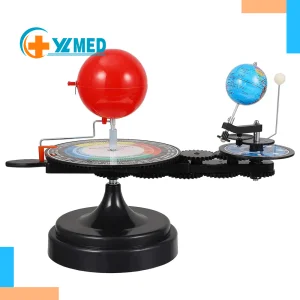
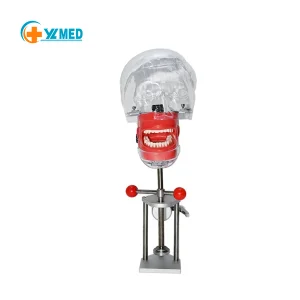
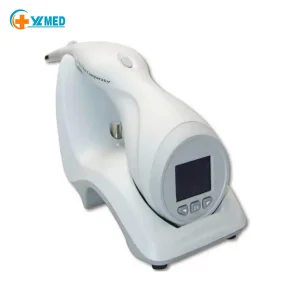
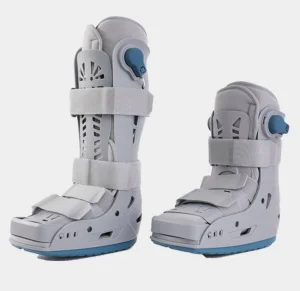
These eight buyer-selected products show the practical breadth of the Yulin Medical catalogue. Every original image and product URL is retained below, and each product can be quoted as part of a mixed-category ODM/OEM order.
What the CPR Training Simulator Manikin Buyer Market Looks Like Now
The buyer journey for a CPR training simulator manikin is no longer a simple price comparison. Procurement teams now evaluate compression-feedback accuracy, ventilation sensing, AED integration, language localisation, spare-parts availability, regulatory documentation and the supplier’s ability to support a multi-year training programme. This guide is written for distributors, medical schools, nursing colleges, EMS agencies and hospital groups that need an ODM partner rather than a catalogue reseller.
From product to programme
Institutional buyers rarely purchase a single manikin. They buy a training standard: lesson plans, instructor guides, consumables, replacement lungs, face shields, AED trainers and assessment records. A credible ODM partner must support the whole programme, not only the box.
ODM is a system, not a sticker
True ODM covers industrial design, material selection, electronics, firmware, language packs, scenario scripts, packaging, labelling, instructions for use and after-sales documentation. The deeper the customisation, the more important the supplier’s change-control process becomes.
Total cost of ownership wins
Unit price matters, but consumables, spare parts, warranty, training, freight, import documentation and downtime matter more over a three- to five-year horizon. Ask for a total cost model, not just an FOB quotation.
ODM vs OEM: What Customisation Really Means for CPR Manikins
The terms OEM and ODM are often used interchangeably in tenders, but they describe different risk profiles. OEM usually means the buyer owns the design and the factory manufactures to specification. ODM means the manufacturer contributes an existing platform, engineering knowledge and customisation capability. For CPR training manikins, the strongest programmes often blend both models.
When OEM makes sense
Your organisation already owns validated tooling, electronics architecture, firmware and clinical content. The factory’s role is to manufacture, assemble, test and pack to your drawings and quality plan. You need a supplier with strong process discipline, incoming-material control, traceability and change notification.
- Your brand controls the complete user experience.
- Your regulatory team owns the technical file.
- You need strict drawing and revision control.
- You can support higher tooling and validation investment.
When ODM accelerates the programme
You need a proven platform quickly, with market-specific branding, language, packaging and scenario content. The manufacturer supplies the core mechanical and electronic design, then adapts it to your market. This reduces development time, but requires clear IP ownership, exclusivity terms and firmware update policies.
- Private-label packaging and instructions for use.
- Language packs, local emergency numbers and metric units.
- Custom face skins, airway accessories and carry cases.
- Optional AED trainer integration and data export.
Clinical Accuracy, Feedback and Patient-Safety Outcomes
A CPR training simulator manikin is a measurement instrument as much as a teaching aid. If the manikin cannot measure compression depth, compression rate, full recoil, ventilation volume and hand position, learners may develop false confidence. The best ODM programmes start with the skill standard, then design the hardware and feedback logic around it.
Compression depth & rate
Adult CPR guidance commonly centres on a compression depth of approximately 5–6 cm and a rate of 100–120 compressions per minute, with full chest recoil between compressions. Verify the current AHA, ERC or ILCOR version applicable in your market before finalising claims.
Ventilation feedback
Effective ventilation training requires visible chest rise, realistic airway resistance and feedback on volume. For adult training, a common teaching range is around 500–600 mL per breath, but local protocols and learner level should drive the final specification.
AED & defibrillation integration
AED trainers should simulate pad placement, voice prompts, charging, shock delivery and safety warnings without delivering a real electrical discharge. The best configuration depends on whether your courses assess individual skills or team-based response.
Data & debriefing
Data capture is becoming a differentiator. Buyers increasingly ask for chest compression fraction, no-flow time, compression-to-ventilation ratio and session summaries. Ask how data is exported, stored, secured and deleted, and whether firmware updates are provided.
Localised Support and Compliance Assurance: A Practical Framework
Compliance is not a single certificate. It is a chain of evidence that connects the product design, manufacturing batch, labelling, instructions for use, shipping documents and post-market support. For overseas buyers, localisation is equally important: language, power supply, measurement units, emergency numbers, packaging and training content must fit the destination market.
Regulatory mapping
Map the product to the destination market’s requirements: medical device classification, electrical safety, battery transport, radio equipment, labelling and import registration. Provide a compliance matrix rather than a vague statement that the product is “CE approved”.
Language & IFU localisation
Translate instructions for use, labels, packaging, quick-start guides and training scripts. Localise emergency numbers, measurement units, spelling conventions and clinical terminology. Review translations with a local instructor before mass production.
Electrical & battery compliance
For electronic feedback displays, AED trainers and powered accessories, confirm voltage, plug type, charger safety, battery chemistry and transport documentation. Lithium batteries may require UN38.3 test summaries and safety data sheets.
Tender & import documentation
Prepare a document pack that includes ISO 9001 certification, product test reports, material declarations, calibration records, batch traceability, packing list, commercial invoice, certificate of origin and warranty terms.
Spare parts & service
Define the spare-parts list, wear items, replacement intervals, warranty terms and return process. A manikin is often used weekly across multiple classes, so downtime can delay certification courses and create hidden costs.
Train-the-trainer support
Offer instructor orientation, set-up videos, cleaning and infection-control guidance, troubleshooting sheets and assessment rubrics. Localised train-the-trainer content increases adoption and reduces support requests.
China Factory Supply Chain Advantages: Beyond Low Cost
Henan Yulin Edu. Project Co., Ltd. was founded in 1958 and is headquartered at No. 8, Daoqing Road, Industry Park, Hongqi District, Xinxiang, Henan, China. With ISO 9001 certification since 2008, more than 200 professional employees, registered capital of RMB 120 million and 10 product lines, the factory combines long manufacturing experience with a broad supply network for one-stop medical education and hospital equipment orders.
Manufacturing depth
In-house capabilities typically include mould development, injection moulding, painting, printing, electronics assembly, final inspection and export packing. Depth matters because it reduces dependence on third parties when a custom colour, logo, language pack or packaging change is required.
- Repeatable tooling and fixture control.
- In-process quality checks.
- Batch traceability and serial numbering.
- Stable supply for repeat orders.
What the factory controls
Vertical integration shortens the path from design change to production. It also makes mixed-category consolidation practical: CPR manikins, anatomy models, dental trainers, hospital furniture and rehabilitation aids can be combined into one shipment with one point of contact.
- Fewer suppliers to manage.
- Lower consolidated freight cost.
- Faster sample iterations.
- Better visibility of lead times.
Typical cost composition
Understanding the cost structure helps buyers negotiate intelligently. The chart below is a planning illustration, not a quotation. Actual percentages vary by model, order volume and customisation.
Global Enterprise Procurement Requirements: What Tenders and Distributors Ask For
Large distributors, hospital groups, government tenders and international NGOs evaluate suppliers differently from small clinics. They need evidence, consistency and risk controls. The following eight requirements appear repeatedly in serious procurement conversations.
Tender-ready documentation
Technical specifications, compliance statements, warranty terms, packing details, lead times, spare-parts lists and after-sales commitments in a clear, indexed format.
Batch consistency
Colour, hardness, airway resistance, electronic feedback and packaging should remain stable from batch to batch. Ask for a golden sample and written tolerances.
Sample & pilot orders
A sample evaluation should mirror the real course: compression, ventilation, cleaning, storage and instructor use. Pilot orders reduce risk before a large tender award.
Warranty & spare parts
Clarify what is covered, what is excluded and how quickly replacement parts are dispatched. Consumables and wear items should be priced separately.
Change control
Suppliers should notify buyers before changing materials, components, firmware, labels or packaging. Without change control, a tender approval can become invalid.
Export packaging
Protective cartons, moisture control, drop-test evidence, pallet configuration, barcodes, shipping marks and container loading plans reduce damage and customs delays.
Compliance & ESG
Buyers increasingly request material declarations, recyclable packaging options, conflict-mineral statements where relevant, and responsible manufacturing evidence.
Project communication
A named project manager, structured milestones, sample photos, inspection reports and weekly updates are more valuable than vague promises of fast delivery.
Industry Trends: Where CPR Simulation Is Moving
CPR training is shifting from static practice to measurable performance. The strongest ODM programmes are designed for that transition, with modular hardware, open documentation and a clear roadmap for software and content updates.
Real-time feedback
Visual and audible feedback on depth, rate, recoil and ventilation is becoming expected in professional training. The quality of the sensor and the clarity of the feedback matter more than the number of lights on the manikin.
Data & debriefing
Instructors increasingly use session data to debrief learners objectively. Buyers should ask about export formats, privacy, retention, firmware updates and compatibility with existing learning management systems.
Modular platforms
One torso platform that can be configured for adult, child or neonatal training reduces inventory complexity. Modularity also makes it easier to replace wear parts and add AED or airway modules.
Infection control
Easy-to-clean surfaces, removable face skins, disposable airways and clear cleaning protocols are essential. Post-pandemic buyers pay far more attention to cleanability and cross-contamination controls.
Blended learning
Online theory plus in-person skills practice is now common. Manikins that support quick set-up, portable carry cases and instructor-friendly assessment tools fit this model better than complex fixed installations.
Sustainability & mandates
School CPR mandates, workplace first-aid requirements and community bystander programmes are expanding demand. Recyclable packaging, long service life and repairable designs are becoming procurement criteria.
Localised Application Scenarios: Match the Manikin to the Learner
Different markets and learner groups need different configurations. A school bystander CPR programme has different requirements from an EMS refresher course or a hospital ACLS programme. The table below can be used as a configuration starting point for ODM discussions.
Medical schools
Full-body BLS/ACLS simulators, airway management, defibrillation training, team communication and scenario debriefing. Prioritise realistic anatomy, durable skin, data export and instructor controls.
Nursing colleges
Adult and child CPR torsos, infection-control accessories, patient handling and communication scenarios. Lightweight models with easy cleaning and low maintenance are often preferred.
EMS & fire rescue
Field-realistic training with AED trainers, extrication devices, scoop stretchers and immobilisation equipment. Rugged construction, fast set-up and portability matter.
Hospitals
Annual competency assessment, mock codes, neonatal and paediatric emergencies. Look for consistent feedback, calibration records, spare parts and minimal downtime.
Schools & universities
Affordable adult torsos, bilingual instructions, simple feedback and hygiene kits. Packaging and storage should suit classrooms with limited space.
Corporate & industrial
Workplace first aid, AED response, remote-site preparedness and annual refreshers. Durable carry cases, quick-clean surfaces and clear competency records are valuable.
Aviation & offshore
Confined-space scenarios, team coordination, oxygen and AED integration. Localisation may include language packs, emergency numbers and regulatory documentation.
Community & Red Cross
High-volume bystander training, portable manikins, low-cost consumables and train-the-trainer support. Easy maintenance and consistent quality across large batches are essential.
How to Evaluate an ODM CPR Manikin Partner: 10-Point Checklist
Use this checklist during supplier audits, sample reviews and tender evaluations. A strong supplier should be able to provide evidence for each point, not just verbal assurances.
Clinical validation
Feedback accuracy, airway realism and alignment with current resuscitation guidance.
Certification evidence
ISO 9001, test reports, material declarations and market-specific compliance documents.
Customisation depth
Branding, packaging, language, firmware, accessories and scenario content.
Manufacturing control
In-house tooling, assembly, inspection and batch traceability.
Sample process
Clear sample timeline, golden sample approval and documented revisions.
MOQ & lead time
Realistic minimum order quantities and written production schedules.
Spare parts
Wear-item list, replacement pricing and dispatch commitment.
Export packing
Drop-test evidence, carton marks, barcodes and container loading plans.
After-sales
Warranty, troubleshooting, training content and escalation path.
Communication
Named project manager, response time and change-notification process.
Pricelist Framework: What Drives the Price of a CPR Training Manikin
A public pricelist can only be indicative because CPR training manikins are configured products. Feedback electronics, materials, airway design, custom branding, packaging, certification and freight can change the landed cost significantly. The table below provides a planning framework, not a binding quotation.
| Product category | Typical configuration | Indicative FOB planning range* | Buyer notes |
|---|---|---|---|
| Basic adult CPR torso | No electronics, disposable airway, carry bag | USD 35–80 | High-volume school and community programmes; check skin durability and airway cost. |
| Adult CPR manikin with feedback | Compression depth/rate, ventilation feedback, display or app | USD 120–350 | Confirm sensor calibration, data export and firmware update policy. |
| Full-body BLS/ACLS simulator | Full-body, airway, IV/IO, defibrillation, scenario control | USD 800–3,500 | Complexity varies widely; request a detailed function matrix. |
| Child & neonatal manikins | Age-specific anatomy, airway, feedback options | USD 250–1,200 | Verify airway realism and local guideline alignment. |
| AED trainer | Voice prompts, pad placement, scenario modes | USD 50–180 | Check battery type, language options and safety labelling. |
| Accessories & consumables | Face skins, lungs, airway kits, carry cases | USD 3–250 | Consumables are a recurring cost; price them separately. |
*Indicative planning ranges only, not a quotation. Final price depends on specification, order volume, customisation, certification, packaging, Incoterms and freight. Request a line-item quotation from the factory.
What raises the price
Advanced sensors, colour displays, wireless data, custom firmware, high-end silicone, complex tooling, small MOQ, multi-language packaging, third-party testing and expedited shipping.
What lowers the price
Standard platforms, larger order volume, mixed-category consolidation, simplified packaging, longer lead times, repeat orders and design standardisation.
What to request in a quote
Unit price, MOQ, tooling cost, sample fee, packaging cost, certification cost, spare-parts list, lead time, warranty, Incoterm and validity period.
Quality Control, Documentation and Export Packaging
Quality is built into the process, not inspected in at the end. A well-run CPR manikin factory controls incoming materials, moulding parameters, assembly fixtures, electronic calibration and final functional testing. The buyer should receive evidence at each stage.
Incoming material inspection
Verify plastic grades, silicone hardness, airway materials, electronic components and packaging against approved specifications. Keep material certificates and batch records.
In-process checks
Monitor moulding dimensions, colour consistency, assembly fit, airway leakage and display function. Record deviations and corrective actions.
Functional testing
Test compression depth, rate, recoil, ventilation resistance, AED prompts, battery charging and data output. Use a documented test protocol.
Traceability
Assign batch or serial numbers and link them to inspection records. This supports warranty claims, recalls and tender audits.
Pre-shipment inspection
Check quantity, packaging, labels, accessories, manuals and carton marks before shipment. Share photos and videos with the buyer.
Third-party inspection
Welcome independent inspection and factory audits. A supplier that resists inspection is a risk, especially for multi-year contracts.
Medical Teaching Models, CPR Manikins & Hospital Equipment Manufacturer Since 1958
Henan Yulin Edu. Project Co., Ltd. (Yulin Medical) has built educational and medical training equipment in Xinxiang, China, for more than six decades. Our quality management system has been ISO 9001 certified since 2008, and our motto is simple: quality first, service first. Every order is produced and inspected so that distributors, medical universities, nursing colleges and hospitals receive consistent, well-documented products on every batch.
Factory-direct supply
Factory-direct supply across 10 product lines, from anatomy models to hospital furniture, with one accountable manufacturer and one shipment consolidation point.
Private-label value
Private-label packaging and product design that raises your resale value, strengthens your brand and differentiates your catalogue in local markets.
Mixed-category orders
Mixed-category orders consolidated into one shipment with one point of contact, reducing administrative load and freight complexity.
 Headquarters & factory, Xinxiang
 Production workshop
 Bulk orders ready for export
Complete Sourcing for Medical Education & Clinical Use
Ten specialised product lines let procurement teams source simulation, laboratory and hospital equipment from one accountable manufacturer instead of managing multiple suppliers.
Anatomy Models
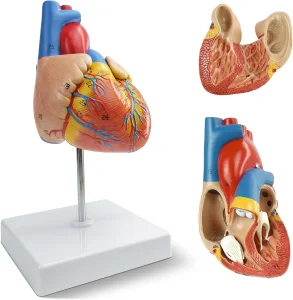
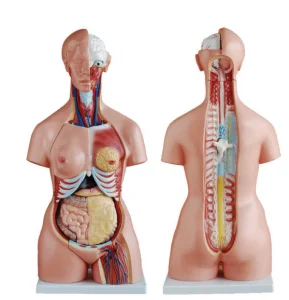
Torso, organ, heart, brain and muscle models with numbered structures for lectures and patient education.
View range 02Biology Prepared Slides and Accessories
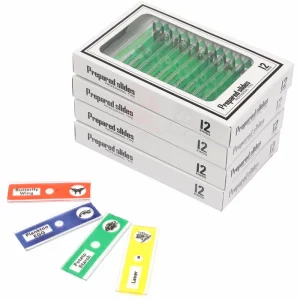
Histology, botany and zoology prepared slides plus storage and microscope accessories for biology labs.
View range 03Dental Tools and Equipment
Dental teaching models, clinic lights, LED whitening units and endodontic instruments for training and practice.
View range 04General Teaching Models
Science demonstration models for primary schools, secondary schools and education equipment tenders.
View range 05Hospital Furniture and Equipments
Stainless steel examination couches, stretchers, walkers and shower chairs built for daily clinical use.
View range 06Hospital Machine and Tools
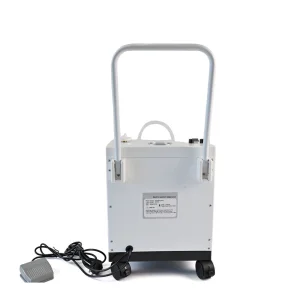
Diagnosis and treatment devices and practical tools for wards, clinics and emergency departments.
View range 07Medical Apparatus and Instruments
Emergency splints, extrication devices, cervical traction and rehabilitation instruments.
View range 08Medical Nursing Model
Adult, child and neonatal CPR manikins, ACLS simulators and AED trainers for skills assessment.
View range 09Skeleton Models
Life-size and desktop skeletons, skulls, spines and joint models for osteology teaching.
View range 10Suture Pads and Kits
Realistic skin suture pads and complete instrument kits for surgical and wound-closure practice.
View rangeWhy Distributors and Institutions Partner with Yulin Medical
Four strengths overseas buyers consistently cite when they move long-term orders to our factory.
24/7 Responsive Service
Our team is online 24 hours a day, 7 days a week. Whatever your time zone, you receive a detailed answer as quickly as possible — typically within 24 hours.
Design & Packaging Team
In-house specialists deliver professional product design and private-label packaging that strengthens your brand and increases the added value of every unit you sell.
Professional Expertise
Our vision is to provide the most professional educational and medical training products from mainland China, built under ISO 9001 process control and decades of category knowledge.
60+ Years of Supply Stability
A factory with over 60 years of history and a deeply integrated partner supply chain lets us meet one-stop demands and keep lead times predictable on repeat orders.
A Transparent 5-Step Process for Overseas Buyers
From first conversation to delivery, every stage has a named contact and clear documentation, so you can plan stock, tenders and training schedules with confidence.
Share Requirements
Send product types, quantities, target market and any tender or certification needs.
Catalog & Proposal
Receive matched models, specifications, packaging options and shipping suggestions.
Sample Evaluation
Test samples with your instructors or clinicians before confirming bulk production.
Production & QC
Manufacturing and inspection follow our ISO 9001 quality management system.
Export & Support
Protective export packing, delivery coordination and responsive after-sales service.
More Simulation, First-Aid and Hospital Products from the Same Factory
The following best-selling items are frequently requested by training centres, ambulance services, hospitals and healthcare distributors. They are shown here with their original images and catalogue links.












Visual Evidence: Products, Production and Global Service
These original images show the product environment, production capability and international service context behind the catalogue. They are retained from the company’s existing website to support buyer due diligence.
 Medical teaching models & training equipment
 Anatomy & skeleton models
 CPR & nursing simulation
 Hospital furniture & equipment
 Global export service
 Anatomy & teaching collection
 Nursing & clinical skills
 Hospital equipment & instruments
News & Practical Insights from Our Specialists
Exhibition updates and hands-on guidance written by the team that designs and builds our products.

Do You Really Know How to Observe Biological Prepared Slides?
Many plant and animal cell structures can only be studied under a microscope, which makes prepared biological slides essential in every biology lab. Yet many users never get the full value from them. Our specialists explain how to handle, focus and store slides correctly so students see clearer detail and your slide sets last for years.

The 5th Henan Provincial Educational Equipment Expo Concludes Successfully
Themed “Digital Leading Innovation and Development”, the expo reached a record 50,000 m² with 600+ brands and 10,000+ products on display, showcasing the latest educational equipment.

Inside Our Product Showroom
A look at the medical teaching models and training equipment buyers can inspect in person when visiting our Xinxiang facility.
Read more buyer guides
Sourcing tips, product comparisons and industry news for medical education and hospital procurement teams.
Visit Hot BlogFrequently Asked Questions from Importers, Distributors and Clinical Educators
Straight answers to the questions procurement managers ask most before placing a first order or moving a tender specification to an ODM programme.
Is Yulin Medical a manufacturer or a trading company?
We are a manufacturer. Henan Yulin Edu. Project Co., Ltd. was founded in 1958 and operates its own factory in Xinxiang, Henan, China, with more than 200 professional staff. For one-stop orders, we also coordinate a stable network of long-term partner factories.
What quality certification does Yulin Medical hold?
Our quality management system has been ISO 9001 certified since 2008. Product-specific documentation can be provided on request for tenders and import registration.
Do you support OEM, private label and custom packaging?
Yes. Our in-house design team develops private-label packaging and product presentation for distributors to increase shelf appeal and resale value. We can also support custom manuals, labels, language packs, accessory kits and branded carry cases.
How do I choose the right CPR training manikin?
Match the manikin to the learner group (adult, child or neonatal), check that real-time feedback covers compression depth, rate and ventilation, confirm alignment with current AHA resuscitation guidelines, and decide whether AED training integration is required. For advanced life-support programmes, an ACLS simulator with embedded scenarios offers far more assessment value than a basic torso.
How quickly will I receive a reply?
Our export team is online 7 days a week and typically replies within 24 hours with catalogs, specifications and shipping options.
What is the minimum order quantity for an ODM CPR manikin project?
MOQ depends on the model, level of customisation, packaging and whether new tooling or firmware is required. Mixed-category orders can often be consolidated. Share your target quantity and market so the team can propose a practical MOQ and sampling plan.
Can you provide samples and pre-shipment inspection?
Yes. Sample evaluation is strongly recommended before bulk production. Pre-shipment inspection photos, videos and test records can be shared, and third-party inspection is welcome.
How do you support localisation?
We can support translated instructions for use, local labels, language packs, plug and voltage variants, metric units, local emergency numbers and market-specific packaging. For complex projects, review translations with a local instructor before mass production.
What is the typical lead time?
Lead time is confirmed in writing after the specification, packaging and documentation are frozen. Repeat orders benefit from stable tooling and supply-chain planning. For tenders, request a production schedule with milestones rather than a single delivery promise.
Do you provide spare parts and warranty support?
Yes. Spare-parts lists, wear items and warranty terms are defined per product and contract. Consumables such as face skins, airways and lungs should be priced separately so the total cost of ownership is transparent.
Can you support tenders and regulatory documentation?
We can provide ISO 9001 certification, test reports, material declarations, packing lists, commercial invoices, certificates of origin and other documents requested in a tender. The buyer remains responsible for confirming local regulatory requirements and import registration.
How are products packed for export?
Export packing is designed for the product and shipping method. Options include protective cartons, moisture control, palletisation, barcodes, shipping marks and drop-test evidence. Packaging artwork and language can be customised for ODM orders.
Need Specifications, a Pricelist or a Tender Package? We Reply Within 24 Hours.
Tell us your target market, quantities and certification requirements. Our product specialists will recommend suitable models, share detailed specifications and propose the most economical shipping plan for your order.

8 More Models for Clinical, Laboratory & Rehabilitation Procurement
This bottom product set completes the 16 original product items. All product images and URLs are preserved, and each item can be included in a consolidated ODM/OEM quotation.