ODM CPR Training Kit Manufacturer & Factory
OEM/ODM CPR training kits, feedback manikins, AED trainers, anatomy models and clinical simulation equipment from an ISO 9001 factory since 1958 — engineered for distributors, medical schools, hospitals and public-health programmes.
Featured ODM CPR Training Kit & Clinical Training Products
A practical product window into the Yulin Medical ecosystem: anatomical models, CPR and nursing training aids, diagnostic equipment and hospital rehabilitation products that can be consolidated into one OEM/ODM programme.
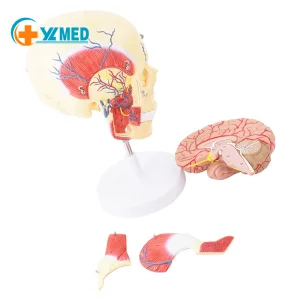
OEM Human anatomical model of the maxillofacial anatomy of masticatory muscles Masseter temporalis trigeminal nerve Manufacturer, Factory
View Product Details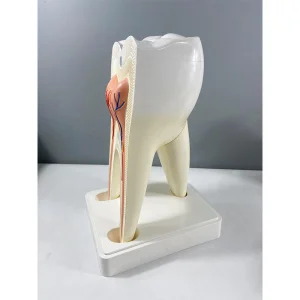
China Enlarged Model Display Human Anatomy Model Biology Teaching Medical Science 2 Parts Molar Tooth Decay Molar Model Pricelist, Quotes
View Product Details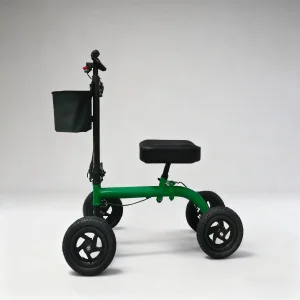
China Knee Walker Scooter Convenient Adult Folding Walker for Leg Easy Mobility Aid Adults Disabled People Rehabilitation Equipment Manufacturers, Quotes
View Product Details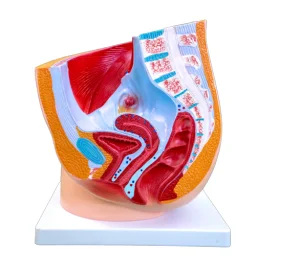
ODM Female sagittal anatomical model (1 piece) Manufacturer, Factories
View Product Details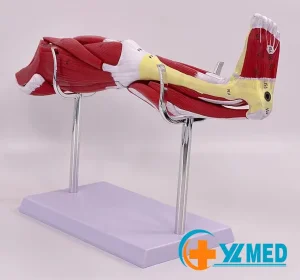
OEM New design Artificial Muscle leg Anatomy model for medical teaching use with 13parts Model Manufacturers, Factory
View Product Details
China Longermay Support 5ml 10ml 20ml 50ml/60ml Electric Syringe Pump High Quality Medical Cheap Syringe Pump Pricelist, Quotes
View Product Details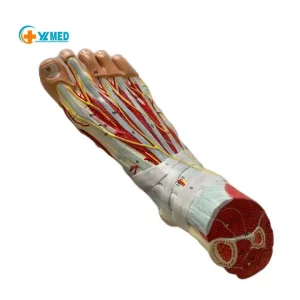
OEM Detachable 9 Parts Foot Joint Muscle Anatomy Model with Ligament Neurovascular Manufacturers, Service
View Product Details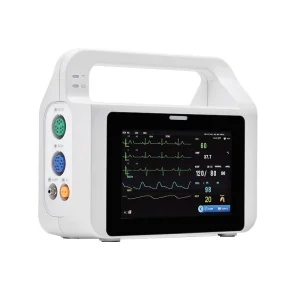
China Professional Portable HD 5 Inch TFT Color Screen with 4 Parameters Is Suitable for Health Centers and Private Medical Clinics Factories, Pricelist
View Product DetailsThe ODM CPR Training Kit Is Now a Competency Delivery System
In mature training markets, the purchase decision is shifting from “a manikin at the lowest unit price” to “a repeatable competency system with documentation, localisation and lifecycle support.” That shift changes who can credibly act as an ODM CPR training kit manufacturer.
An ODM CPR training kit is no longer just a torso, lungs and a carry bag. It is a system of anatomy, compression and ventilation feedback, consumables, disinfection workflow, instructor guides, packaging, language localisation and regulatory evidence. The real cost of a CPR training kit is not the unit price; it is the cost of poor feedback, inconsistent consumables, missing documentation and training downtime. Buyers who understand this evaluate suppliers on repeatability, not only samples.
Henan Yulin Edu. Project Co., Ltd. — trading as Yulin Medical — has manufactured educational and medical training equipment in Xinxiang, Henan, China, since 1958. Our quality management system has been ISO 9001 certified since 2008. With registered capital of RMB 120 million and more than 200 professional staff, we manage product development, manufacturing, inspection and export from our base at No. 8, Daoqing Road, Industry Park, Hongqi District, Xinxiang. Our motto remains simple: quality first, service first. For global distributors, universities, hospitals and public-health programmes, this means one accountable manufacturing partner across ten product lines, with mixed-category orders consolidated into one shipment and one point of contact.
Where ODM CPR Training Kits Fit in the Wider Healthcare Economy
Demand is being driven by workforce shortages, mandatory resuscitation training, accreditation, public-access defibrillation and the professionalisation of simulation-based education. The winning offer is configured by use case, not by catalogue page.
Hospitals, EMS & Clinical Skills Labs
In-service competency requires durable manikins, realistic airway mechanics, infection-control consumables, AED trainer integration and fast replacement of wearable parts. A kit should survive daily cohort use, not just demonstration.
Medical, Nursing & Allied Health Schools
Curriculum mapping matters. Programs need adult, child and neonatal options, objective compression metrics, ventilation feedback, scenario guides and assessment records that align with current AHA, ILCOR or ERC-informed teaching practice.
Distributors & Private-Label Brands
OEM/ODM buyers need stable MOQs, private-label packaging, multilingual manuals, spare-part kits and predictable lead times. A local brand can compete on service when the factory provides documentation and supply continuity.
Government & Public-Health Programmes
Tenders demand traceability, batch consistency, tender-ready technical files, packaging protection and localised training materials. Public-access defibrillation and community first-aid rollouts reward suppliers who can scale without losing documentation quality.
Corporate, School & Community First Aid
High-volume basic life support courses need lightweight kits, simple sanitisation, durable carry cases and clear visual instructions. Instructor-to-learner ratios and storage constraints often matter more than advanced electronics.
Sports, Occupational & Field Response
Ruggedised training equipment and portable feedback devices support remote teams, military medics, sports medicine staff and industrial first responders. Repairability, battery choices and spare parts reduce operational risk.
From Anatomical Realism to Connected Competency
The next competitive frontier is not simply a more lifelike face or a louder clicker. It is the ability to turn each training session into usable, localised and defensible competency data. This is where ODM policy, electronics and service design converge.
Mechanical Realism & Material Science
Skin-like surfaces, anatomical landmarks, realistic airway resistance, recoil behaviour and easy sanitation remain the foundation. Future kits will use modular faces, removable lungs and colour-coded consumables to reduce instructor setup time.
Sensorised Feedback & Objective Metrics
Compression depth, rate, full recoil, ventilation volume, hand position and AED pad placement will be measured at the point of practice. The product becomes a coaching device, not a passive model.
Connected Training & LMS Integration
QR-code session pairing, instructor dashboards, local data export and LMS compatibility let institutions standardise assessment across campuses. Privacy-by-design and offline modes are essential for emerging markets.
AI-Assisted Debriefing & Mixed Reality
Computer vision, adaptive scenarios and mixed-reality overlays can help instructors identify poor technique faster. The factory that wins will be the one that makes these features robust, serviceable and affordable for routine courses.
Buyer Evaluation Signals for Next-Generation CPR Training Kits
Supply-Chain Resilience & Efficiency Advantages
A factory is only useful to an international brand when it can repeat quality, protect delivery dates and absorb specification changes without chaos. Factory 4.0 is not a slogan; it is the discipline of making those outcomes visible.
At Yulin Medical, resilience is built through vertical integration: mould and tooling development, injection moulding, model assembly, electronics integration, packaging design, inspection and export consolidation are coordinated around one product-development process. Digital work instructions, batch traceability and quality gates are used to reduce variation between the sample that wins approval and the third or fifth production run. For ODM buyers, the most valuable factory capability is not speed at the first order; it is predictability at the tenth.
Integrated Tooling & Mould Making
In-house design coordination shortens the loop between a customer request and a manufacturable part. It also makes private-label housings, packaging inserts and training-kit fixture changes more practical for smaller ODM programmes.
Sensor & Electronics Validation
Feedback electronics are checked for repeatability, battery safety, connector reliability and user-interface clarity. This matters for CPR training kits because a sensor that drifts changes the learner experience and the institution’s confidence.
ISO 9001 Quality Gates
Incoming materials, in-process checks, final inspection and packaging review are documented under our ISO 9001 system. Product-specific test reports and tender documentation can be prepared on request, subject to model and destination.
Mixed-Model Production & Export Consolidation
Distributors increasingly order CPR manikins, anatomy models, nursing simulators, hospital furniture and diagnostic devices together. Mixed-category consolidation reduces freight complexity and gives one commercial contact for the entire shipment.
Made for Local Markets — Not Just for the Factory Gate
International buyers do not fail because a product looks wrong in a catalogue. They fail because the manual, packaging, screen language, regulatory file or spare-part plan does not match the destination market. Localisation is therefore part of product design.
Standards-Informed Training Design
CPR training kits should support teaching that is aligned with current resuscitation guidance, including compression depth, rate, recoil and ventilation expectations. The original Yulin ACLS and neonatal product range already references AHA 2020-aligned training; buyers should confirm the latest applicable guidance for their market.
Tender & Technical Documentation
Available documentation may include product specifications, packing lists, material declarations, inspection records and ISO 9001 evidence. For public tenders, we can support specification matching and document checklists so that the commercial offer and the technical file tell the same story.
Language & Packaging Localisation
Private-label manuals, quick-start cards, carry-bag artwork, screen prompts, unit labels and instructor guides can be localised for the target market. This increases resale value and reduces the after-sales burden on distributors.
Transport, Battery & Safety Considerations
Battery-powered devices, aerosols and electronic trainers may require additional transport documentation, such as safety data sheets or battery test summaries, depending on the configuration and destination. Packaging can be reviewed for drop protection and humid-climate resilience.
After-Sales & Spare-Part Planning
Consumable lungs, face skins, airway parts, seals, fuses and electronic modules should be identifiable by part number. A practical spare-part kit and replacement guide protect the buyer from training downtime and protect the manufacturer’s reputation.
Regulatory Pathway Awareness
Where a product is treated as a medical device, CE, UKCA, FDA, TGA or local import registration may apply according to classification and market. Product-specific certification depends on model and destination, so requirements should be confirmed during quotation rather than assumed.
What Professional Buyers Actually Need from a Factory
Procurement teams are not only buying hardware. They are buying supply security, audit evidence, SKU rationalisation and a lower total cost of ownership across the training lifecycle.
Total Cost of Ownership
Compare consumable frequency, cleaning labour, spare-part lead time and instructor training. A lower unit price can become expensive if face skins tear quickly or if replacement lungs are unavailable during a course season.
Mixed-Container Efficiency
Distributors can combine CPR training kits, anatomy models, skeleton models, suture pads, dental teaching products and hospital equipment. Consolidation reduces freight complexity and improves cash-flow planning for multi-category resellers.
Repeat-Order Consistency
Colour, material feel, feedback thresholds, packaging and manuals should remain stable across batches. For universities and tender buyers, consistency protects accreditation evidence and student experience.
Risk Management & Responsiveness
Export teams should reply to technical questions quickly, identify documentation gaps early and propose alternative shipping or packaging plans when routes change. A 24-hour reply commitment is a service promise, not a marketing line.
One Factory Ecosystem Across Medical Education & Clinical Use
Ten specialised product lines allow procurement teams to source simulation, laboratory and hospital equipment from one accountable manufacturer instead of managing multiple suppliers.
Anatomy Models
Torso, organ, heart, brain and muscle models with numbered structures for lectures and patient education.
Biology Prepared Slides and Accessories
Histology, botany and zoology prepared slides plus storage and microscope accessories for biology labs.
Dental Tools and Equipment
Dental teaching models, clinic lights, LED whitening units and endodontic instruments for training and practice.
General Teaching Models
Science demonstration models for primary schools, secondary schools and education equipment tenders.
Hospital Furniture and Equipments
Stainless steel examination couches, stretchers, walkers and shower chairs built for daily clinical use.
Hospital Machine and Tools
Diagnosis and treatment devices and practical tools for wards, clinics and emergency departments.
Medical Apparatus and Instruments
Emergency splints, extrication devices, cervical traction and rehabilitation instruments.
Medical Nursing Model
Adult, child and neonatal CPR manikins, ACLS simulators and AED trainers for skills assessment.
Skeleton Models
Life-size and desktop skeletons, skulls, spines and joint models for osteology teaching.
Suture Pads and Kits
Realistic skin suture pads and complete instrument kits for surgical and wound-closure practice.
Why Distributors and Institutions Partner with Our Factory
Four strengths overseas buyers consistently cite when they move long-term orders to our factory.
24/7 Responsive Service
Our team is online 24 hours a day, 7 days a week. Whatever your time zone, you receive a detailed answer as quickly as possible — typically within 24 hours.
Design & Packaging Team
In-house specialists deliver professional product design and private-label packaging that strengthens your brand and increases the added value of every unit you sell.
Professional Expertise
Our vision is to provide the most professional educational and medical training products from mainland China, built under ISO 9001 process control and decades of category knowledge.
60+ Years of Supply Stability
A factory with over 60 years of history and a deeply integrated partner supply chain lets us meet one-stop demands and keep lead times predictable on repeat orders.
A Transparent 5-Step Process for Overseas Buyers
From first conversation to delivery, every stage has a named contact and clear documentation, so you can plan stock, tenders and training schedules with confidence.
Share Requirements
Send product types, quantities, target market and any tender or certification needs.
Catalog & Proposal
Receive matched models, specifications, packaging options and shipping suggestions.
Sample Evaluation
Test samples with your instructors or clinicians before confirming bulk production.
Production & QC
Manufacturing and inspection follow our ISO 9001 quality management system.
Export & Support
Protective export packing, delivery coordination and responsive after-sales service.
A Six-Decade Manufacturer Trusted by Educators and Clinicians
Our factory history is part of the quality argument: long supplier relationships, accumulated mould and assembly knowledge, and a culture of inspection that predates the current export market.
Founded in 1958, Henan Yulin Edu. Project Co., Ltd. has grown into a well-known educational and medical equipment supplier that integrates scientific research, production and sales. With registered capital of RMB 120 million and more than 200 professional employees, we manage product development, manufacturing, inspection and export from our base at No. 8 Daoqing Road, Hongqi District, Xinxiang.
Our goal is to fully satisfy every customer through dependable quality and attentive service, while continuously developing the skills of our team so that each project is handled by experienced people. For overseas buyers, this means you can discuss CPR training kits, anatomy models, nursing simulators, biology slides and hospital equipment with one team that understands both the classroom and the clinic.




Do You Really Know How to Observe Biological Prepared Slides?
Many plant and animal cell structures can only be studied under a microscope, which makes prepared biological slides essential in every biology lab. Our specialists explain how to handle, focus and store slides correctly so students see clearer detail and your slide sets last for years.

The 5th Henan Provincial Educational Equipment Expo Concludes Successfully
Themed “Digital Leading Innovation and Development”, the expo reached a record 50,000 m² with 600+ brands and 10,000+ products on display, showcasing the latest educational equipment.

Inside Our Product Showroom
A look at the medical teaching models and training equipment buyers can inspect in person when visiting our Xinxiang facility. Buyers can review CPR manikins, anatomy models, nursing models and hospital equipment before confirming a programme.
Visit Hot BlogFrequently Asked Questions from Importers
Straight answers to the questions procurement managers ask most before placing a first order or scaling an ODM CPR training kit programme.
Is Yulin Medical a manufacturer or a trading company?
What quality certification do you hold?
Do you support OEM, private label and custom packaging?
How do I choose the right CPR training manikin?
How quickly will I receive a reply?
What is typically included in an ODM CPR training kit?
Can you localise language, packaging and manuals?
How do you handle regulatory and tender documentation?
What are MOQ, sampling and lead time?
How does Yulin manage supply-chain risk and repeat orders?
Need Specifications, a Price List or a Tender Package? We Reply Within 24 Hours.
Tell us your target market, quantities and certification requirements. Our product specialists will recommend suitable models, share detailed specifications and propose the most economical shipping plan for your ODM CPR training kit or mixed-category order.
Address: No. 8, Daoqing Road, Industry Park, Hongqi District, Xinxiang, Henan, China. For ODM CPR training kit projects, please include target learner group, destination market, estimated annual volume and any tender documentation requirements in your first message.
More ODM & OEM Medical Teaching Models
Additional anatomy, gynaecology, neurology, reproductive, torso, mobility and patient-transfer products that can be combined with CPR training kits under a consolidated factory programme.
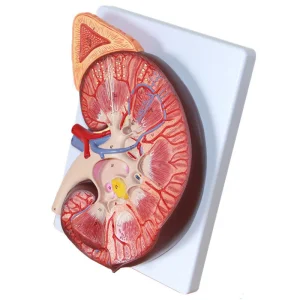
Wholesale A novel magnifying model of renal anatomy Quotes, Service
View Product Details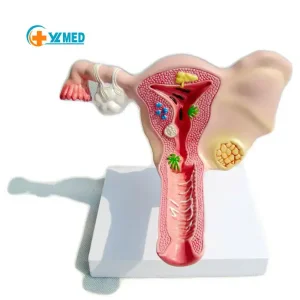
OEM Factory Manufacture Medical Gynaecology Female Ovarian Reproductive Structure Ovarian Uterus Model Manufacturers, Factory
View Product Details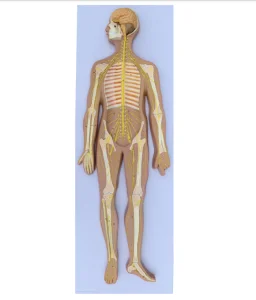
China Scientific Human Anatomy Educational Model, Central Nerve, Brain, Spinal Cord, Brain Anatomical Human Model Nervous System Cerebral-Medical Training Factories, Service
View Product Details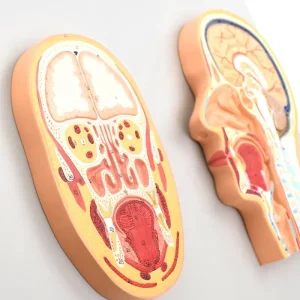
ODM Models of sagittal and frontal sections of the head Manufacturer, Quotes
View Product Details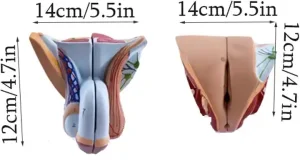
Wholesale Durable Educational Model Professional Version Male and Female Reproductive Structure Model Detachable Human Organ Anatomy Model Manufacturer, Factory
View Product Details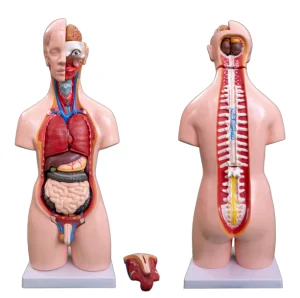
China A total of 20 55CM male and female torso models were made Factories, Service
View Product Details
China Self-made electric remote control buoyancy boat - a scientific invention of primary school students Manufacturers, Quotes
View Product Details