
First 8 Reference Products for Burn Care, Simulation and Clinical Procurement
Use this quick-view set to evaluate complementary products that frequently ship with burn care training arms, nursing simulation programs, anatomy classrooms and hospital equipment projects. Each title, image and product URL is retained from the original product series so procurement teams can compare models, request specifications and build a mixed-category order.
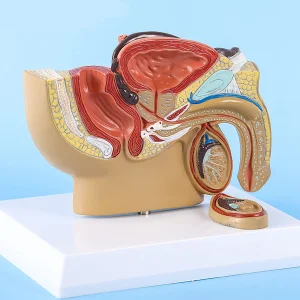
China Wooden or plastic box sets common zoology, botany, microscopes, microbiology, preparing slides for medical education Factory, Factories
View Product & Request Price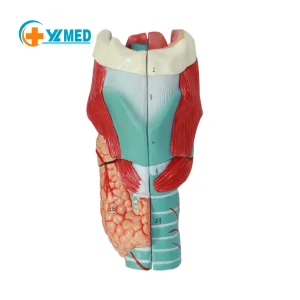
China Human Larynx Model, 2 Parts Larynx Throat Anatomical Model for Medical Anatomy and Physiology Study Research Teaching Manufacturers, Quotes
View Product & Request Price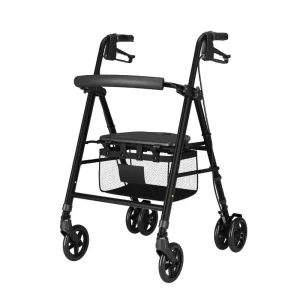
Wholesale Multifunctional Four-Wheel Shopping Trolley Outdoor Elderly Walker Disabled Bone Folding Rollator Manufacturer, Factory
View Product & Request Price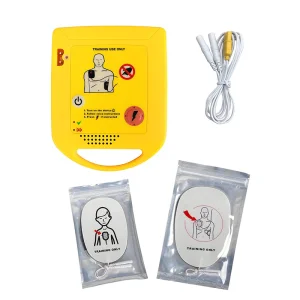
OEM Mini beginner Training AED trainer Manufacturers, Factory
View Product & Request Price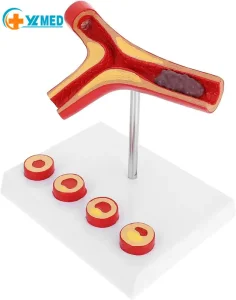
Wholesale Human Atherosclerosis Cardiovascular Medical Model Blood Vessel Anatomical Model Medical Teaching Supplies for School Students Pricelist, Quotes
View Product & Request Price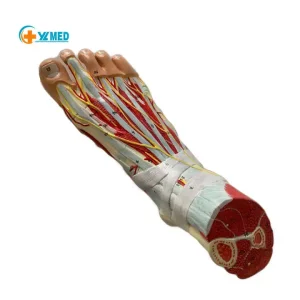
Wholesale Foot Anatomical Skeleton Model W/Bones Muscles Ligaments Nerves and Blood Vessels, One Part Life Size Medical Quality Foot Joint Easy Mounting for Medical Classroom Teaching Study Manufacturer, Factories
View Product & Request Price
What Does ODM Burned Arm Manufacturing Mean for Global Buyers?
The search intent behind “ODM Burned Arm Manufacturers & Pricelist” is highly specific. It usually comes from a distributor, medical school, nursing college, burn center, emergency training provider or tender agent that needs a lifelike burned arm simulator under its own brand, with repeatable quality and a price structure that can be quoted to an institution or reseller network.
A burned arm training model is not simply an anatomical display. It is a task trainer used to practise burn assessment, wound cleaning, dressing selection, infection-control routines, pain communication, debridement simulation and escalation decisions. In advanced programs, the arm may include interchangeable wound overlays, different skin tones, removable tissue layers, embedded sensors, cleaning ports, mounting systems and packaging that supports both classroom and field use. For ODM buyers, the commercial question is broader than unit price: the supplier must translate a curriculum into a product specification, control colour and texture consistency across batches, and provide documentation that survives tender review.
Yulin Medical, operated by Henan Yulin Edu. Project Co., Ltd., has manufactured educational and medical training equipment since 1958 and has held ISO 9001 certification since 2008. That manufacturing history matters for burned arm ODM projects because the product sits at the intersection of anatomy modelling, silicone or TPE skin simulation, nursing skills training and institutional procurement. A supplier without category depth can produce a sample, but a factory with process control can reproduce that sample in批量 production, pack it for export and support repeat orders.
ODM, Not Catalogue-Only
ODM burned arm programs begin with a buyer brief: wound pattern, arm size, skin tone, material hardness, cleaning method, sensor options, logo placement and packaging. The factory then proposes a specification, tooling path, MOQ and quotation matrix.
Price List as a Parameter Matrix
A meaningful burned arm pricelist is not one fixed number. It is a quote matrix covering model size, wound set, material, feedback option, accessories, private label, carton configuration, Incoterm and spare-part plan.
Documentation for Tenders
Institutional buyers often need product descriptions, material declarations, packing lists, HS codes, certificates of origin, pre-shipment inspection records and tender-ready specification sheets.
Why Burned Arm Simulators Are Moving from Niche Models to Program-Level Purchases
Demand is being shaped by clinical safety, accreditation, workforce readiness and distributed training. Hospitals and schools increasingly prefer modular task trainers that can be replaced part-by-part rather than discarded after surface wear.
Burn care is time-sensitive and visually complex. Learners must recognise partial-thickness and full-thickness patterns, estimate surface area, differentiate contamination from tissue damage, select dressings and communicate escalation. A realistic burned arm model gives instructors a repeatable teaching object without using patients for early-stage practice. For distributors, this creates an opportunity to bundle burned arm trainers with anatomy models, CPR manikins, AED trainers, hospital furniture and emergency transport products in one shipment. For public buyers, the model must fit procurement rules: clear specifications, stable lead times, traceable quality control and after-sales replacement parts.
Hospitals & Burn Centers
Need realistic wound patterns, easy cleaning, durable surfaces and replacement skins for repeated staff training.
Medical & Nursing Schools
Need curriculum-aligned task trainers, consistent skin tones, instructor guides and storage-friendly packaging.
Emergency & Rescue Teams
Need portable arms, rugged carriers, fast setup and field-cleaning instructions for pre-hospital drills.
Distributors & Private Label
Need ODM design, branded packaging, MOQ planning, spare-part kits and repeatable export documentation.
Illustrative Buyer Evaluation Priorities
From a Single Burned Arm Model to a Complete Simulation and Clinical Sourcing Program
Professional buyers rarely purchase one isolated item. They build a training ecosystem. Our role is to connect ODM burned arm development with the wider medical education, nursing simulation and hospital equipment catalogue shown in the original Yulin Medical product platform.
Custom Burned Arm ODM Program
Define wound type, arm posture, skin tone, softness, detachable layers, cleaning method, logo and packaging. Engineering review turns the brief into a sample plan and quote matrix.
Mixed-Category Consolidation
Combine burned arm trainers with anatomy models, CPR manikins, AED trainers, skeleton models, hospital furniture and rehabilitation aids to reduce supplier management costs.
Simulation Lab Fit-Out
Support skills labs, nursing classrooms and emergency training rooms with coordinated models, storage-friendly packaging and product-level documentation.
Private-Label Packaging
In-house design support can adapt labels, instruction inserts, cartons and product presentation for distributor brands and reseller networks.
Tender & Import Documentation
Provide product descriptions, material information, packing data, HS codes, country-of-origin documents and inspection records where applicable.
After-Sales Replenishment
Plan replacement skins, wound overlays, fasteners, carrying bags and spare parts so institutions can maintain training schedules after initial delivery.
Technical Roadmap: From Requirement Brief to Repeatable ODM Production
A burned arm simulator is a product-design project, not a commodity purchase. The roadmap below reflects the practical stages buyers should expect when qualifying an ODM manufacturer.
Clinical Brief & Anatomy Review
Clarify learner level, burn patterns, arm orientation, wound depth, skin tone range and whether the model is for classroom, OSCE, ambulance drill or patient education.
Digital Sculpting & Surface Design
Translate anatomy references into a sculpted arm form, including hand posture, joint position, wound edges, tissue texture and mounting points.
Material Selection
Compare silicone, TPE, PVC and composite options for softness, tear resistance, colour stability, cleanability and repairability under institutional use.
Wound Colour & Texture Matching
Control reds, yellows, charred areas, moisture effects and matte surfaces so each batch remains visually consistent with the approved sample.
Modularity & Feedback Options
Design replaceable wound overlays, removable tissue layers, sensor-ready cavities or simple mechanical feedback depending on budget and curriculum need.
Validation, Packaging & Scale-Up
Run sample review, cleaning trials, drop-test packing checks, private-label proofing and production control before repeat orders and mixed-container shipment.
For buyers, the most important information gain is to separate sample realism from production realism. A visually strong prototype may still fail if the skin tears during repeated dressing changes, if the wound colour shifts under cleaning agents, if the arm cannot be mounted securely or if replacement parts are not available. A qualified ODM supplier should discuss these risks before quoting. This is where decades of manufacturing discipline, ISO 9001 process control and export packing experience reduce total cost of ownership.
Future Outlook: Smart, Sustainable and Data-Ready Burn Care Training
The next generation of burned arm models will be judged not only by appearance, but by how well they support assessment, maintenance and distributed training.
Sensor-Assisted Assessment
Embedded pressure, moisture or temperature sensors could help instructors verify dressing pressure, cleaning sequence and wound handling.
AR & Digital Overlays
Augmented-reality labels and scenario cards can guide learners through burn depth recognition, escalation and documentation without changing the physical arm.
Replaceable & Sustainable Parts
Modular skins, refillable wound kits and recyclable packaging extend product life and reduce waste in high-frequency training centres.
Localized Training Kits
Language-specific inserts, regional skin-tone sets, hospital protocol cards and distributor-branded storage cases will become stronger differentiators.
Global Commercial and Industrial Status for Burned Arm Sourcing
China remains one of the densest manufacturing ecosystems for medical teaching models, anatomy models, CPR manikins and hospital equipment. The market includes factory-direct manufacturers, trading consolidators and regional distributors, each with different cost and service profiles.
For burned arm ODM projects, factory-direct manufacturing generally offers stronger control over material formulation, colour matching, tooling and repeat orders. Trading consolidators can be useful for small mixed orders or hard-to-find accessories, but buyers should confirm who controls the production specification and who handles replacement parts after shipment. Regional distributors may provide local stock and service, but their price includes markup and their customization window can be limited. The most resilient sourcing model is often a hybrid: a factory-direct ODM partner for the core burned arm program, supported by local warehousing or service partners for fast replenishment.
Commercial terms also reflect the maturity of the product. Basic anatomical models can be quoted from a standard list, while ODM burned arm models require tooling, sample approval, packaging design and batch controls. Lead times therefore depend on specification complexity, not just quantity. Buyers should request a line-item quotation that separates unit price, tooling or sample charge, packaging, spare parts, testing documentation, inland freight and international shipping. This prevents later disputes and makes landed-cost comparison transparent.
Localization Support and Compliance Assurance for Overseas Buyers
International procurement is not only about product quality. It is also about language, documentation, packaging, import classification and after-sales clarity. A good ODM manufacturer reduces friction before the shipment leaves the factory.
Language & Documentation
English and Chinese communication is supported for quotations, specifications and export paperwork. Private-label inserts can be localized using buyer-supplied translated copy.
Labeling & Packaging
Custom labels, barcodes, carton marks, warning symbols, instruction formats and protective packaging can be designed around distributor and tender requirements.
Tender & Certification Dossier
ISO 9001 information, material declarations, product descriptions, packing lists and country-of-origin documents can be prepared where applicable.
Shipping & After-Sales
Export carton design, container planning, spare-part packing and responsive after-sales communication help protect product performance after delivery.
Important compliance note: classification and market-entry requirements for medical training models differ by country. Buyers should confirm whether a burned arm simulator is treated as a teaching aid, simulation device, medical device accessory or another category in their market. CE marking, UKCA, FDA listing or other claims depend on the exact product, intended use and local regulation. Yulin Medical can provide factual product and quality documentation, but the importer remains responsible for local regulatory verification. This distinction is part of reliable E-E-A-T content: no supplier should promise regulatory approval without a defined product and market pathway.
Yulin Medical: A Six-Decade Manufacturing Base Behind the ODM Program
Henan Yulin Edu. Project Co., Ltd. (Yulin Medical) has built educational and medical training equipment in Xinxiang, China, for more than six decades. Our quality management system has been ISO 9001 certified since 2008, and our motto is simple: quality first, service first.
Founded in 1958, Henan Yulin Edu. Project Co., Ltd. has grown into a well-known educational and medical equipment supplier that integrates scientific research, production and sales. With registered capital of RMB 120 million and more than 200 professional employees, we manage product development, manufacturing, inspection and export from our base at No. 8, Daoqing Road, Industry Park, Hongqi District, Xinxiang, Henan, China. Our goal is to fully satisfy every customer through dependable quality and attentive service, while continuously developing the skills of our team so that each project is handled by experienced people.
What this means for burned arm ODM buyers: one accountable manufacturer for anatomy models, nursing simulators, lab slides, hospital equipment and simulated burn-care training concepts — consolidated into a single shipment and backed by an ISO 9001 quality system. For one-stop orders, we also coordinate a stable network of long-term partner factories.
Complete Sourcing for Medical Education & Clinical Use
Ten specialised product lines let procurement teams source simulation, lab and hospital equipment from one accountable manufacturer instead of managing multiple suppliers.
Anatomy Models
Torso, organ, heart, brain and muscle models with numbered structures for lectures and patient education.
View range →Biology Prepared Slides and Accessories
Histology, botany and zoology prepared slides plus storage and microscope accessories for biology labs.
View range →Dental Tools and Equipment
Dental teaching models, clinic lights, LED whitening units and endodontic instruments for training and practice.
View range →General Teaching Models
Science demonstration models for primary schools, secondary schools and education equipment tenders.
View range →Hospital Furniture and Equipments
Stainless steel examination couches, stretchers, walkers and shower chairs built for daily clinical use.
View range →Hospital Machine and Tools
Diagnosis and treatment devices and practical tools for wards, clinics and emergency departments.
View range →Medical Apparatus and Instruments
Emergency splints, extrication devices, cervical traction and rehabilitation instruments.
View range →Medical Nursing Model
Adult, child and neonatal CPR manikins, ACLS simulators and AED trainers for skills assessment.
View range →Skeleton Models
Life-size and desktop skeletons, skulls, spines and joint models for osteology teaching.
View range →Suture Pads and Kits
Realistic skin suture pads and complete instrument kits for surgical and wound-closure practice.
View range →Why Distributors and Institutions Partner with Yulin Medical
Four strengths overseas buyers consistently cite when they move long-term orders to our factory.
24/7 Responsive Service
Our team is online 24 hours a day, 7 days a week. Whatever your time zone, you receive a detailed answer as quickly as possible — typically within 24 hours.
Design & Packaging Team
In-house specialists deliver professional product design and private-label packaging that strengthens your brand and increases the added value of every unit you sell.
Professional Expertise
Our vision is to provide the most professional educational and medical training products from mainland China, built under ISO 9001 process control and decades of category knowledge.
60+ Years of Supply Stability
A factory with over 60 years of history and a deeply integrated partner supply chain lets us meet one-stop demands and keep lead times predictable on repeat orders.
A Transparent 5-Step Process for Overseas Buyers
From first conversation to delivery, every stage has a named contact and clear documentation, so you can plan stock, tenders and training schedules with confidence.
Share Requirements
Send product types, quantities, target market and any tender or certification needs.
Catalogue & Proposal
Receive matched models, specifications, packaging options and shipping suggestions.
Sample Evaluation
Test samples with your instructors or clinicians before confirming bulk production.
Production & QC
Manufacturing and inspection follow our ISO 9001 quality management system.
Export & Support
Protective export packing, delivery coordination and responsive after-sales service.
Featured CPR, Emergency & Rehabilitation Equipment for Burn Care Procurement
Best-selling simulation manikins, first-aid devices and mobility aids requested by training centres, ambulance services and healthcare distributors. These products are commonly bundled with burn-care and emergency-response training programs.

Advanced Full-Body CPR Training Manikin with 8" Color Feedback Display
View Product & Inquire
AED Automated External Defibrillator Trainer for CPR Courses
View Product & Inquire

Neonatal ACLS Training Manikin Aligned with AHA 2020 Guidelines
View Product & Inquire







News & Practical Insights from Our Specialists
Exhibition updates and hands-on guidance written by the team that designs and builds our products.

Do You Really Know How to Observe Biological Prepared Slides?
Many plant and animal cell structures can only be studied under a microscope, which makes prepared biological slides essential in every biology lab. Yet many users never get the full value from them. Our specialists explain how to handle, focus and store slides correctly so students see clearer detail and your slide sets last for years.

The 5th Henan Provincial Educational Equipment Expo Concludes Successfully
Themed “Digital Leading Innovation and Development”, the expo reached a record 50,000 m² with 600+ brands and 10,000+ products on display, showcasing the latest educational equipment.

Inside Our Product Showroom
A look at the medical teaching models and training equipment buyers can inspect in person when visiting our Xinxiang facility.
Frequently Asked Questions from Importers
Straight answers to the questions procurement managers ask most before placing a first order or requesting an ODM burned arm quotation.
Is Yulin Medical a manufacturer or a trading company?
What quality certification do you hold?
Do you support OEM, private label and custom packaging?
How do I choose the right CPR training manikin?
How quickly will I receive a reply?
What is included in an ODM burned arm pricelist?
Can you produce different burn wound patterns and skin tones?
How do you protect quality in repeat production?
Second 8 Reference Products for ODM Burned Arm & Pricelist Evaluation
The remaining reference products from the original series support anatomy teaching, ICU care, dialysis, pathology, rehabilitation and emergency casualty handling. Use these links to complete your comparison and consolidate a mixed-category enquiry.
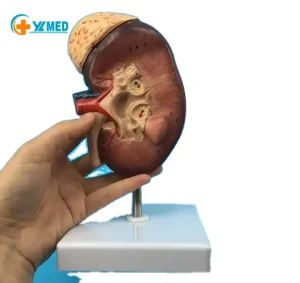
OEM Hot selling factory direct supply kidney anatomical model medical organ education model human plastic kidney model 2X large Manufacturers, Factory
View Product & Request Price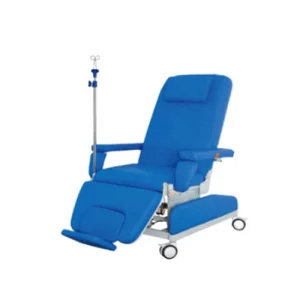
Wholesale Hospital Furniture Multifunctional Adjustable Medical Blood Donation Collection Electric Dialysis Chair Infusion Chair Factory, Service
View Product & Request Price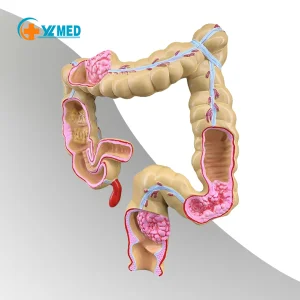
China Large intestine rectum pathology medical anatomical model Medical teaching used human pathological colon model Manufacturer, Factory
View Product & Request Price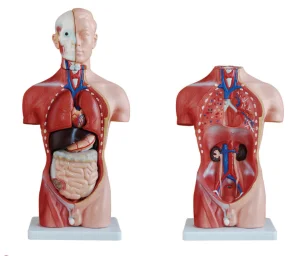
ODM Thirteen models of a 42CM male torso were made Factories, Quotes
View Product & Request Price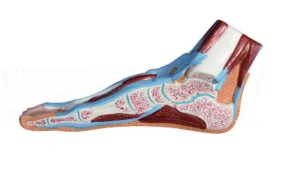
ODM Sagittal anatomical model of the natural great foot Manufacturers, Service
View Product & Request Price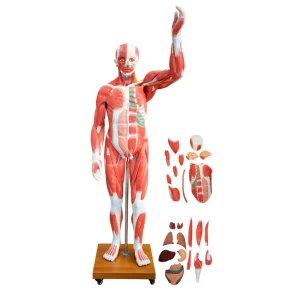
Wholesale Life size Human Muscle Anatomical Model with Organs Removable Whole Body Muscled Model 27 Parts For Teaching Medical Science Manufacturer, Quotes
View Product & Request Price
Need a Burned Arm Sample, ODM Proposal, or Pricelist?
Tell us your target market, learner group, wound pattern requirements, quantities and certification needs. Our product specialists will recommend suitable models, clarify ODM variables, share detailed specifications and propose an economical shipping plan for your order. For catalogue and tender requests, include your institution type, destination country and required delivery window so the quotation can be structured correctly.