
ODM · OEM · ISO 9001 · Factory Since 1958
ODM Bedside Patient Monitor Factory & Quotes
Custom-branded multi-parameter bedside patient monitors engineered and assembled in China, delivered with the documentation, packaging and after-sales support that distributors, hospital groups and telemedicine operators need to win tenders.
Factory Product Range
Request Quotes on Our Best-Selling ODM & OEM Lines
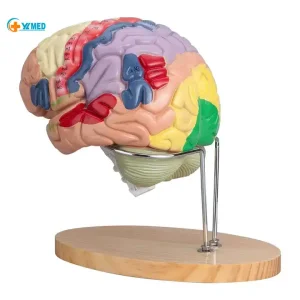
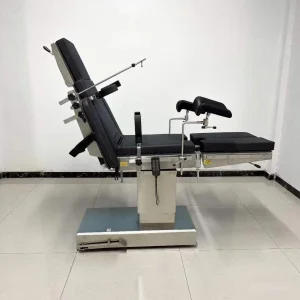
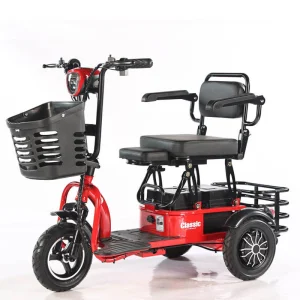
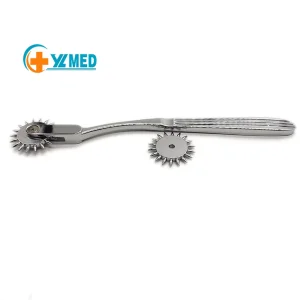
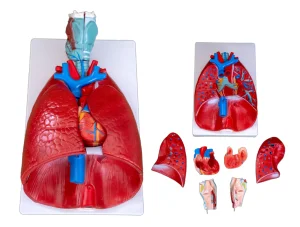
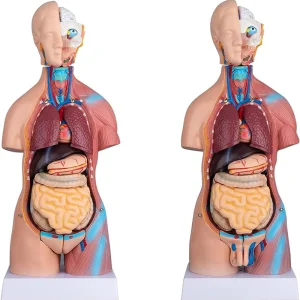
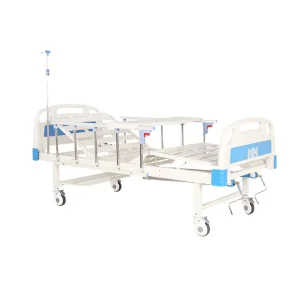
Every unit below is produced or coordinated by our Xinxiang facility. Send us a target quantity and destination port and we will return an indicative quotation within one working day.
Who We Are
An ODM Partner Built on 60+ Years of Medical Manufacturing
Henan Yulin Edu. Project Co., Ltd. — ISO 9001 certified since 2008, exporting clinical and educational equipment from Xinxiang, Henan.
A bedside patient monitor is the most frequently touched screen in a hospital ward, and clinical decisions are made from it every few minutes. For a distributor, that makes it a high-stakes, high-reputation product category: choosing the wrong factory does not simply produce a return, it can cost you a tender, an account, or worse, an adverse event report that follows your brand for years.
This is why the ODM relationship matters far more than the unit price printed on a quotation sheet. A capable original design manufacturer does not simply screw a board into a plastic housing. It handles tooling, firmware localisation, language packs, alarm vocabulary, labelling, electrical safety documentation, retail packaging, container loading plans and supply continuity across repeat orders. Every one of those steps, if mishandled, costs the buyer weeks of follow-up.
Yulin Medical was founded in 1958 and has manufactured medical and educational equipment ever since. Our quality management system has been ISO 9001 certified since 2008. With registered capital of RMB 120 million and more than 200 professional staff, we operate ten product lines that cover anatomy and skeleton models, nursing and CPR simulators, suture trainers, dental teaching equipment, biology prepared slides, hospital furniture, hospital beds, operating tables and clinical monitoring devices.
That breadth is the practical advantage for a procurement team: one accountable manufacturer can consolidate monitors, beds, trolleys and training models into a single shipment, a single set of export documents and a single point of contact.
This page sets out how our ODM bedside patient monitor programme works, what global buyers are actually asking for in 2025, where Chinese factory efficiency still delivers a structural advantage, and how to read a quotation so that the cheapest number on the table is not the most expensive decision you make.
Global Industry Status
The Worldwide Bedside Patient Monitor Market at a Glance
Demand is no longer driven by new hospital construction alone — replacement cycles, home care and data integration now set the pace.
Public industry estimates consistently place the global patient monitoring device market in the tens of billions of US dollars per year, with compound annual growth of roughly six to eight percent projected through the end of the decade. The exact figure depends on how a research house draws the boundary between monitors, telemetry, central stations and connected wearables, but the direction of travel is not in dispute. Three forces are pushing the curve upward.
First, demographic pressure. Ageing populations in Europe, East Asia and Latin America are expanding the number of beds that require continuous vital-sign surveillance, while a shrinking clinical workforce per bed raises the value of automated detection. Second, chronic disease burden. Cardiovascular disease, diabetes and respiratory illness generate long-term monitoring demand that continues outside the hospital, in step-down units, community clinics and the home. Third, replacement and upgrade cycles. A large installed base of monitors purchased between 2012 and 2018 is now reaching end-of-support, and hospital groups are refreshing fleets to obtain larger touchscreens, wireless connectivity and interoperable data output.
Regional differences are pronounced. North America and Western Europe remain the highest-value markets and reward factories that can supply complete technical files and cybersecurity documentation. The Middle East, Southeast Asia, Africa and parts of Latin America are the fastest-growing volume markets, and they reward factories that can deliver robust, serviceable, low-cost platforms with local language interfaces and dependable spare-part supply.
6–8%Projected annual growth of the global patient monitoring market
60+Years of continuous medical equipment manufacturing
2008ISO 9001 certification maintained without interruption
24hTypical quotation response for export enquiries
Efficiency Advantage
Why Chinese ODM Factories Win on Speed and Cost Engineering
The advantage is not cheap labour any more. It is supply-chain density, tooling velocity and the ability to absorb change requests without resetting the schedule.
Dense Supplier Ecosystem
From multilayer PCBs and LCD modules to medical-grade housings and cable assemblies, the components of a bedside monitor sit within a few hours of the assembly line. That density shortens lead times and makes second-sourcing realistic rather than theoretical.
Rapid New Product Introduction
Tooling for a custom enclosure, a revised front membrane and a new language pack can be sequenced in weeks rather than quarters. For distributors launching a private label, this is often the difference between catching a tender window and missing it.
Flexible Order Quantities
Trial batches sized for a single hospital or a first market entry sit comfortably alongside container-scale repeat orders. Buyers can validate a model in the field before committing capital to a full production run.
Cost Engineering from Day One
Value engineering happens during design review, not after the first invoice. Component substitution, board consolidation and packaging optimisation are agreed before tooling is cut, which is where most of the real cost reduction is created.
Technical Platform
Configurations Buyers Commonly Request for ODM Monitors
A reference outline of the specification envelope our ODM programme is built around. Final parameters are confirmed against the agreed datasheet for each project.
Display & Interface
12.1-inch and 15.6-inch capacitive touchscreens with anti-glare coating, configurable waveform layouts, and a front panel that can carry your own brand identity rather than a generic moulding.
Core Parameters
ECG, respiration, SpO₂, non-invasive blood pressure and dual temperature channels as the standard set, with adult, paediatric and neonatal modes selectable in software.
Optional Extensions
Invasive blood pressure channels, sidestream or mainstream capnography, cardiac output and 12-lead diagnostic ECG modules can be specified at order stage so the platform grows with your market.
Connectivity
Wired LAN and optional Wi-Fi modules, HL7 output for third-party HIS and EMR integration, and support for connection to a central monitoring station for multi-bed surveillance.
Power & Battery
Wide-range 100–240 V input with an internal lithium-ion pack sized for several hours of uninterrupted operation, so intra-hospital transport does not interrupt the monitoring record.
Alarms, Trends & Records
Three-level alarm logic with configurable limits, extended trend storage and event review, plus an on-board thermal recorder option for buyers whose regulators still expect a paper strip.
Localised Applications
Where Bedside Monitors Are Actually Deployed
A single platform rarely fits every ward. Buyers who specify by scenario get better clinical adoption and far fewer after-sales complaints.
ICU & High Dependency Units
Continuous multi-parameter surveillance, central-station integration and extended trend review matter most here. Hospitals in this segment rarely buy on price alone; alarm reliability and data continuity drive the decision.
Emergency & Pre-Hospital
Rugged housings, long battery life and fast power-up are the deciding factors. Ambulance services and emergency departments need a monitor that survives a bumpy transfer and boots before the patient reaches the trauma bay.
Operating Rooms & Recovery
Capnography, invasive pressure and cardiac output modules become relevant, and the mounting footprint must fit around anaesthesia machines. Buyers usually order these units alongside operating tables and surgical furniture in the same shipment.
Paediatric & Neonatal Wards
Smaller cuffs, dedicated neonatal algorithms and softer alarm behaviour are non-negotiable. This is the scenario where a generic adult-only platform fails most visibly, and where ODM software configuration earns its value.
Clinics & Community Health
Private clinics, day-surgery centres and community posts need a compact, easy-to-train device with low maintenance cost. Simplified interfaces and local-language menus increase adoption far more than additional parameters do.
Elderly Care & Telehealth
Nursing homes and remote-monitoring providers increasingly want monitors with data upload capability. When paired with hospital beds, walking aids and mobility scooters from the same factory, they form a complete ward or home-care package.
Global Buyer Requirements
What Overseas Procurement Teams Actually Ask For
Four buyer profiles, four different definitions of a good quotation.
Brand Distributors
They want exclusivity by territory, private-label silk-screen and packaging, consistent firmware across batches, and a spare-parts kit that keeps their service engineers independent. Documentation quality is usually the deciding factor.
Hospital Groups & Tenders
Fleet consistency, standardised accessories and a ten-year parts availability statement carry more weight than unit price. Tender packages need datasheets, compliance declarations and, increasingly, software maintenance terms.
Government & NGO Programmes
Large volumes, staged deliveries, stringent logistics requirements and a preference for equipment that can be maintained with limited technical staff. Localisation of manuals and training material is frequently mandatory.
Service & MRO Providers
They buy boards, sensors, cuffs, cables and housings rather than complete units. A factory that can supply both finished monitors and genuine sub-assemblies becomes a long-term partner instead of a one-off vendor.
Industry Trends
Six Trends Rewriting the ODM Monitor Specification
If your next tender includes any of these line items, the platform you choose today will determine whether you can bid on it.
Embedded Early-Warning Scoring
Aggregated warning scores calculated on-device are shifting from a premium feature to an expectation in intensive care procurement. Monitors that cannot surface deterioration trends are increasingly excluded at the technical evaluation stage.
Wireless & Ambulatory Telemetry
Battery-powered telemetry and wearable patches are pulling monitoring out of the fixed bedside and into the corridor, the rehabilitation gym and the patient's home. ODM platforms now need a wireless roadmap, not just a LAN socket.
Interoperability by Default
HL7 and FHIR-ready data output is now requested in tenders across Europe, the Gulf and Southeast Asia. A monitor that cannot feed the electronic record becomes a data island the hospital has to pay someone to bridge.
Cybersecurity & Software Lifecycle
Regulators now ask how firmware updates are distributed, how vulnerabilities are disclosed and how long a device will receive security patches. Buyers should confirm the software support policy before signing, not after the first recall notice.
Large-Format Touch Displays
Nurses working twelve-hour shifts benefit from 15.6-inch screens with clear colour coding and fewer nested menus. The shift toward larger displays is also pushing factories to redesign housings and mounting arms.
Battery Endurance & Sustainability
Longer transport times and pressure to reduce consumable waste have made battery capacity a clinical feature rather than a convenience. Recyclable packaging and reduced standby power are appearing in public tender scoring matrices too.
How We Work
Four Controlled Stages from Enquiry to Container
Every stage has a named contact and a documented output, so your team can plan stock, tenders and training schedules with confidence.
Requirement Definition
Share the target market, expected annual volume, required parameters, regulatory pathway and any tender specification. We map these onto the closest existing platform and flag gaps immediately.
Proposal, Samples & Quote
You receive matched models, a full technical datasheet, packaging options, accessory list, indicative pricing at your volume band and a shipping estimate to your destination port.
Production & Quality Control
Manufacturing runs under our ISO 9001 quality management system, with incoming component inspection, in-process checks, ageing tests before packing and pre-shipment inspection by arrangement.
Export & After-Sales
Protective export packing, consolidated loading with other product lines, complete shipping documentation, and a responsive channel for spare parts, technical questions and warranty handling.
Ordering monitors, hospital beds, operating tables and training models from one factory is not only simpler administratively — it usually reduces total landed cost through consolidated freight and a single customs entry.
Buyer FAQ
Frequently Asked Questions About ODM Bedside Monitors
Direct answers to the questions procurement managers raise most often before a first order.
Is Yulin Medical a monitor factory or a trading company?
We are a manufacturer. Henan Yulin Edu. Project Co., Ltd. was founded in 1958 and operates its own facility at No. 8 Daoqing Road, Hongqi District, Xinxiang, Henan, China, with more than 200 professional staff and registered capital of RMB 120 million. For complete one-stop orders that combine monitors with teaching models, hospital beds or operating tables, we also coordinate a stable network of long-term partner factories under our own quality supervision.
What customisation is available on an ODM bedside patient monitor?
Typical ODM scope covers housing colour and moulding, front-panel and rear-label branding, boot logo and system interface, language packs, parameter configuration, alarm limits and default profiles, accessory bundles, user manual localisation and retail packaging design. Where a market requires a specific regulatory submission, we can discuss the documentation package your importer will need.
What quality certification do you hold?
Our quality management system has been ISO 9001 certified since 2008 and is maintained without interruption. Product-specific test reports and conformity documentation can be provided on request to support tenders and import registration in your market.
How quickly will I receive a quotation?
Our export team is online seven days a week and typically replies within 24 hours. For a fast, accurate quote, please include the model or parameter list you need, estimated first-order quantity, destination country and port, and any packaging or branding requirements.
Can I order a small trial batch before committing to a full production run?
Yes. Trial quantities sized for a single hospital, a pilot ward or a first market entry are available so you can validate clinical acceptance, service access and regulatory clearance before scaling. Lead time and unit price are confirmed at quotation stage and depend on the level of customisation.
Do you supply spare parts and accessories separately?
Yes. SpO₂ sensors, NIBP cuffs and hoses, ECG cables and lead sets, temperature probes, power cables, battery packs and mounting hardware can all be ordered alongside finished monitors or as separate replenishment shipments, which lets distributors maintain their own service capability.
Complete the Ward Package
More OEM & ODM Equipment from the Same Factory
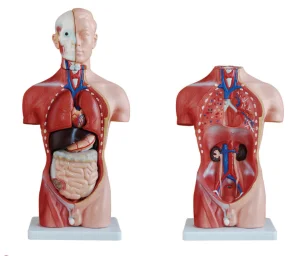
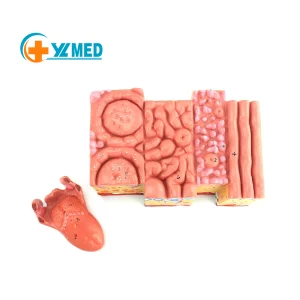
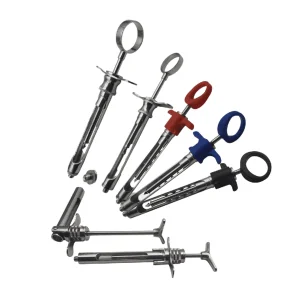
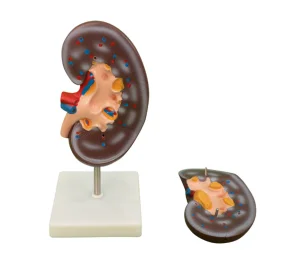
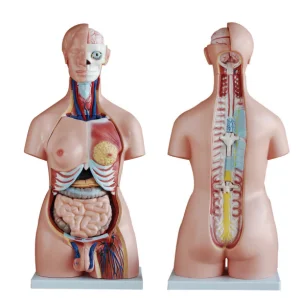
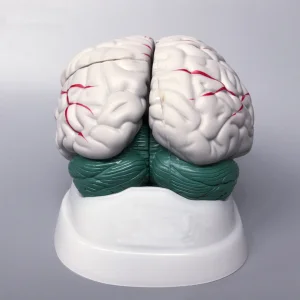
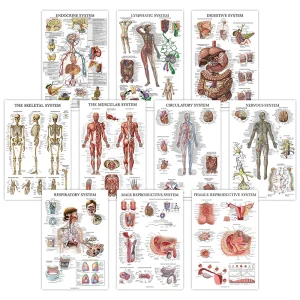
Combine monitors with beds, training models and clinical teaching aids in one consolidated shipment and reduce both freight cost and supplier management overhead.
Talk to Our Export Team
Need a Datasheet, a Price List or a Tender Package? We Reply Within 24 Hours.
Send us your target market, expected quantities, required parameters and certification expectations. Our specialists will recommend the closest matching ODM platform, confirm the specification, and propose the most economical consolidated shipping plan for your order.
Request Your ODM Quote