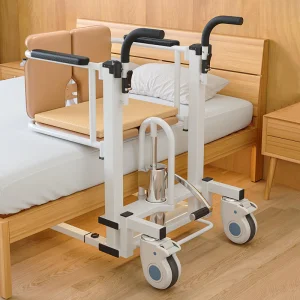
ODM Automatic Infusion Pump Manufacturer & Manufacturers
A technical procurement guide for hospitals, distributors and home-care brands seeking resilient automatic infusion pump manufacturing, localized clinical configuration and documentation-ready global compliance.
Eight Products from Our ISO 9001 Manufacturing & Sourcing Network
Alongside ODM automatic infusion pump program discussions, Yulin Medical supplies a broad range of medical education, hospital and care equipment. The eight products below are retained exactly from our current catalog, with original product URLs, to support mixed-category sourcing and distributor consolidation.
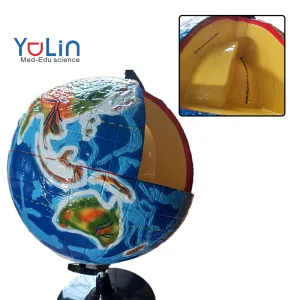
ODM Tectonico Placa Terrestre Modelo Globo Educativo Globo Tierra De Plastico Geographical Earth Internal Structure Globe Model Pricelist, Quotes
View Product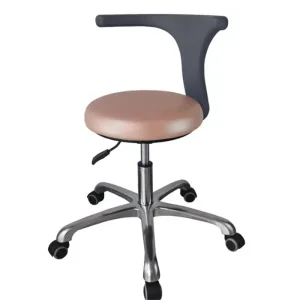
Wholesale Medical Hospital Adjustable Dental Stool Assistant Dentist Doctor Chair Factory, Pricelist
View Product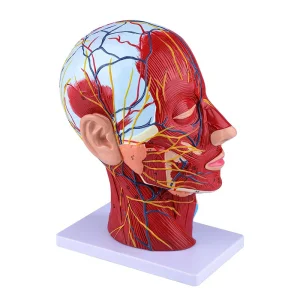
ODM Human Half Head & Neck Anatomy Model Superficial Neurovascular Model Manufacturer, Pricelist
View Product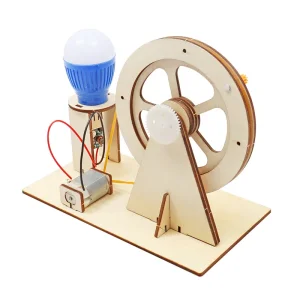
OEM Newest Assemble Wooden Intelligent Science Kits Children Homemade Hand Generator Wood DIY Educational Physics Toys Manufacturer, Manufacturers
View Product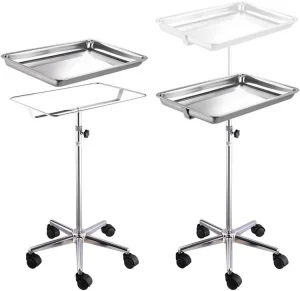
OEM Top Selling Adjustable Mayo Stainless Steel Tray Stand Mobile Trolley Medical Salon Equipment Tattoo 45lb Capacity Factory, Factories
View Product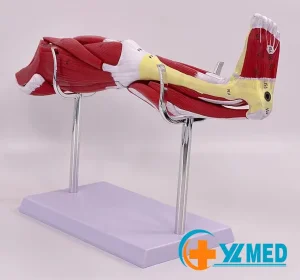
OEM New design Artificial Muscle leg Anatomy model for medical teaching use with 13parts Model Manufacturers, Factory
View Product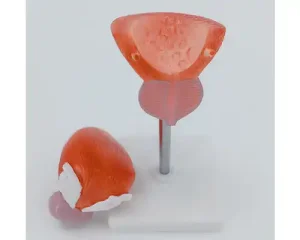
OEM Medical science Human bladder model Natural large prostate model genitourinary system anatomical model Manufacturer, Manufacturers
View Product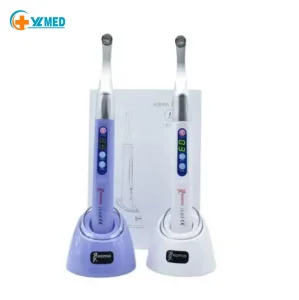
China Dental light curing equipment woodpecker one second light curing machine wide spectrum high intensity LED light curing machine Pricelist, Service
View ProductODM Automatic Infusion Pump Manufacturer & Manufacturers: A Technical Buyer’s White Paper
Automatic infusion pumps are safety-critical active medical devices. Choosing an ODM partner is therefore not a price-list decision alone; it is a decision about software lifecycle control, clinical risk management, supply continuity, local service and regulatory evidence.
Why ODM Automatic Infusion Pump Programs Demand More Than Assembly
In an ODM model, the manufacturer contributes platform design, software, tooling, validation, production and lifecycle engineering. For infusion pumps, the core value is not only the pump mechanism or motor; it is the combination of dose accuracy, occlusion detection, air-in-line protection, drug-library configuration, battery backup, alarm behavior and cybersecurity. A credible ODM automatic infusion pump manufacturer should be able to explain how these systems interact in real clinical workflows, not merely quote a unit price.
Buyers should ask for design history file structure, software requirements traceability, risk management outputs, usability validation, EMC reports and post-market surveillance plans. The more safety-critical the application, the more important it is to treat the supplier as an engineering partner rather than a catalog assembler.
E-E-A-T Note from Henan Yulin Edu. Project Co., Ltd.
Yulin Medical has manufactured educational and medical equipment in Xinxiang, Henan, China since 1958. Our quality management system has been ISO 9001 certified since 2008. With registered capital of RMB 120 million and more than 200 professional staff, we operate across 10 product lines and support overseas distributors, medical universities, nursing colleges, hospitals and care organizations. Our motto is simple: quality first, service first.
For automatic infusion pump ODM projects, we combine this manufacturing discipline with qualified infusion-pump production partners and documented quality agreements. This guide reflects our practical experience in medical equipment export, private-label packaging, mixed-category consolidation and tender documentation.
Information gain for procurement teams: evaluate an infusion pump ODM partner across five evidence layers — clinical requirement definition, hardware and software design controls, manufacturing process validation, market-specific regulatory documentation and local after-sales readiness. A low quotation that omits any layer usually becomes a total-cost risk after installation.
The Global Commercial and Industrial Status of Automatic Infusion Pumps
Demand is moving from standalone volumetric pumps toward connected medication delivery ecosystems. Hospitals want fewer manual programming steps, stronger drug-library controls and better integration with barcode medication administration and electronic medical records.
Illustrative ODM Buyer Priority Index
Planning model used in buyer discussions, not a market forecast.
Typical Procurement Mix
Illustrative demand mix for ODM discussion and product planning.
In mature markets, differentiation is driven by interoperability, cybersecurity, dose-error reduction software, service-level agreements and clinical training. In high-growth markets, buyers often prioritize ruggedness, intuitive operation, spare-parts availability, local-language documentation and a predictable total cost of ownership.
Regulated Markets
Buyers expect documented design controls, software lifecycle evidence, cybersecurity plans, usability engineering and post-market surveillance. ODM programs must be ready for technical-file review rather than relying on generic certificates.
China’s Industrial Role
China’s medical-device ecosystem combines electronics, precision motors, sensors, injection molding, tubing, batteries, PCBA and software engineering. The advantage is not only cost; it is the ability to iterate prototypes quickly and industrialize a validated design.
Home-Care Expansion
Home infusion growth is creating demand for simplified interfaces, remote support, caregiver lockouts, light-weight poles and robust connectivity. Product design must reduce training burden without weakening safety controls.
Where Automatic Infusion Pump Localization Creates Clinical Value
A successful ODM automatic infusion pump is not configured for one global average. It is tuned to the department, language, workflow, power environment, connectivity level and service model in the target market.
Hospital Wards & ICU
Continuous and intermittent infusions require precise flow, clear alarm escalation, multiple-channel coordination and drug-library safeguards. Localization includes EMR integration, language packs and nursing workflow mapping.
Oncology Day Care
Chemotherapy and biologic therapies need low-rate accuracy, dose limits, anti-bolus behavior, quiet operation and strong traceability. Localized drug libraries and color-coded lines reduce programming variation.
Pediatric & Neonatal Care
Micro-volume delivery, weight-based dosing, small dead space and fine occlusion thresholds are critical. Soft alarms, caregiver prompts and department-specific training improve safe use in pediatric units.
Ambulatory Infusion Centers
High-throughput centers need fast setup, battery endurance, fleet visibility and simple maintenance. ODM customization can include docking workflow, barcode scanning, local-language screens and service kits.
Home Infusion & Elderly Care
Home-care pumps require simplified menus, caregiver lockouts, remote troubleshooting and clear alarms. Localization includes telephone support scripts, training videos and spare-parts logistics for community nurses.
Emergency & Transport
Ambulance and inter-hospital transport demand rugged enclosures, vibration tolerance, battery hot-swap options and secure pole mounting. Alarm audibility and screen visibility must be validated in moving environments.
From Basic Infusion to Connected, Evidence-Rich Therapy
The next generation of ODM automatic infusion pump platforms will be judged by how safely they connect clinical data, device behavior and service operations across the product lifecycle.
2025–2026: Modular Safety Platform
Modular pump heads, standardized drug libraries, improved occlusion sensing and a compliance baseline aligned with IEC 60601-2-24, IEC 62304, ISO 14971 and IEC 62366-1 usability engineering.
2026–2027: Workflow Interoperability
HL7/FHIR connectivity, barcode medication administration, auto-programming from EMR orders and bidirectional status updates. Localization will require testing against hospital IT environments, not just laboratory networks.
2027–2028: Fleet Analytics
Cloud or on-premise fleet dashboards for utilization, battery health, alarm trends, maintenance scheduling and firmware compliance. Service teams gain predictive signals before a pump becomes unavailable.
2028–2029: AI-Assisted Dose Safety
Drug-library analytics, anomaly detection and clinical rule support can help identify programming patterns that deserve review. AI must remain advisory, auditable and subordinate to validated safety logic.
2029–2030: Home-Care Ecosystems
Remote monitoring, caregiver authentication, disposable or semi-disposable fluid paths and logistics integration will shape home infusion. Local service networks and reimbursement evidence become as important as device features.
Cross-Cutting: Cybersecurity
Secure boot, signed firmware, role-based access, vulnerability handling, SBOM management and coordinated disclosure should be designed from the start. Cybersecurity is a lifecycle commitment, not a one-time test report.
Supply Chain Resilience and Efficiency Advantages of a China Factory Partner
China’s medical-device supply chain is not a single factory; it is a network of component makers, tooling shops, electronics suppliers, sterilization providers and export logistics specialists. The right partner converts that network into predictable delivery.
Integrated Component Ecosystem
Motors, sensors, tubing, batteries, chargers, injection-molded housings, PCBA and display modules can be sourced and validated through a coordinated supplier network. This shortens iteration cycles from concept to pilot build.
Multi-Node Supplier Redundancy
Critical components can be dual-sourced where appropriate, with approved alternate materials and change-control procedures. Resilience means knowing which substitution is acceptable and which requires re-validation.
DFM & Rapid Tooling
Design-for-manufacture reviews, mold-flow analysis, jig design and pilot assembly help identify issues before mass production. Fast tooling is valuable only when paired with controlled validation and traceable changes.
Quality Management Discipline
ISO 9001 provides a structured baseline for document control, inspection, nonconformance management and corrective action. For infusion pumps, product-specific quality plans and supplier audits extend this baseline into safety-critical areas.
Mixed-Category Consolidation
Factory-direct supply across 10 product lines allows distributors to combine anatomy models, CPR manikins, hospital furniture and care equipment with private-label packaging. Mixed-category orders can be consolidated into one shipment with one point of contact.
Export Logistics & Lead Time
From Henan, suppliers can route through Zhengzhou airport, Shanghai, Qingdao, Shenzhen and China-Europe rail options. A realistic lead-time plan includes component procurement, production, inspection, packaging, booking and destination clearance.
Efficiency advantage for buyers: one accountable manufacturer for mixed product lines, one shipment, one point of contact, supported by an ISO 9001 quality system and a 24-hour reply commitment. This model reduces supplier-management overhead while keeping product-specific documentation visible.
Localized Support, Regulatory Evidence and Market-Specific Compliance
No responsible ODM partner should promise a universal certificate for every automatic infusion pump configuration. Regulatory approval is product-specific, market-specific and dependent on the final intended use, labeling, software and manufacturing evidence.
Regulatory Pathway Mapping
Support for pathway discussions covering FDA 510(k), EU MDR, NMPA, TGA, Health Canada, ANVISA and other market requirements. The earlier the target markets are known, the more efficient the technical-file strategy.
Technical File Co-Development
Documentation packages can address IEC 60601-1, IEC 60601-1-2, IEC 60601-2-24, IEC 62304, ISO 14971, IEC 62366-1 and related standards. Evidence must match the actual configuration being registered.
Risk & Usability Engineering
Hazard analysis, use-error analysis, formative usability studies and summative validation are central to infusion pump safety. Local language, nurse workflow and alarm interpretation should be included in validation.
Cybersecurity & Software Lifecycle
Security risk assessment, secure update planning, access control, audit logging and vulnerability response should be documented. Buyers should also define who will maintain software after shipment.
Language, Labeling & Packaging
Private-label packaging, translated IFU, warning labels, quick-reference cards and training materials can be localized for distributors. Localization improves shelf appeal and reduces clinical onboarding friction.
Local Service & Spare Parts
Warranty terms, RMA workflow, spare-parts lists, service manuals, training and response times should be agreed before launch. A strong device with weak service coverage becomes a clinical interruption risk.
A Six-Decade Manufacturer Trusted by Educators and Clinicians
Founded in 1958, Henan Yulin Edu. Project Co., Ltd. has grown into a well-known educational and medical equipment supplier that integrates scientific research, production and sales.

Manufacturing Experience Since 1958
With registered capital of RMB 120 million and more than 200 professional employees, we manage product development, manufacturing, inspection and export from our base at No. 8 Daoqing Road, Industry Park, Hongqi District, Xinxiang, Henan, China.
Our quality management system has been ISO 9001 certified since 2008. Our goal is to fully satisfy every customer through dependable quality and attentive service, while continuously developing the skills of our team so that each project is handled by experienced people.
- Factory-direct supply across 10 product lines, from anatomy models to hospital furniture
- Private-label packaging and product design that raises resale value
- Mixed-category orders consolidated into one shipment with one point of contact
What This Means for Infusion Pump ODM Buyers
Infusion pump projects require a different technical layer from anatomy models or hospital furniture, but the same fundamentals apply: controlled documentation, disciplined incoming inspection, supplier qualification, traceable production and responsive export communication. Our role is to coordinate these fundamentals across qualified production partners while applying our 60+ years of medical equipment supply experience.
We support tender packages, product-specific documentation requests, private-label presentation, packaging development and shipment consolidation. This is one accountable manufacturing and sourcing channel rather than a fragmented collection of unknown suppliers.
Our stated service commitment is simple: our export team is online 7 days a week and typically replies within 24 hours with catalogs, specifications and shipping options.
Inside Our Factory & Product Showcase
 Medical teaching & training equipment
 Anatomy & skeleton models
 CPR & nursing simulation
 Hospital furniture & equipment
 Global export service
 Headquarters & factory, Xinxiang
 Production workshop
 Bulk orders ready for export
Product, Training & Clinical Equipment Gallery
 Anatomy & teaching models
 Nursing & clinical skills
 Hospital equipment & instruments
Ten Specialised Product Lines
Why Distributors and Institutions Partner with Yulin Medical
Four strengths overseas buyers consistently cite when they move long-term orders to our factory and sourcing network.
24/7 Responsive Service
Our team is online 24 hours a day, 7 days a week. Whatever your time zone, you receive a detailed answer as quickly as possible — typically within 24 hours.
Design & Packaging Team
In-house specialists deliver professional product design and private-label packaging that strengthens your brand and increases the added value of every unit you sell.
Professional Expertise
Our vision is to provide the most professional educational and medical training products from mainland China, built under ISO 9001 process control and decades of category knowledge.
60+ Years of Supply Stability
A factory with over 60 years of history and a deeply integrated partner supply chain lets us meet one-stop demands and keep lead times predictable on repeat orders.
A Transparent 6-Step Process for Overseas Buyers
From first conversation to delivery and review, every stage has a named contact and clear documentation, so you can plan stock, tenders and training schedules with confidence.
Share Requirements
Send product types, quantities, target market and any tender or certification needs.
Catalog & Proposal
Receive matched models, specifications, packaging options and shipping suggestions.
Sample Evaluation
Test samples with your instructors or clinicians before confirming bulk production.
Production & QC
Manufacturing and inspection follow our ISO 9001 quality management system.
Export & Support
Protective export packing, delivery coordination and responsive after-sales service.
Review & Improvement
Capture buyer feedback, service data and repeat-order requirements for continuous improvement.
Featured CPR, Emergency & Rehabilitation Equipment
Best-selling simulation manikins, first-aid devices and mobility aids requested by training centres, ambulance services and healthcare distributors. Original product images and links are retained.












News and Buyer Guidance from Our Specialists
Exhibition updates and hands-on guidance written by the team that designs, sources and supplies medical education and hospital equipment.

Do You Really Know How to Observe Biological Prepared Slides?
Many plant and animal cell structures can only be studied under a microscope, which makes prepared biological slides essential in every biology lab. Our specialists explain how to handle, focus and store slides correctly so students see clearer detail and your slide sets last for years.
Read Buyer Guides
The 5th Henan Provincial Educational Equipment Expo Concludes Successfully
Themed “Digital Leading Innovation and Development”, the expo reached a record 50,000 m² with 600+ brands and 10,000+ products on display, showcasing the latest educational equipment.
Visit Hot Blog
Inside Our Product Showroom
A look at the medical teaching models and training equipment buyers can inspect in person when visiting our Xinxiang facility.
Plan a Factory VisitFrequently Asked Questions from Importers
Straight answers to the questions procurement managers ask most before placing a first order or evaluating an ODM automatic infusion pump program.
Is Yulin Medical a manufacturer or a trading company?+
What quality certification does Yulin Medical hold?+
Do you support OEM, private label and custom packaging?+
How do I choose the right CPR training manikin?+
How quickly will I receive a reply?+
What is the difference between OEM and ODM automatic infusion pump projects?+
Which standards matter for an ODM automatic infusion pump?+
Can infusion pumps be localized for language, drug libraries and branding?+
How do you manage cybersecurity and software updates?+
What are typical MOQ, lead time and service support?+
Request a Technical Review for Your Automatic Infusion Pump ODM Program
Tell us your target market, clinical application, expected volume, regulatory pathway and localization requirements. Our product specialists will recommend suitable models, share specification templates and outline a practical documentation and shipping plan.
Eight More Original Catalog Products from Yulin Medical
The final eight product cards retain the original product images, titles and URLs. They demonstrate the mixed-category consolidation capability that supports distributors sourcing medical education, hospital and care products through one accountable channel.
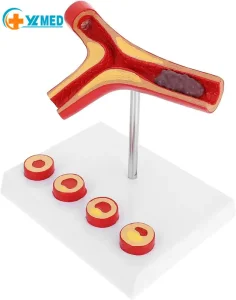
Wholesale Human Atherosclerosis Cardiovascular Medical Model Blood Vessel Anatomical Model Medical Teaching Supplies for School Students Pricelist, Quotes
View Product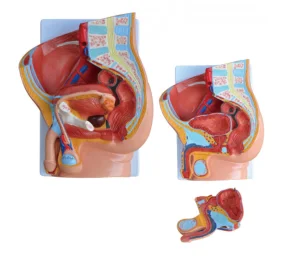
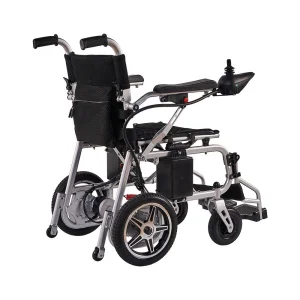
Wholesale High Power Lightweight Carbon Steel Electric Wheelchair Disc Brake Class II Adjustable Foldable Walker Rollator-Factory Direct Manufacturers, Factories
View Product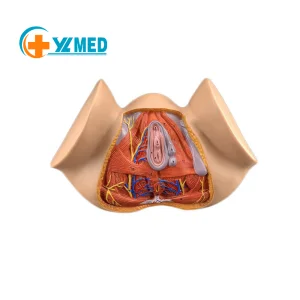
Wholesale Factory Price Human Anatomical Model for Uterus Medical Science Torso Model Educational Female Perineum Model Manufacturer, Service
View Product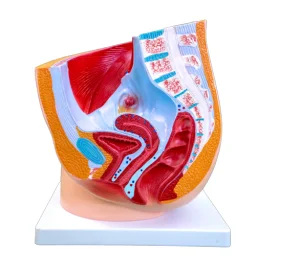
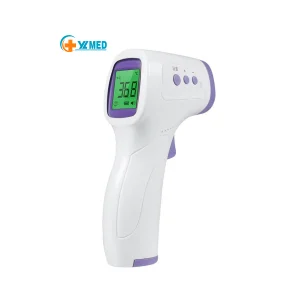
China Medical grade electronic temperature gun factory straight hair handheld electronic temperature measurement Factories, Service
View Product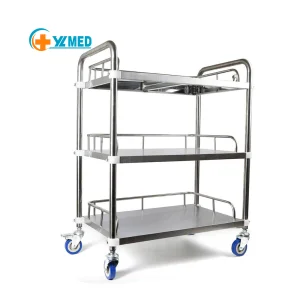
China Light and Strong Hospital Patient Trolley Nurse Dental Surgery Trolley Beauty Equipment Three-Layer Stainless Steel Treatment Pricelist, Quotes
View Product