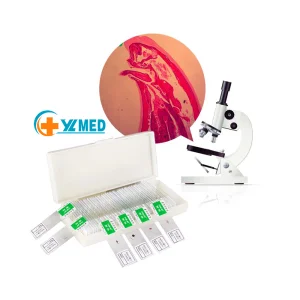
ODM · OEM · ISO 9001 Since 2008 · Factory Since 1958
ODM Anatomical Model Quotes & Service
Factory-direct anatomical models, medical teaching simulators, dental tools and hospital equipment for distributors, universities, simulation centres and healthcare groups worldwide. One accountable manufacturer, one quality system and one export contact for mixed-category sourcing.
Top product selection
Featured ODM Anatomical Model Quotes & Service Products
The first eight products below show the practical breadth of a single-source ODM order: anatomy and parasitology teaching models, dental equipment, surgical accessories, emergency devices, hospital equipment and specialty training products. Every image and product URL is retained so procurement teams can request specifications, packaging options and a formal quotation directly.
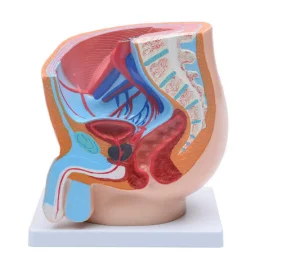
China Male sagittal anatomical model (1 piece) Manufacturers, Pricelist
Request ODM Quote & Service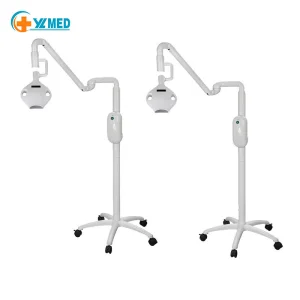
ODM Three-dimensional dental cold light tooth whitening instrument oral beauty tooth instrument beauty dental chair LED beauty tooth Manufacturers, Factory
Request ODM Quote & Service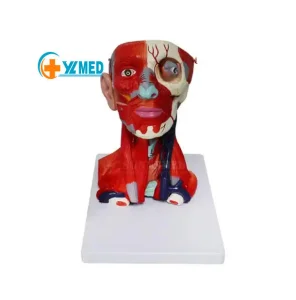
China Human Head and Neck Muscle Blood Vessel and Brain Model PVC Material Head and Face Anatomy Model with Brain Manufacturers, Pricelist
Request ODM Quote & Service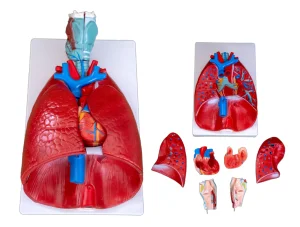
China Human anatomical laryngeal, heart, and lung models Manufacturer, Factories
Request ODM Quote & Service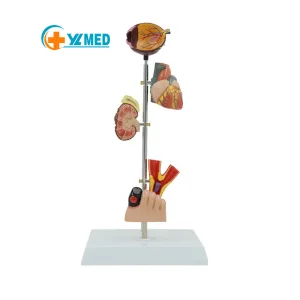
ODM Medical Science Diabetic Foot Anatomical Model Show Patterns of Diabetes Including Pathological Organ Patterns Manufacturers, Factory
Request ODM Quote & Service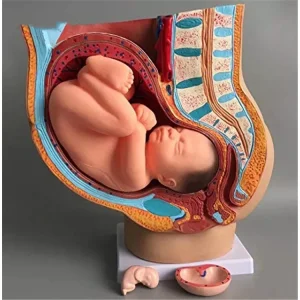
ODM Medical teaching, Female human sagittal anatomical model (4 pieces) Manufacturer, Manufacturers
Request ODM Quote & Service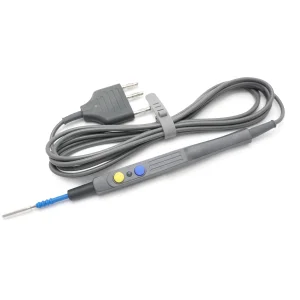
Wholesale Surgical accessories: Disposable electrosurgical pen, Reusable ESU pen-shaped electrocautery device, Pen-shaped surgical instruments Manufacturers, Factories
Request ODM Quote & Service
Semantic search intent
ODM Anatomical Model Quotes & Service: The Complete Buyer's Guide
ODM anatomical model quotes and service are not simple price lists. For distributors, medical universities, hospital groups and government procurement teams, the quotation is the first technical and commercial checkpoint in a longer decision: can the supplier interpret the learning objective, recommend the right anatomical model, document the material and finish, protect the product during export and support replacement parts after delivery? A high-value ODM quote answers those questions before the buyer asks.
Yulin Medical, operated by Henan Yulin Edu. Project Co., Ltd., has manufactured educational and medical training equipment in Xinxiang, Henan, China since 1958. The company has held ISO 9001 certification since 2008 and manages more than 200 professional staff, RMB 120 million registered capital and ten product lines. That combination matters in anatomical model procurement because buyers can combine anatomy models, CPR manikins, dental tools, biology prepared slides, hospital furniture and instruments in one shipment, under one quality system and with one accountable export contact.
The search phrase "ODM anatomical model quotes & service" combines three buying intents: product specification, commercial quotation and long-term service capability. The strongest supplier response therefore needs to be technical, commercial and operational at the same time.
Who this guide is written for
This guide is for importers comparing Chinese factories, distributors preparing private-label catalogues, universities responding to accreditation requirements, hospitals standardising patient-education materials and tender teams that need complete documentation. It also supports buyers who already have a target price but need to understand where cost, quality and lead time interact. A model that looks similar in a photo may differ in PVC formulation, paint durability, detachable-part tolerance, numbering accuracy, base stability and carton protection. Those details decide whether an anatomy model survives daily classroom use.
The practical recommendation is to treat every quote as a mini project brief. Ask the factory to map the model to the learner level, confirm the anatomical structures included, define the label language, state the material, show the packaging method and explain the after-sales replacement route. When those points are written into the quotation, procurement risk falls sharply and internal approval becomes faster.
What a strong ODM response should include
1
Recommended model numbers with anatomy coverage and learner level
2
Material, finish, labelling and detachable-part specification
3
MOQ, sample cost, tooling or artwork charge and quotation validity
4
Packaging, carton dimensions, gross weight and export protection
5
Lead time, inspection method and documents for tenders
6
After-sales parts, manuals and named export contact
ODM vs OEM
What ODM Quotes and Service Really Mean for Anatomical Models
Original Design Manufacturing gives the factory a wider role than simple production. The supplier helps define the platform, material, tooling, packaging and product presentation while the buyer retains brand ownership and market responsibility.
Technical Scope
Define the anatomical region, detachable parts, numbering system, label language, base type and intended learner level before a price is fixed.
Commercial Clarity
Show unit price, MOQ, sample fee, tooling, packaging, Incoterm, lead time, payment term and quotation validity without hidden assumptions.
Customization Control
Confirm logo, colour, base, numbering, carton artwork, instruction manual and private-label presentation before mass production begins.
Service Loop
Assign one contact for samples, QC photos, shipping documents, tender clarifications and after-sales replacement parts.
Industry trends
Anatomical Model Industry Trends Driving Better Procurement
Anatomical models are moving from static classroom demonstration toward task-based simulation, hybrid teaching and evidence-based procurement. Buyers increasingly evaluate the model as part of a learning system, not as an isolated object.
Hybrid Anatomy and Digital Labels
Instructors combine physical models with digital quizzes and augmented anatomy. Models with clear numbering, removable parts and stable landmarks remain easier to integrate into hybrid lessons.
Material Realism and Durability
PVC, silicone, resin and composite materials are selected according to realism, cleaning routine, repairability, weight and budget. The lowest unit price can become expensive if paint wears quickly.
Modular Task-Specific Design
Schools increasingly prefer modular organ sets, regional anatomy models and task trainers that can be replaced or expanded without buying a complete torso again.
3D Printing and Rapid Iteration
3D modelling and rapid prototyping shorten sample development for custom pathologies, dental models and specialty training products, especially for distributor-owned brands.
Infection-Control-Friendly Surfaces
Anatomy and nursing models are shared assets. Smooth surfaces, sealed paint, detachable parts and cleanable bases reduce contamination risk and extend service life.
Sustainability and Local Content
Tenders increasingly ask about packaging reduction, material declarations and long-life spare parts. A factory that documents these points can be easier to approve than a pure trading intermediary.
Global procurement demand
Global Enterprise Procurement Demand: Who Buys and Why
Demand for anatomical models is expanding beyond traditional medical schools. Nursing colleges, dental schools, emergency training centres, hospitals, rehabilitation providers, science museums and education distributors now purchase simulation and anatomy products with different documentation and packaging expectations.
Universities and Simulation Centres
Need consistent anatomical accuracy, numbered structures, replaceable parts and clear teaching notes. Accreditation and curriculum mapping influence purchase decisions.
Distributors and Tender Specialists
Require private label, stable carton artwork, product photography, MOQ flexibility, quotation support and documentation that can be attached to public tenders.
Hospitals and Patient Education Teams
Use anatomy models for informed consent, patient communication, clinical training and health promotion. Portability, visual clarity and cleaning matter more than advanced dissection detail.
Dental, Nursing, TCM and Emergency Programs
Need specialty models and task trainers that reflect local curricula, from dental colour comparison and acupuncture pads to CPR, diabetic foot and endocrine demonstration sets.
China Factory 4.0
China Factory 4.0: Supply Chain Resilience and Efficiency Advantages
Factory 4.0 in medical teaching equipment is not only automation. It is the combination of digital design, mould discipline, supplier depth, process documentation and export coordination. For buyers, these capabilities reduce sample cycles, stabilise repeat orders and make mixed-category shipments practical.
Industrial Cluster Depth
Henan and the wider manufacturing network provide access to moulding, painting, metalwork, packaging, electronics and textile accessories. This supports one-stop sourcing across ten product lines.
ISO 9001 Process Control
A documented quality system supports incoming material checks, production inspection, final testing, packing verification and corrective action on repeat orders.
Digital Design to Sample Loop
3D modelling, artwork files, label checks and sample photos shorten the path from an ODM idea to a buyer-approved product and packaging set.
Mixed-Container Efficiency
Buyers can combine anatomy models, dental equipment, hospital furniture and training kits in one shipment, reducing freight complexity and supplier management cost.
 Headquarters and factory, Xinxiang, Henan
 Production workshop for teaching and anatomy models
 Bulk orders prepared for export shipment
Market context
Global Commercial and Industrial Status: A More Demanding Market
Global buyers now expect the responsiveness of a local partner and the cost efficiency of a factory. Freight volatility, currency movements, tender deadlines and regulatory documentation make total landed cost more important than unit price alone. A supplier that can consolidate multiple product lines, provide clear packing data and respond to technical questions quickly becomes more valuable than a lower-price intermediary that disappears after shipment.
The commercial pressure is visible on both sides. Distributors need products that photograph well, pack safely and carry their own brand. Universities need repeatable quality across batches so that instructors can teach the same anatomy year after year. Hospitals need simple, durable models for patient communication. Government buyers need consistent documentation and dependable delivery schedules. These different expectations can be served through a structured ODM quote process that separates platform cost from customization cost.
Industrial capability also matters. A factory with long operating history, supplier depth and controlled processes can protect supply during material shortages or shipping disruption. A manufacturer that has survived six decades has learned to manage product transitions, tooling changes and repeat buyer expectations. Yulin Medical's history since 1958 and ISO 9001 certification since 2008 provide a practical foundation for that kind of continuity, while ten product lines enable mixed-category orders.
Illustrative procurement evaluation weighting based on common ODM sourcing priorities; it is not a market forecast or third-party statistical dataset.
Procurement triggers in 2025 and beyond
01
Accreditation and curriculum renewal in medical and nursing schools
02
Expansion of simulation laboratories and emergency training programmes
03
Ageing populations and stronger demand for patient education at hospitals
04
Distributors adding private-label catalogues with local language packaging
05
Tender requirements for documentation, consistent quality and delivery certainty
06
Buyers consolidating several product categories into fewer suppliers
Local application scenarios
Localized Application Scenarios That Shape Product Selection
Anatomical model requirements differ by market. A model that serves a European medical school, a Middle East hospital group, an African community health programme or a Southeast Asian dental school may look similar online but need different labelling, packaging and service assumptions.
Europe: University Anatomy Laboratories
Numbered structures, accurate landmark placement, detachable organ sets and documentation for internal procurement. Buyers often ask for material declarations and consistent batch quality.
Middle East: Hospital Groups and Tenders
Bilingual labels, strong export packing for high temperatures, complete tender documents and reliable delivery schedules are often more important than elaborate product variation.
Africa: Community Health and Training Centres
Durable CPR and anatomy models with simple maintenance, visible landmarks and replacement parts. Training programmes often value long service life and ease of cleaning.
Southeast Asia: Dental and Clinical Training
Dental colour comparison tools, whitening units, mobile X-ray equipment and head-and-neck anatomy models are combined with local voltage and plug requirements.
Latin America: Distributor Catalogues
Private-label catalogues, Spanish or Portuguese packaging, mixed orders and consolidated shipping help distributors serve schools, clinics and hospitals from one warehouse.
North America: Simulation and Skills Labs
Task trainers, realistic tissue feel, cleaning protocols, user manuals and replacement components matter for repeat programmes in nursing, emergency medicine and allied health.
Information gain
How to Evaluate an ODM Anatomical Model Quote: A Buyer Checklist
A useful quotation should make comparison easy. If every supplier sends a different format, procurement teams cannot see the real cost difference. Use the following checklist to normalise offers and protect quality.
Total Landed Cost
Compare unit price, packaging, carton volume, gross weight, freight, insurance, duties and bank charges. A lower unit price can raise total cost if the carton is inefficient.
Bill of Materials and Finish
Ask for the main material, paint system, base material, metal fittings and cleaning guidance. For anatomy models, material choice affects weight, realism and service life.
Customization Before Production
Lock logo, numbering, label language, base colour, user manual, carton artwork and private-label information in a signed sample or approval sheet.
Inspection and AQL
Specify appearance, structure, detachable parts, paint adhesion, accessory completeness and packing check. Ask for QC photos before cartons are sealed.
Documents for Tenders
Request ISO 9001 evidence, product specifications, packing lists, proforma invoice data, warranty terms and any product-specific declarations available for your market.
Lead Time and Warranty
Separate sample lead time, production lead time, inspection time and shipping time. Confirm what happens if parts arrive damaged or if an instructor needs a replacement component.
PVC Models
Widely used for torso, organ and head models. Good balance of cost, paint detail and durability when stored and cleaned correctly.
Silicone Models
Useful for realistic tissue feel, suturing pads, skin simulation and products requiring flexibility. Higher material cost but strong training value.
Resin and Composite
Selected for high-detail anatomical structures, dental models and durable demonstration pieces where surface finish is important.
3D-Printed Prototypes
Best for custom pathology, rapid sample iteration and low-volume specialty models before mould or production decisions are made.
RFQ data package: what to send for a faster ODM quote
1
Product type, reference image or model number
2
Target quantity for first order and annual repeat demand
3
Destination country, port or door address and preferred Incoterm
4
Label language, numbering style, manual and packaging requirements
5
Voltage, plug type and accessory requirements for electrical products
6
Tender deadline, sample deadline and required documents
7
Private-label logo files, colour references and carton artwork
8
Inspection standard, warranty expectation and after-sales needs
E-E-A-T manufacturer profile
Yulin Medical: Six Decades of Experience, Authority and Reliability
Henan Yulin Edu. Project Co., Ltd. was founded in 1958 and has grown into a manufacturer that integrates scientific research, production and sales of educational and medical equipment. The company's motto, quality first, service first, is supported by an ISO 9001 quality management system certified since 2008, more than 200 professional staff, RMB 120 million registered capital and a base at No. 8, Daoqing Road, Industry Park, Hongqi District, Xinxiang, Henan, China.
For overseas buyers, the value is not only the age of the factory. It is the ability to manage development, manufacturing, inspection and export from one organisation while coordinating a stable network of long-term partner factories for one-stop orders. That model supports distributors who need mixed categories, universities that need documented teaching products and hospitals that need practical equipment delivered on schedule.

Years of Manufacturing
Professional Staff
Registered Capital (RMB)
Product Lines
Reply Commitment
2008ISO 9001 Certified Since
24/7 Responsive Service
The export team is online seven days a week and typically replies within 24 hours with catalogues, specifications and shipping options, whatever the buyer's time zone.
Design and Packaging Team
In-house specialists develop private-label packaging, product presentation and brand materials that increase shelf appeal and resale value for distributors.
Professional Expertise
The team combines category knowledge in anatomy, nursing, dental, laboratory and hospital equipment with ISO 9001 process control and export experience.
60+ Years of Supply Stability
A long factory history and integrated partner supply chain help meet one-stop demands, stabilise repeat orders and keep lead times more predictable.
One-stop sourcing
Complete Product Categories for Medical Education and Clinical Use
Ten specialised product lines let procurement teams source simulation, laboratory and hospital equipment from one accountable manufacturer instead of managing multiple suppliers. All original category links are retained below.
01
Anatomy Models
Torso, organ, heart, brain and muscle models with numbered structures for lectures and patient education.
02Biology Prepared Slides and Accessories
Histology, botany and zoology prepared slides plus storage and microscope accessories for biology labs.
03Dental Tools and Equipment
Dental teaching models, clinic lights, LED whitening units and endodontic instruments for training and practice.
04General Teaching Models
Science demonstration models for primary schools, secondary schools and education equipment tenders.
05Hospital Furniture and Equipments
Stainless steel examination couches, stretchers, walkers and shower chairs built for daily clinical use.
06Hospital Machine and Tools
Diagnosis and treatment devices and practical tools for wards, clinics and emergency departments.
07Medical Apparatus and Instruments
Emergency splints, extrication devices, cervical traction and rehabilitation instruments.
08Medical Nursing Model
Adult, child and neonatal CPR manikins, ACLS simulators and AED trainers for skills assessment.
09Skeleton Models
Life-size and desktop skeletons, skulls, spines and joint models for osteology teaching.
10Suture Pads and Kits
Realistic skin suture pads and complete instrument kits for surgical and wound-closure practice.
How we work
A Transparent Five-Step ODM Quote and Service Process
From first conversation to delivery, every stage has a clear output. This helps buyers plan stock, tenders and training schedules with fewer surprises.
01
Share Requirements
Send product types, quantities, target market, label language, voltage needs and any tender or certification requirements.
02
Catalog and Proposal
Receive matched models, specifications, packaging options, MOQ and shipping suggestions with a clear commercial format.
03
Sample Evaluation
Test samples with instructors or clinicians, approve logo, colour and packaging, and lock the golden sample before bulk production.
04
Production and QC
Manufacturing and inspection follow the ISO 9001 quality management system, with QC photos and packing checks before shipment.
05
Export and Support
Protective export packing, delivery coordination, shipping documents and responsive after-sales service for repeat programmes.
Practical insights
News and Practical Insights from Our Specialists
Exhibition updates and hands-on guidance written by the team that designs, produces and exports medical teaching products.

Do You Really Know How to Observe Biological Prepared Slides?
Many plant and animal cell structures can only be studied under a microscope, which makes prepared biological slides essential in every biology lab. Our specialists explain how to handle, focus and store slides correctly so students see clearer detail and slide sets last longer.

The 5th Henan Provincial Educational Equipment Expo Concludes Successfully
Themed “Digital Leading Innovation and Development”, the expo reached a record 50,000 m² with more than 600 brands and 10,000 products on display, showcasing the latest educational equipment and training solutions.

Inside Our Product Showroom
A look at the medical teaching models and training equipment buyers can inspect in person when visiting the Xinxiang facility, from anatomy and nursing models to dental and hospital equipment.
Buyer FAQ
Frequently Asked Questions About ODM Anatomical Model Quotes & Service
Straight answers to the questions procurement managers, distributors and teaching institutions ask most before placing a first or repeat order.
Is Yulin Medical a manufacturer or a trading company?
Yulin Medical is a manufacturer. Henan Yulin Edu. Project Co., Ltd. was founded in 1958 and operates its own factory in Xinxiang, Henan, China, with more than 200 professional staff. For one-stop orders, the company also coordinates a stable network of long-term partner factories.
What quality certification does Yulin Medical hold?
The quality management system has been ISO 9001 certified since 2008. Product-specific documentation can be provided on request to support tenders and import registration where available.
Do you support OEM, private label and custom packaging?
Yes. The in-house design team develops private-label packaging and product presentation for distributors, helping increase shelf appeal and resale value in the target market. Logo, colour, label language, manual and carton artwork can be reviewed before production.
How do I choose the right CPR training manikin?
Start with the learner group: adult, child or neonatal. Then check that real-time feedback covers compression depth, compression rate and ventilation volume; confirm alignment with current AHA resuscitation guidelines; and decide whether your courses need AED trainer integration. For advanced life-support programmes, an ACLS simulator with embedded scenarios offers more assessment value than a basic torso.
How quickly will I receive a reply?
The export team is online seven days a week and typically replies within 24 hours with catalogues, specifications and shipping options.
What information is needed for an anatomical model ODM quote?
Send the product type, reference image or model number, target quantity, destination country, label language, packaging requirement, tender deadline and any documentation needs. For custom models, include drawings, dimensions, anatomy coverage and the expected learner level.
Which materials are used for anatomical models?
Common materials include PVC, silicone, resin and composite materials. PVC is widely used for torso and organ models; silicone is useful for realistic tissue feel and training pads; resin and composite materials are selected for high-detail structures. The best choice depends on realism, cleaning, weight, repairability and budget.
Can models be customized with numbers, logos or local-language labels?
Yes. Numbering, label language, base colour, logo placement, user manual and packaging can be customised subject to model structure and order quantity. A sample or artwork approval should be completed before mass production.
What is the MOQ and lead time?
MOQ and lead time depend on the product, customisation level, packaging and order mix. A mixed-category order may have different production times by item. The quotation should state sample lead time, production lead time, inspection time and estimated shipping time separately.
Do you provide samples, QC photos and export packing?
Yes. Samples can be arranged for evaluation. Before shipment, QC photos and packing checks can be provided according to the agreed inspection standard. Export packing is designed to protect products during multiple handling stages and mixed-container shipments.
How do you support tenders and import registration?
Support can include product specifications, packing data, proforma invoice information, ISO 9001 evidence and other available documents. Buyers should confirm the exact document list required by their tender authority or import regulator before ordering.
How do you protect quality and supply on repeat orders?
Repeat orders are supported by approved samples, product specifications, material records and ISO 9001 process control. For long-term distributor programmes, packaging artwork and inspection criteria can be archived to reduce variation between batches.
More products
More ODM Anatomical Models, Dental Tools and Hospital Equipment
The second group of eight products supports buyers consolidating anatomy, dental, hospital, emergency and training equipment into one shipment. Combine these items with the featured models above to reduce supplier management and shipping complexity.
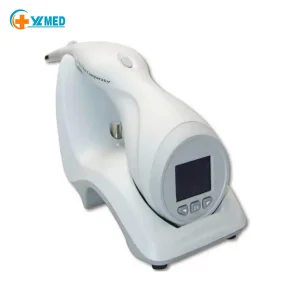
OEM Dental colorimeter dental colorimeter dental computer digital colorimeter colorimetric lamp whitening instrument tooth cleaning Manufacturer, Factories
Request ODM Quote & Service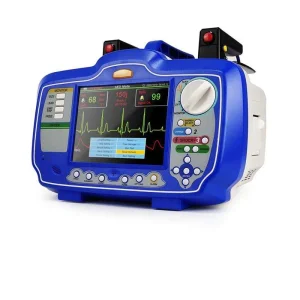
Wholesale High Quality Hospital Heart Pacemaker Portable Emergency Defibrillation Apparatus for ICU Manufacturer, Factories
Request ODM Quote & Service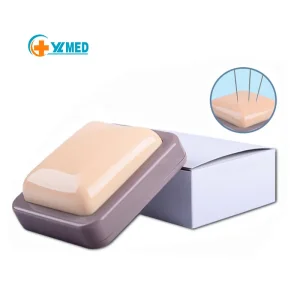
China Medical Student Exercises Beginner Acupuncture Training Model Simulation Human Skin Silicone Training Pad Manufacturer, Factories
Request ODM Quote & Service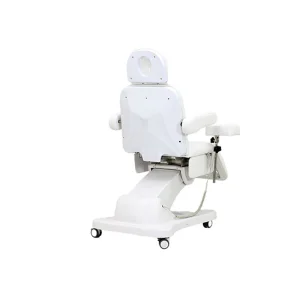
China Best Selling Factory Supply Professional 4 Motor Electric Gynecological Chair Obstetric Examination Medical Operation Bed Manufacturer, Service
Request ODM Quote & Service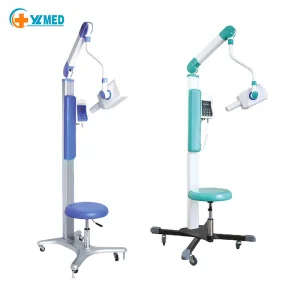
ODM Dental mobile X-ray machine dental radiography machine dental equipment Magnolia officinalis vertical X-ray machine Manufacturers, Factories
Request ODM Quote & Service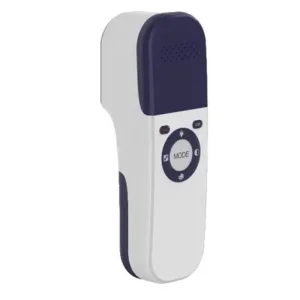
China Medical LED vein finder, vein illuminator equipment Manufacturer, Quotes
Request ODM Quote & Service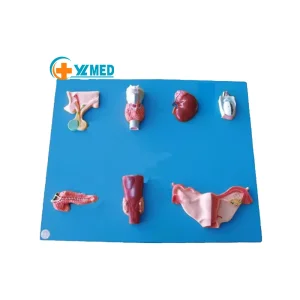
ODM Educational Adhesive Medical Science Anatomical Model Human Endocrine Organ Hypophysis Thyroid Testis Science Demonstrations Manufacturers, Quotes
Request ODM Quote & Service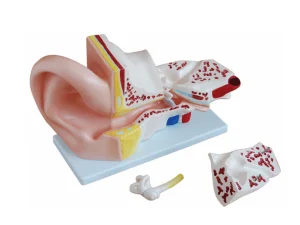
China Anatomical model of the big ear Factories, Pricelist
Request ODM Quote & Service
Talk to the export team
Request ODM Anatomical Model Quotes & Service
Send your target market, product list, quantities, label language and certification requirements. The team will recommend suitable models, share specifications, confirm customization options and propose an economical shipping plan for a mixed-category order.
Direct Channels
Email
[email protected] Phone
0086-13503800666 WhatsApp
+86 135 0380 0666
[email protected] Phone
0086-13503800666 WhatsApp
+86 135 0380 0666
Address
No. 8, Daoqing Road, Industry Park, Hongqi District, Xinxiang, Henan, China