China Tabletop Autoclave Manufacturer & Manufacturers
A procurement-grade, E-E-A-T-led guide to Class N, Class B and Class S benchtop steam sterilizers from China — covering macro industry solutions, global commercial conditions, localized support and compliance assurance, application scenarios, technical roadmaps, manufacturer due diligence and buyer Q&A.
Featured Products Immediately Below the Banner
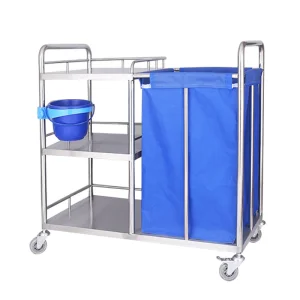
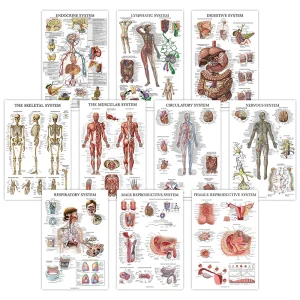
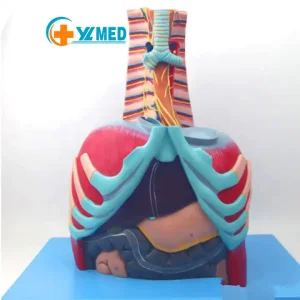
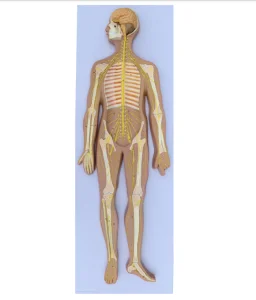
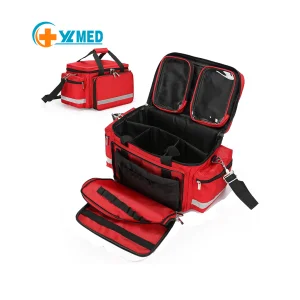
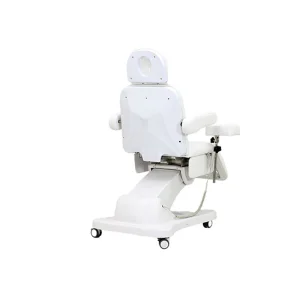
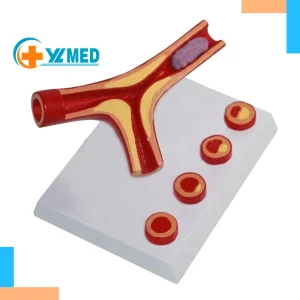
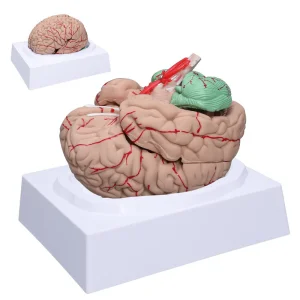
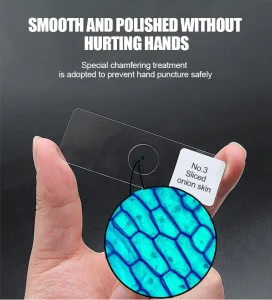
These first eight products belong to the wider Yulin Medical portfolio that clinics, dental groups, laboratories, distributors and hospital projects often evaluate alongside sterilization equipment. Original product images, product names and product URLs are retained exactly for direct inquiry.


Why Tabletop Autoclave Sourcing Is Now a Risk-Managed Decision
A benchtop sterilizer is no longer purchased as a simple accessory. It is a validated workflow asset that influences infection control, instrument turnaround, staff safety, tender compliance and the total cost of ownership.
China tabletop autoclave manufacturer search demand is expanding because dental clinics, community hospitals, laboratories, veterinary practices, ophthalmology units, aesthetics businesses and public-health programmes need compact steam sterilization capacity close to the point of use. A 12 L, 18 L or 23 L benchtop autoclave may appear to be a compact stainless-steel chamber with a control panel, but its real performance depends on pressure-vessel integrity, vacuum control, temperature distribution, water quality, door-seal design, validation documentation and operator training.
For professional buyers, the phrase is not only a price query. It is a search for a reliable manufacturing partner that can provide consistent cycles, traceability, labelling, multilingual instructions, spare parts and after-sales support. That is why the strongest sourcing strategies compare evidence, not adjectives: test reports, pressure-vessel records, cycle data, complaint handling, change-control procedures and local service capability.
Yulin Medical’s perspective is shaped by more than six decades in medical and educational equipment manufacturing. Henan Yulin Edu. Project Co., Ltd. was founded in 1958 and has operated an ISO 9001 quality management system since 2008. That background informs this white-paper guide, which is designed to help distributors, procurement teams and clinical operators evaluate tabletop autoclave programmes with greater technical and commercial confidence.
What “China Tabletop Autoclave Manufacturer & Manufacturers” Really Means
The query combines transactional sourcing intent, technical validation intent and compliance-led research. A page that only repeats “factory price” misses the deeper semantics that procurement teams actually assess.
Transactional sourcing intent
Buyers ask for MOQ, FOB or CIF pricing, lead time, chamber sizes, carton dimensions, private label, warranty and payment terms. They want a factory that can quote clearly and ship predictably.
Technical validation intent
Clinical buyers compare Class B vacuum cycles, wrapped and hollow loads, drying performance, water consumption, cycle charts, chamber capacity and usable tray dimensions.
Compliance-led procurement
Tenders and import registration require CE MDR evidence where applicable, EN 13060 performance data, IEC electrical safety documentation, pressure-vessel records and UDI-ready labelling.
Localized support intent
Importers need the correct voltage, plug, language, installation guidance, spare-part list, consumables, training materials and a practical plan for local service escalation.
Semantic search rewards pages that answer the full buying journey. A serious manufacturer page should not just say “we are a factory.” It should prove how the factory controls pressure, vacuum, temperature, documentation and service. It should explain the difference between Class N, Class B and Class S sterilizers, and it should help a distributor understand local registration before the first purchase order is signed.
Related semantic terms that matter in this category include benchtop autoclave, dental sterilizer, 12 L tabletop autoclave, 18 L Class B autoclave, 23 L laboratory autoclave, vacuum pump, wrapped instrument sterilization, hollow load, Bowie-Dick test, biological indicator, EN 13060, ISO 17665, pressure vessel traceability, OEM private label, wholesale factory price and local after-sales support. Used naturally, these terms help Google and human buyers understand the page’s topical depth without keyword stuffing.
Tabletop Autoclave Fundamentals: Class N, Class B, Class S and the Standards That Matter
The sterilizer class must match the real load. A low-cost cycle that is correct for one clinic may be unsuitable for another clinic’s wrapped, hollow or porous instruments.
Class N sterilizers
Generally intended for non-wrapped solid instruments. They are common in small clinics, podiatry, veterinary and basic procedure rooms. Buyers must confirm that the load list excludes wrapped, hollow or porous items.
Class B sterilizers
Use forced-air removal and vacuum-assisted cycles for wrapped solid, hollow and porous loads. They are widely specified for dental, implant, ophthalmic, surgical and hospital instrument workflows where packaging is routine.
Class S sterilizers
Designed for specific load types defined by the manufacturer. They can be efficient where the clinic’s instrument mix is stable, but the buyer must not assume that a Class S unit can process every wrapped or hollow load.
Standards and evidence stack
Key references include EN 13060 for small steam sterilizers, ISO 17665 for moist-heat sterilization processes, IEC 61010-2-040 for sterilizer safety, plus pressure-equipment and medical-device rules applicable in the destination market.
A tabletop autoclave can be safe only when the load matches the validated cycle. Buyers should send the manufacturer a realistic load list: solid instruments, handpieces, cassettes, wrapped packs, hollow tubes, porous materials, liquids or waste. The manufacturer should then recommend a chamber size, cycle profile, rack configuration and routine monitoring plan. Validation is a process, not a brochure claim.
Where Tabletop Sterilizers Create Operational Leverage
Benchtop autoclaves deliver value when they are matched to the workflow around them: instrument volume, packaging, turnaround time, staff competency and documentation.
Dental and oral surgery
Handpieces, cassettes, implant kits and wrapped packs require reliable vacuum cycles, drying and traceability. Fast turnaround supports same-day dentistry without compromising sterility assurance.
Community and primary care
Wound care, minor surgery and examination instruments need simple, repeatable cycles with clear operator prompts. Right-sized benchtop units reduce outsourcing and improve clinic autonomy.
Laboratory and research
Media preparation, glassware and waste decontamination require documented cycles and consistent steam quality. A tabletop unit can extend laboratory capacity without a central sterilization plant.
Veterinary clinics
Surgical instruments, drapes and dental tools create mixed loads. Veterinary buyers value robust construction, straightforward maintenance and fast access to gaskets, filters and trays.
Tattoo, piercing and aesthetics
Reusable tools and wrapped items demand class-appropriate cycles and local compliance. Operators need clear loading rules, water quality guidance and routine indicator records.
Ophthalmology and ENT
Delicate wrapped instruments benefit from controlled vacuum, gentle drying and correct tray protection. Small chambers can support rapid specialty turnover in outpatient settings.
Emergency and field clinics
Rapid deployment, tolerant electrical design and a compact footprint matter in temporary facilities. Training and simple maintenance procedures are as important as cycle speed.
Education and simulation
Medical and nursing schools run multiple small loads for training models and instruments. Equipment should pair easily with teaching models, first-aid supplies and skills laboratories.
A More Demanding Import Market for Benchtop Steam Sterilizers
Global demand is rising, but purchasing criteria are shifting from lowest initial price to total cost of ownership, documented performance and reliable local support.
Tabletop autoclave demand is supported by several long-term trends: an ageing population, expansion of outpatient and same-day procedures, stronger infection-prevention expectations, growth in dental and veterinary services, laboratory decentralisation and increasing regulation of reusable medical instruments. In many markets, a compact sterilizer is the first piece of validated processing equipment a clinic installs, making education and after-sales support part of the product itself.
China remains one of the most integrated manufacturing environments for medical equipment because component supply, electronics, stainless-steel fabrication, pressure-equipment expertise, packaging and export logistics are concentrated within a mature supplier ecosystem. That does not mean every quotation is equivalent. Serious importers now separate low-documentation offers from manufacturers that can provide pressure-vessel traceability, type-test evidence, electrical safety files, cycle validation data, labelling controls and change notification.
Regulatory expectations vary by market. The European Union may require CE marking under MDR 2017/745 where the device is within scope, together with EN 13060 evidence and pressure-equipment assessment where applicable. The United States may require FDA clearance for certain medical-device claims, while Canada, Australia, Brazil, the Middle East, Southeast Asia and Africa each maintain their own registration and import pathways. Buyers should confirm the classification of the exact model and intended claim before committing to volume.
Illustrative procurement weighting based on typical buyer inquiry patterns; not a statistical market forecast.
From Plug Type to Post-Market Surveillance
Localization is not only translation. It is the engineering, documentation and service adaptation that makes a China-made tabletop autoclave usable and auditable in the destination market.
Electrical configuration
Confirm 110–120 V/60 Hz or 220–240 V/50 Hz, plug type, circuit protection, voltage tolerance and surge protection. High- and low-voltage variants should be documented, not improvised.
Water and steam quality
Feed-water hardness, conductivity and contamination affect scale, sensors and chamber life. Specify filtration, water-quality limits, drain conditions and cleaning frequency for local utilities.
Language and instructions
Operator manuals, error messages, labels, training slides and logbook templates should use the buyer’s required language and terminology, with controlled revision numbers.
Documentation package
Request the declaration of conformity where applicable, test reports, cycle validation evidence, material certificates, pressure-vessel records, UDI or labelling data, packing list and change-control policy.
Local regulatory support
A manufacturer should help distributors compile technical files and identify gaps for EU MDR, FDA, UKCA, TGA, Health Canada, ANVISA, SFDA or other local pathways. Legal responsibility remains local.
Spare parts and service
Door gaskets, filters, solenoid valves, vacuum pumps, sensors, trays and printers should have defined part numbers, lead times and replacement instructions. Local stock reduces downtime.
Installation and training
Commissioning should cover placement, utilities, chamber loading, cycle selection, indicator use, documentation and competency checks. A trained operator is part of the sterilization system.
Post-market surveillance
Complaint handling, corrective and preventive action, field safety notices, traceability and periodic review are indicators of a mature manufacturer. They protect the distributor’s reputation.
Matching Cycles, Utilities and Service to Real Regional Workflows
The same tabletop autoclave model may need different documentation, voltage, water treatment and service planning in different markets.
MDR readiness and EN 13060 evidence
Dental practices, clinics and laboratories often expect CE MDR documentation where applicable, EN 13060 type testing, 230 V/50 Hz configuration and instructions in the local language. Distributors increasingly audit technical files before placing annual orders.
120 V/60 Hz dental and clinic workflows
Voltage, plug, electrical safety evidence, FDA status where required and local service response are central. Private dental groups may standardize a compact Class B unit across many offices and expect consistent training and spare-part planning.
Tender documentation and high ambient temperature
Public tenders may require detailed technical files, English or Arabic labels, 230 V/50 Hz design and robust performance in high ambient temperatures. Service partners and guaranteed spare-part availability carry significant weight.
Humidity, power stability and distributor service
Tropical humidity, variable water quality and occasional power instability make filtration, drainage, surge protection and local troubleshooting important. Distributors often need compact models for clinics with limited space.
Registration, language and high-altitude considerations
Spanish or Portuguese manuals, 127 V or 220 V variants, import registration and altitude-related boiling-point considerations may affect model selection. Local maintenance access is essential for long-term adoption.
Durability, training and low-maintenance operation
Clinics and laboratories may operate with limited technical support. Robust construction, simple error recovery, clear training, consumables planning and a realistic preventive-maintenance schedule are often more valuable than advanced features.
What the Next Generation of Benchtop Sterilizers Will Require
Innovation will matter only if it strengthens repeatable sterilization, operator safety and auditability. Connectivity without validation is not progress.
Digital cycle records and UDI-ready traceability
Expect more demand for exportable cycle logs, operator identification, batch traceability, QR-linked service records and documentation that can be attached to hospital or clinic quality systems.
Remote diagnostics and predictive service
Secure telemetry can help distributors identify sensor drift, water-quality issues, door-seal wear and vacuum-pump trends before a failed cycle disrupts the clinic. Service models must still work offline.
Water and energy efficiency
Lower water consumption, smart standby, improved insulation and heat recovery will appeal to clinics with sustainability targets. Efficiency claims should be measured against validated cycle performance, not marketing estimates.
Cybersecurity and secure firmware updates
Connected sterilizers require access control, signed firmware, audit logs and clear data ownership rules. Hospital IT and quality teams will ask who can change cycle parameters and how changes are controlled.
Modular service architecture and circular design
Replaceable pumps, controllers, valves and chamber components can extend service life and reduce electronic waste. Distributors will favour platforms that are easy to repair and stock locally.
AI-assisted validation and load recognition
Future systems may help operators select cycles or detect load anomalies, but the core principle remains unchanged: validated, repeatable steam sterilization with documented evidence and human accountability.
How to Evaluate a China Tabletop Autoclave Manufacturer: An 8-Point Audit
Use a structured audit rather than a single price comparison. Ask for evidence that can be verified, retained and presented to your own quality or regulatory team.
Quality-management scope
Check ISO 9001 and, where applicable, ISO 13485 certification scope. Confirm that the certificate covers the actual manufacturing site and product category, not simply a trading address.
Pressure-vessel traceability
Request material certificates, weld and inspection records, hydrostatic test evidence and the applicable pressure-equipment conformity route for the destination market.
Performance validation
Review EN 13060 type-test data where relevant, temperature and pressure curves, vacuum leak tests, Bowie-Dick or helix results and the rationale for the declared load types.
Component and software governance
Ask about vacuum pumps, valves, sensors, controllers and firmware control. Confirm change notification, software version control and traceability of critical purchased components.
Documentation and labeling
Verify instructions for use, labels, symbols, serial numbers, manufacturing dates, warnings, maintenance schedules, packaging marks and language requirements before production.
Local service and spare parts
Confirm part numbers, recommended stock, replacement instructions, warranty terms and escalation channels. A fast response plan is more useful than a vague “global service” claim.
OEM and private-label control
Clarify who owns artwork, moulds, labels, firmware configuration and packaging files. Require approval steps, revision control and written rules for changes that affect form, fit or function.
References and transparency
Ask for export references where confidentiality allows, sample inspection reports, audit access, complaint trends and a clear statement of what is manufactured in-house versus coordinated with qualified partners.
A Practical 5-Step Qualification Path for Buyers
A disciplined process reduces sample risk, shortens approval cycles and creates a cleaner audit trail for distributors, hospitals and tender teams.
Share requirements
Send load list, chamber size, voltage, target market, certification needs, annual volume, packaging and expected lead time.
Technical proposal
Match the model and cycle class, review documentation gaps, confirm utilities and agree on acceptance criteria before sampling.
Sample validation
Test representative loads, review cycle records, check build quality and confirm language, labels and spare-part availability.
Production and QC
Approve pre-production documents, inspection plan, packaging and traceability. Request final inspection records before shipment.
Export and support
Coordinate protective packing, documentation, shipping marks, installation guidance, training and after-sales escalation.
Experience, Expertise, Authoritativeness and Trust: The Yulin Medical Operating Base
A manufacturer’s credibility is built through traceable facts, long-term operations, documented processes and the ability to support complex mixed-category orders.
Henan Yulin Edu. Project Co., Ltd. was founded in 1958 and has grown into a medical and educational equipment supplier that integrates scientific research, production and sales. The company operates from No. 8 Daoqing Road, Industry Park, Hongqi District, Xinxiang, Henan, China, with registered capital of RMB 120 million and more than 200 professional employees. Its quality management system has been ISO 9001 certified since 2008, and its operating motto is quality first, service first.
Yulin Medical manages ten product lines: anatomy models, biology prepared slides and accessories, dental tools and equipment, general teaching models, hospital furniture and equipment, hospital machines and tools, medical apparatus and instruments, medical nursing models, skeleton models and suture pads and kits. For international buyers, that breadth creates practical value: a clinic, dental group, medical school or hospital project can consolidate multiple categories into one shipment with one point of contact.
For tabletop autoclave sourcing, this experience supports disciplined documentation, inspection coordination, export packing, multilingual communication and after-sales responsiveness. We recommend that every buyer still verifies the exact sterilization configuration, regulatory status and service plan for the destination market. That transparency is consistent with E-E-A-T: the page should demonstrate real operating experience, technical expertise, authority in the category and trustworthiness in commercial commitments.
Frequently Asked Questions About China Tabletop Autoclave Sourcing
Clear answers to the questions procurement teams ask before sampling, import registration and volume production.
Is Yulin Medical a manufacturer or a trading company?+
What certifications should I request from a China tabletop autoclave manufacturer?+
Which autoclave class should a dental clinic choose?+
How can I validate sterilization performance before a bulk order?+
Can you customize voltage, plug, language and packaging?+
What spare parts and after-sales documents should be included?+
How do I estimate total cost of ownership?
What local regulatory steps are needed before importing?+
Need a Tabletop Autoclave Specification Review or OEM Proposal?
Send your target market, load list, chamber size, voltage, certification requirements, annual volume and preferred packaging. Our export team will reply within 24 hours with a structured configuration and documentation checklist. We can also coordinate related dental equipment, hospital furniture, medical teaching models, emergency supplies and laboratory products from the wider Yulin Medical portfolio.
More Products at the Bottom of the Page
The final eight products complete the original product set supplied for this page. Their titles, images and product URLs are preserved and displayed with button-style product links for straightforward inquiry and internal navigation.