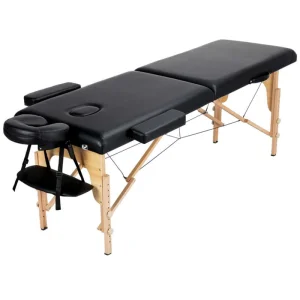
8 Medical Equipment Items Retained from the Original Catalogue
These are the first eight source-list products. The original image URLs, product titles and product URLs are retained, and every product URL is presented with a button-style anchor. For POC-specific sourcing, use the buyer framework below to request POC manufacturer evidence separately.
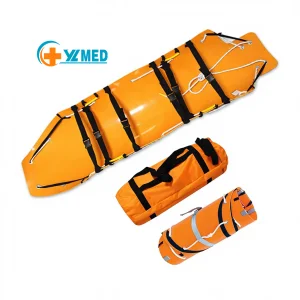
China Portable Folding Stretcher Aluminum Alloy Lightweight Foldable Design for Emergency Rescue and Ambulance Patient Transfer CE/ISO Manufacturer, Quotes
View Product & Quote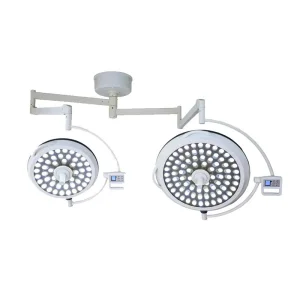
China Hospital with double head LED shadowless lamp Factories, Quotes
View Product & Quote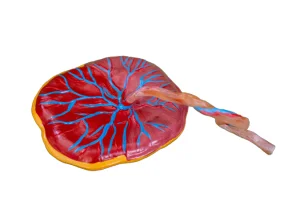
Wholesale Umbilical cord was attached to the placenta model Pricelist, Service
View Product & Quote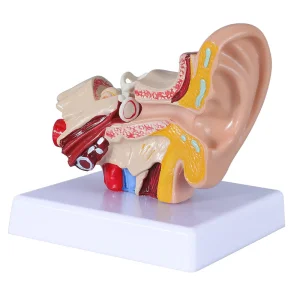
ODM Medical teaching 1.5 times adult ear anatomy model Manufacturers, Pricelist
View Product & Quote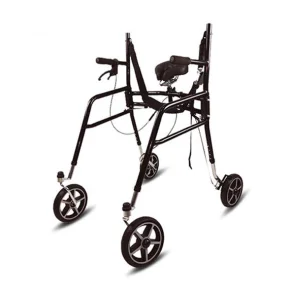
Wholesale Lightweight Adult Walker Height Adjustable Deluxe Walker Rollator Anodized Aluminum Durable Walker for Disabled Manufacturer, Quotes
View Product & Quote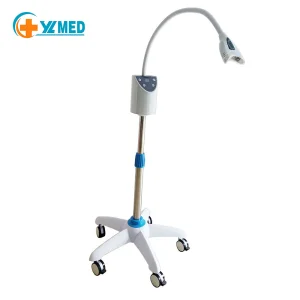
Wholesale Dental cold light column mobile tooth whitening instrument monochromatic blue light dental cleaner clinic equipment Manufacturers, Service
View Product & Quote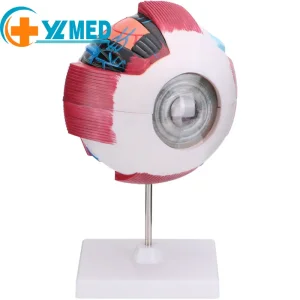
OEM Medical Science Biology 6 times Human eye model Giant eye model Human eye Anatomy Science teaching Medical model Quotes, Service
View Product & Quote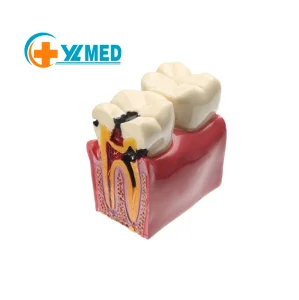
China Dental Caries Teeth Model - Anatomy Education Model Caries Bilateral Comparison Study Model 6 Times Cross-Section Demonstration Model Tooth Decay Props for Science Teaching Factory, Factories
View Product & QuoteA Procurement White Paper for China Portable Oxygen Concentrator (POC) Manufacturers & Service
Portable oxygen concentrators are no longer a niche travel accessory. They sit at the intersection of respiratory care, home medical equipment, emergency preparedness, mobility and industrial safety. For international buyers, the phrase “China POC manufacturers” may describe a finished-device factory, an OEM/ODM assembler, a component integrator, or a trading company with a catalogue. The distinction matters because oxygen therapy products carry clinical risk, market-specific registration duties, battery and altitude performance claims, and after-sales obligations that cannot be solved by a low unit price alone.
Demand is shifting from “device” to “oxygen continuity”
Distributors and providers increasingly evaluate a POC programme by battery availability, cannula and accessory supply, replacement sieve beds, loaner units, service turnaround and patient training—not only by flow rate and price.
Technical ambiguity creates hidden risk
Pulse-dose and continuous-flow configurations are not interchangeable for every patient or use case. Buyers should obtain test evidence for oxygen purity, flow accuracy, trigger sensitivity, battery duration, sound level, thermal behaviour and altitude derating.
Information gain comes from verification
A credible China POC supplier should provide more than a specification sheet: it should explain which claims are tested in-house, which are third-party verified, which are configuration-dependent, and which regulatory documents apply to the exact target market.
Executive summary: how to read the China POC market
The China POC supply chain benefits from mature medical-device manufacturing clusters, strong electronics integration, available compressor and sieve-bed sub-suppliers, and experienced export documentation teams. However, the market is not uniform. A manufacturer that performs well in home-care distribution may not be the best partner for airline-oriented travel devices, ambulance use, high-altitude operations or rental fleets. Procurement should begin with the use case, not the product photo.
For a global distributor, the core question is not “Who can quote the lowest FOB price?” but “Which manufacturer can provide repeatable performance, market-appropriate documentation, spare-parts visibility and a service model that protects the end user?” For a home-care provider, service uptime and patient training may outweigh compactness. For an emergency or industrial buyer, ruggedisation, high-altitude compensation and accessory compatibility may dominate. For a government tender, traceability, testing reports, warranty terms and local registration support often decide the award.
This white paper uses a five-step qualification framework: define the clinical or operational brief; normalise quotations against lifecycle cost; request product and process evidence; validate samples under realistic conditions; and pilot after-sales service before scaling. Each step produces documentation that can be reused for tenders, distributor onboarding and regulatory submissions.
Separate POC capability from general medical-equipment capability
The original supplier profile retained on this page, Yulin Medical, is presented for medical teaching models, hospital equipment and related non-POC products. It should not be treated as evidence that the company manufactures portable oxygen concentrators. For POC sourcing, request POC-specific manufacturing scope, device registrations, test reports and service records from each candidate supplier.
- Ask for the exact model and configuration quoted.
- Match certificates to the factory, product and market.
- Request failure-rate, return and spare-parts data.
- Validate battery, flow and oxygen claims independently.
Who Buys Portable Oxygen Concentrators—and What They Actually Need
Demand is not a single market. A POC purchased by a home-care distributor, a respiratory therapist, a travel clinic, an ambulance service or an industrial safety manager will be specified, documented and serviced differently. The procurement brief should state the intended environment, user profile, prescriber involvement, altitude and transport conditions, and whether reimbursement or tender rules apply.
Home-care distributors
Need reliable 1–5 LPM class platforms, clear patient instructions, warranty administration, loaner strategy, consumables and local servicing. Procurement should ask for battery cycling data, sieve-bed life assumptions and return rates.
Travel and mobility buyers
Focus on weight, noise, carry options, battery hot-swap, airline documentation and altitude performance. The same device may be used in cars, trains, hotels and aircraft-adjacent environments, so power adapters and accessory compatibility matter.
Emergency and preparedness teams
Prioritise rugged housing, simple controls, rapid training, spare batteries, vehicle charging and storage conditions. Emergency caches also need scheduled battery maintenance and periodic functional testing.
Industrial and high-altitude users
Require altitude compensation evidence, environmental testing, dust and vibration resistance, and clear operating limits. Industrial buyers should verify that the device is appropriate for the intended task and does not replace engineered oxygen-safety controls.
| Buyer segment | Purchasing trigger | Configuration focus | Service evidence to request |
|---|---|---|---|
| Home-care distributor | Ageing population, chronic respiratory care, post-acute continuity, rental fleet expansion | Continuous vs pulse-dose, flow accuracy, cannula options, carry bag, battery charger | Local repair partner, spare-parts list, warranty terms, patient training pack |
| Travel and mobility | Patient mobility, airline travel, hotel and family use, outdoor activity | Weight, noise, battery endurance, altitude mode, airline documentation, hot-swap batteries | Battery test reports, airline letters, accessory availability, quick-start guide |
| Emergency / preparedness | Ambulance support, clinics, disaster stockpiles, temporary care sites | Rugged casing, simple interface, vehicle charging, high-visibility labelling | Functional inspection protocol, storage maintenance schedule, replacement-part lead times |
| Government / tender | Public health programmes, reimbursement, hospital or clinic procurement | Registered configuration, traceability, serial-number control, IFU language | Market registration, test reports, ISO evidence, audit records, after-sales SLA |
A POC is a medical device in many jurisdictions. Specifications, claims and registration pathways must be confirmed for the destination market before purchase orders are placed.
Macro Industry Solutions: Building a POC Programme, Not Just a Purchase Order
Global buyers increasingly bundle devices with accessories, training, maintenance and data. A supplier that can support a programme—rather than ship a one-off carton—reduces operational risk and improves resale value for distributors.
Home respiratory care
Device selection, patient onboarding, replacement filters, cannula supply, maintenance reminders and escalation routes for technical issues.
Travel kit programme
Carry bag, spare battery, AC/DC charging, airline documentation pack, quick-start guide and accessory SKUs for retail or rental.
Emergency cache
Standardised configurations, periodic inspection, labelled storage, battery rotation and rapid training materials for non-specialist staff.
Rental fleet lifecycle
Serial-number tracking, cleaning procedures, replacement-part forecasting, refurbishment rules and fleet-level uptime reporting.
Digital service layer
Where applicable, remote diagnostics, usage logs, error-code guidance, adherence reports and local-language service portals.
Technology Roadmap & Future Outlook for Portable Oxygen Concentrators
The core POC architecture remains pressure swing adsorption: air is compressed, passed through sieve beds, and oxygen is concentrated for delivery. Competition is shifting toward efficiency, battery management, thermal control, connectivity and serviceability. The roadmap below is indicative and should be validated with each supplier; it is not a guarantee of any specific feature.
Efficient core platform
Low-noise compressor tuning, dual sieve-bed balance, improved heat rejection, modular battery packs and service-friendly enclosures.
Smart power & altitude control
Battery health estimation, hot-swap designs, altitude compensation logic, flow-trigger refinement and clearer error diagnostics.
Connected service
Optional telemetry, maintenance reminders, accessory-usage insight and distributor dashboards, subject to privacy and medical-device rules.
Localisation & circularity
Regional assembly or configuration hubs, refurbishment programmes, replaceable subassemblies and improved end-of-life planning.
Technology questions that reveal supplier depth
- What is the tested oxygen purity across flow settings, and how does it change with battery level?
- How does the device behave at altitude, in heat, and during continuous operation?
- Which components are serviceable in the field, and which require factory return?
- What is the expected sieve-bed life, and what evidence supports the replacement interval?
- How are battery cycles, depth of discharge and storage conditions controlled?
- Can the supplier provide error-code definitions and troubleshooting trees for local technicians?
Request documented answers. A supplier that cannot explain the test method, sample size and configuration behind a claim may be relying on marketing language rather than verifiable engineering data.
Global Commercial & Industrial Status: What Buyers Should Benchmark
China remains a major source of medical equipment and POC-related components, but supply maturity varies by product class. Buyers should benchmark manufacturers on process control, engineering responsiveness, document control and after-sales infrastructure. A factory visit or live video audit should verify production lines, testing stations, calibration records, work instructions and traceability.
Supply-chain depth
Local availability of compressors, valves, sieve beds, sensors, batteries and plastics can shorten lead times—but buyers must confirm that critical components are controlled and not subject to silent substitution.
Regulatory fragmentation
Registration pathways differ across the EU, US, UK, Canada, Australia and emerging markets. A manufacturer may hold ISO 13485 yet still require country-specific registration for the exact product.
Service as differentiator
POC uptime depends on batteries, cannulas, filters, sieve beds and technical support. Distributors should model spare-parts consumption and train local technicians before launch.
Industrial & altitude use
Operational limits, environmental testing and user training are critical. Buyers should not assume a home-care POC is suitable for industrial or high-altitude environments without evidence.
| Evidence area | What to request | Why it matters |
|---|---|---|
| Factory scope | Business licence, manufacturing address, product scope, key sub-suppliers, org chart for QA/RA | Confirms whether the seller is a manufacturer, assembler or trader and who controls quality. |
| Quality system | ISO 13485 and ISO 9001 certificates with scope, issuing body, validity and audit reports where available | Shows process control, document control, CAPA and traceability discipline. |
| Product safety | IEC 60601-1 / ISO 80601-2-69 evidence, EMC, battery safety, risk management file summary | Supports market registration and technical due diligence. |
| Performance | Oxygen purity, flow accuracy, trigger sensitivity, battery endurance, altitude, noise and thermal test data | Validates claims under realistic configurations and conditions. |
| Service | Spare-parts list, warranty, repair turnaround, technician training, error-code manual, return process | Protects uptime and total cost of ownership after shipment. |
Localized Support & Compliance Assurance for Global POC Buyers
Compliance is not a single certificate. It is a chain of evidence linking the exact model, manufacturing site, configuration, labelling, instructions for use, testing and post-market obligations. Buyers should create a market-by-market compliance matrix before launch and keep it updated when components, firmware or accessories change.
Market registration
Clarify whether the supplier holds the registration, will support the importer’s registration, or will provide a letter of authorisation and technical file extracts. Confirm the legal manufacturer and importer responsibilities.
Product safety & EMC
Request test reports relevant to the destination market and the exact configuration. Check standards for medical electrical equipment, battery safety, EMC and risk management.
Labelling & IFU
Verify language, symbols, contraindications, operating limits, cleaning instructions and alarm explanations. Incorrect labelling can create both regulatory and clinical risk.
Local service coverage
Identify who performs repair, calibration and battery replacement. Ask for response-time targets, escalation paths, loaner policy and technician training plans.
Spare parts & consumables
Confirm availability of cannulas, filters, batteries, chargers, carry bags and sieve beds. Model demand by installed base, failure rate and shipping lead time.
Traceability & post-market
Serial numbers, batch records, complaint handling, CAPA, field safety notices and change notification should be documented. Buyers should know how firmware or component changes are communicated.
Yulin Medical quality-system reference
The original Yulin Medical profile states that its quality management system has been ISO 9001 certified since 2008. That is relevant to the retained non-POC catalogue below. It is not a substitute for POC-specific evidence such as ISO 13485 scope, device testing, registration or service records. Buyers should verify each POC supplier independently.
A Five-Step Qualification Framework for China POC Manufacturers
Use the same framework for factory-direct suppliers, OEM/ODM partners and trading companies. The goal is to compare offers on a common evidence base and to expose assumptions before a purchase order or tender submission.
Define the brief
Specify use case, flow class, battery target, altitude, transport, language, registration market and service model.
Normalise quotes
Compare accessories, packaging, warranty, spare parts, documentation, testing and freight on a like-for-like basis.
Audit evidence
Review factory scope, quality certificates, test reports, risk management, traceability and change notification.
Validate samples
Test oxygen purity, flow, battery, noise, heat, altitude mode and alarms under realistic conditions.
Pilot service
Run a small installed-base trial to measure training, repair turnaround, spare-parts accuracy and complaint handling.
| Due-diligence item | Acceptable evidence | Red flag |
|---|---|---|
| Manufacturing identity | Factory address, production licence, audit video, key process photos | Inconsistent addresses or refusal to show production/testing areas |
| Product configuration | Model number, bill of materials summary, accessory list, label artwork | Vague “same as photo” quotations or silent substitution |
| Performance data | Test reports with methods, conditions, sample size and configuration | Claims without test conditions or reference to a specific model |
| Compliance | Certificates with scope, validity and issuing body; market-specific registration evidence | Expired certificates or certificates for a different product |
| Service | Spare-parts list, warranty terms, repair flow, technician training plan | No local support path and no error-code documentation |
| Post-market | Complaint, CAPA, field-action and change-notification procedures | No process for notifying buyers about firmware or component changes |
Yulin Medical: ISO 9001 Medical & Educational Equipment Manufacturer Since 1958
The original supplier narrative, product categories, product images, navigation links and product URLs are retained below. This section supports cross-category sourcing for medical teaching models, CPR training manikins, hospital furniture and related equipment. It is not presented as POC manufacturing evidence.
Medical Teaching Models, CPR Manikins & Hospital Equipment Manufacturer Since 1958
Henan Yulin Edu. Project Co., Ltd. (Yulin Medical) has built educational and medical training equipment in Xinxiang, China, for more than six decades. Our quality management system has been ISO 9001 certified since 2008, and our motto is simple: quality first, service first. Every order is produced and inspected so that distributors, medical universities, nursing colleges and hospitals receive consistent, well-documented products on every batch.
- Factory-direct supply across 10 product lines, from anatomy models to hospital furniture
- Private-label packaging and product design that raises your resale value
- Mixed-category orders consolidated into one shipment with one point of contact

Complete Sourcing for Medical Education & Clinical Use
Anatomy Models
Torso, organ, heart, brain and muscle models with numbered structures for lectures and patient education.
View range → 02Biology Prepared Slides and Accessories
Histology, botany and zoology prepared slides plus storage and microscope accessories for biology labs.
View range → 03Dental Tools and Equipment
Dental teaching models, clinic lights, LED whitening units and endodontic instruments for training and practice.
View range → 04General Teaching Models
Science demonstration models for primary schools, secondary schools and education equipment tenders.
View range → 05Hospital Furniture and Equipments
Stainless steel examination couches, stretchers, walkers and shower chairs built for daily clinical use.
View range → 06Hospital Machine and Tools
Diagnosis and treatment devices and practical tools for wards, clinics and emergency departments.
View range → 07Medical Apparatus and Instruments
Emergency splints, extrication devices, cervical traction and rehabilitation instruments.
View range → 08Medical Nursing Model
Adult, child and neonatal CPR manikins, ACLS simulators and AED trainers for skills assessment.
View range → 09Skeleton Models
Life-size and desktop skeletons, skulls, spines and joint models for osteology teaching.
View range → 10Suture Pads and Kits
Realistic skin suture pads and complete instrument kits for surgical and wound-closure practice.
View range →Featured CPR, Emergency & Rehabilitation Equipment

Advanced Full-Body CPR Training Manikin with 8" Color Feedback Display

AED Automated External Defibrillator Trainer for CPR Courses


Neonatal ACLS Training Manikin Aligned with AHA 2020 Guidelines



Non-Pneumatic Shock-Absorbing Emergency Splint & Tension Bandage





A Six-Decade Manufacturer Trusted by Educators and Clinicians
Founded in 1958, Henan Yulin Edu. Project Co., Ltd. has grown into a well-known educational and medical equipment supplier that integrates scientific research, production and sales. With registered capital of RMB 120 million and more than 200 professional employees, we manage product development, manufacturing, inspection and export from our base at No. 8 Daoqing Road, Hongqi District, Xinxiang.
Our goal is to fully satisfy every customer through dependable quality and attentive service, while continuously developing the skills of our team so that each project is handled by experienced people.
What this means for buyers: one accountable manufacturer for anatomy models, nursing simulators, lab slides and hospital equipment—consolidated into a single shipment and backed by an ISO 9001 quality system.
Headquarters & factory, Xinxiang

Production workshop

Bulk orders ready for export
Why Distributors and Institutions Partner with Yulin Medical
24/7 Responsive Service
Our team is online 24 hours a day, 7 days a week. Whatever your time zone, you receive a detailed answer as quickly as possible—typically within 24 hours.
Design & Packaging Team
In-house specialists deliver professional product design and private-label packaging that strengthens your brand and increases the added value of every unit you sell.
Professional Expertise
Our vision is to provide the most professional educational and medical training products from mainland China, built under ISO 9001 process control and decades of category knowledge.
60+ Years of Supply Stability
A factory with over 60 years of history and a deeply integrated partner supply chain lets us meet one-stop demands and keep lead times predictable on repeat orders.
A Transparent 5-Step Process for Overseas Buyers
Share Requirements
Send product types, quantities, target market and any tender or certification needs.
Catalog & Proposal
Receive matched models, specifications, packaging options and shipping suggestions.
Sample Evaluation
Test samples with your instructors or clinicians before confirming bulk production.
Production & QC
Manufacturing and inspection follow our ISO 9001 quality management system.
Export & Support
Protective export packing, delivery coordination and responsive after-sales service.
News & Practical Insights from Our Specialists

Do You Really Know How to Observe Biological Prepared Slides?
Many plant and animal cell structures can only be studied under a microscope, which makes prepared biological slides essential in every biology lab. Yet many users never get the full value from them. Our specialists explain how to handle, focus and store slides correctly so students see clearer detail and your slide sets last for years.

The 5th Henan Provincial Educational Equipment Expo Concludes Successfully
Themed "Digital Leading Innovation and Development", the expo reached a record 50,000 m² with 600+ brands and 10,000+ products on display, showcasing the latest educational equipment.

Inside Our Product Showroom
A look at the medical teaching models and training equipment buyers can inspect in person when visiting our Xinxiang facility.
Visit Hot Blog →Original Visual Assets Retained: Banner, Training, Factory & Export Images

Medical teaching models

Anatomy & skeleton models

CPR & nursing simulation

Hospital equipment

Global export service

Model collection

Clinical skills training

Medical instruments

Export & tender support
Retained Original Navigation & Resource Links
Portable Oxygen Concentrator Sourcing & Original Supplier FAQ
Direct answers to the questions procurement teams ask most before placing a first order or moving a product into a new market.
How do I verify a China POC manufacturer rather than a trading company?
Request the business licence, manufacturing address, factory audit video, production process flow, key equipment list, quality organisation chart and product-specific certificates. Cross-check the legal manufacturer named on the label, IFU and test reports. A trading company can be a useful consolidator, but the buyer should know who actually controls design, manufacturing, testing and post-market obligations.
Which compliance documents should I request for a portable oxygen concentrator?
Ask for the exact model’s quality-system certificates, risk-management summary, product safety and EMC evidence, battery safety data, performance test reports, labelling and IFU samples, and any market-specific registration or approval. Requirements vary by destination: verify ISO 13485 scope, IEC 60601-1, ISO 80601-2-69, EU MDR/CE where applicable, FDA clearance where applicable, UKCA, Health Canada, TGA or other local pathways with a qualified regulatory professional.
How should I compare pulse-dose and continuous-flow POCs?
Start with the clinical or operational requirement. Pulse-dose devices are often chosen for portability and battery efficiency, while continuous-flow configurations may be required for specific therapies or users. Confirm the prescribed flow, trigger sensitivity, breath rate assumptions, oxygen purity at each setting, altitude effects and whether the configuration is validated for the intended patient group. Do not substitute one delivery mode for another without clinical review and local regulatory clearance.
What battery and altitude claims should be independently tested?
Test battery endurance at representative flow settings, temperatures and battery age. Check charge time, hot-swap behaviour and storage conditions. For altitude, request derating curves or test data and confirm whether oxygen purity and flow remain within specification. Verify airline documentation separately; airline acceptance is not the same as medical-device approval.
How do I plan local service and spare parts before launch?
Model the installed base, expected battery and sieve-bed replacement intervals, accessory consumption, repair turnaround and shipping lead times. Require a spare-parts list with part numbers, prices and lead times; an error-code manual; technician training; warranty administration; and an escalation path. Pilot a small fleet before committing to a large order.
Does the original Yulin Medical profile mean Yulin manufactures POCs?
No. The retained Yulin Medical content describes a manufacturer of medical teaching models, CPR manikins, hospital furniture and related educational and medical equipment, with ISO 9001 certification since 2008. It is included because the original supplier profile and product catalogue must be preserved. POC buyers should qualify dedicated POC manufacturers with POC-specific evidence.
Is Yulin Medical a manufacturer or a trading company?
We are a manufacturer. Henan Yulin Edu. Project Co., Ltd. was founded in 1958 and operates its own factory in Xinxiang, Henan, China, with more than 200 professional staff. For one-stop orders, we also coordinate a stable network of long-term partner factories.
What quality certification does Yulin Medical hold?
Our quality management system has been ISO 9001 certified since 2008. Product-specific documentation can be provided on request for tenders and import registration.
Do you support OEM, private label and custom packaging?
Yes. Our in-house design team develops private-label packaging and product presentation for distributors to increase shelf appeal and resale value.
How do I choose the right CPR training manikin?
Match the manikin to the learner group (adult, child or neonatal), check that real-time feedback covers compression depth, rate and ventilation, confirm alignment with current AHA resuscitation guidelines, and decide whether AED training integration is required.
How quickly will I receive a reply?
Our export team is online 7 days a week and typically replies within 24 hours with catalogs, specifications and shipping options.
Need Specifications, a Price List or a Tender Package? We Reply Within 24 Hours.
Tell us your target market, quantities and certification requirements. Our product specialists will recommend suitable models, share detailed specifications and propose the most economical shipping plan for your order. For POC sourcing, clearly state the required flow class, battery target, altitude conditions, registration market and service model so that the quotation can be normalised.
Henan Yulin Edu. Project Co., Ltd. · No. 8, Daoqing Road, Industry Park, Hongqi District, Xinxiang, Henan, China
Direct Channels
No. 8, Daoqing Road, Industry Park, Hongqi District, Xinxiang, Henan, China
8 More Original Catalogue Items with Preserved Product URLs
The remaining eight source-list products are displayed below with their original images, titles and URLs. Every product URL is retained in a button-style anchor for mobile and desktop use.
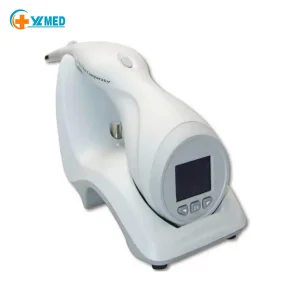
OEM Dental colorimeter dental colorimeter dental computer digital colorimeter colorimetric lamp whitening instrument tooth cleaning Manufacturer, Factories
View Product & Quote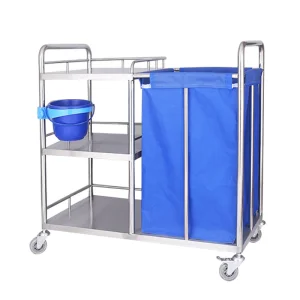
OEM Modern Stainless Steel Medical Trolley Mobile Hospital Furniture for Waste Collection and Commercial Use Factories, Quotes
View Product & Quote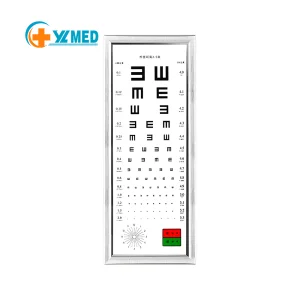
Wholesale LED eye chart light box international standard kindergarten E-logarithm eye measure vision Manufacturers, Quotes
View Product & Quote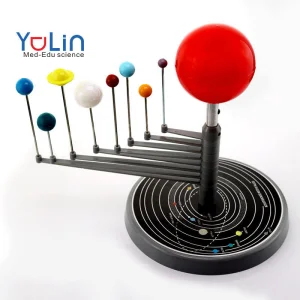
ODM Geography Discipline Teaching Instruments and Astronomy Laboratory Eight Planets Solar System Model with Light Factory, Quotes
View Product & Quote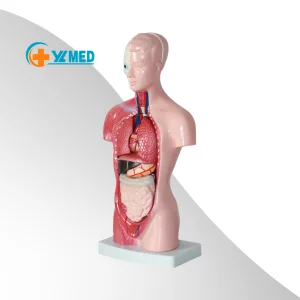
China Human body 28cm medical trunk model Anatomy doll 15 detachable parts Education organs Teaching learning class student model Factories, Service
View Product & Quote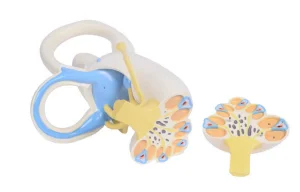
OEM Enlarged model of the inner ear Factory, Pricelist
View Product & Quote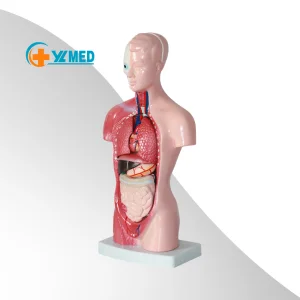
OEM Medical teaching Human body 26CM trunk model 15 parts Manufacturer, Quotes
View Product & Quote