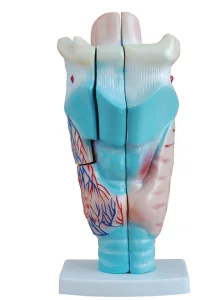
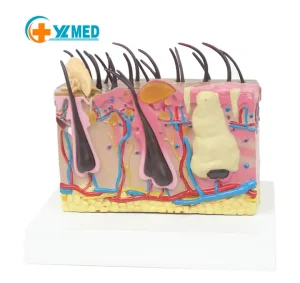
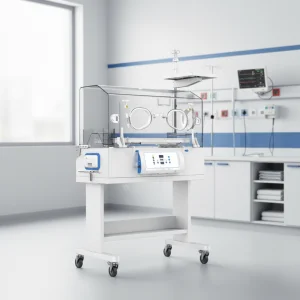
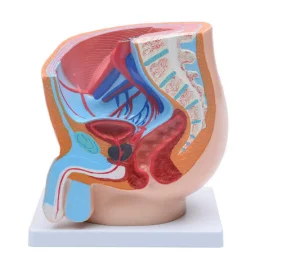
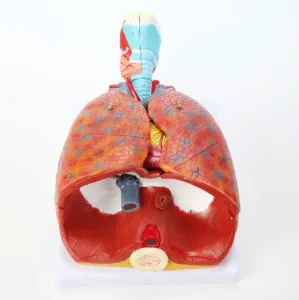
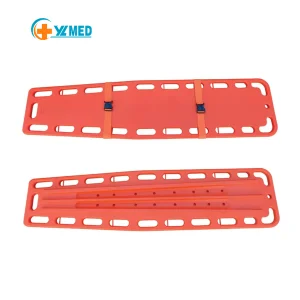
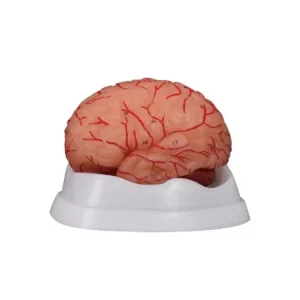
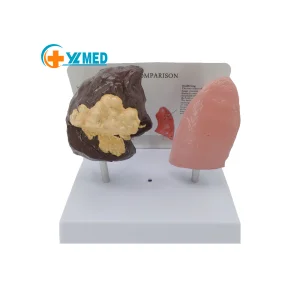
8 Documented Products from the Original Given Catalogue
These eight product records are reproduced with their original images, exact product names and original URLs so procurement teams can combine infusion-pump projects with allied medical, training or hospital-equipment purchases. Each product URL is presented as a button for a clearer mobile and desktop sourcing path.
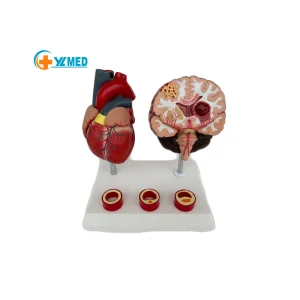
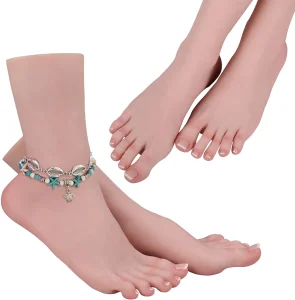
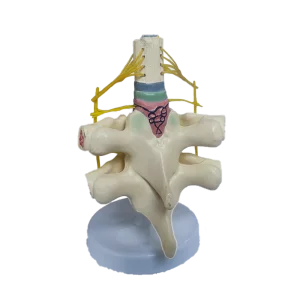
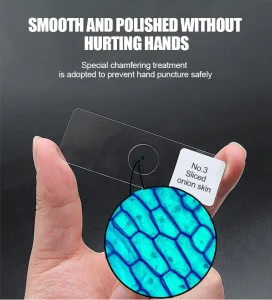
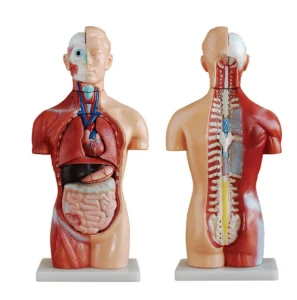
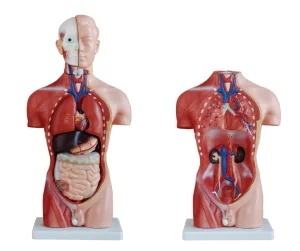
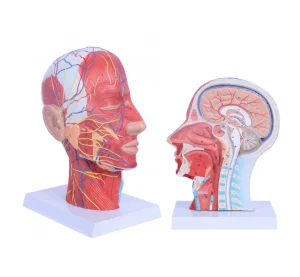
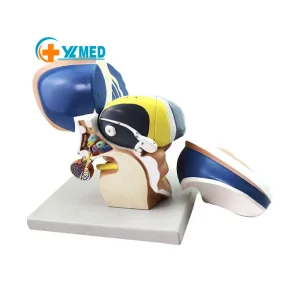
What Buyers Really Mean by “China Portable Infusion Pump Factory & Quotes”
The query is not a single request for a price. It combines factory verification, product architecture, regulatory evidence, total landed cost, OEM flexibility and after-sales confidence. A high-quality response must answer the commercial question and the technical question at the same time.
Factory, Not a Marketplace Listing
International buyers want to know whether the supplier controls design, moulding, PCBA assembly, calibration, final test and batch traceability. A real factory can explain its process flow, provide audit access, identify key equipment and show how non-conforming units are quarantined. For portable infusion pumps, the critical proof points are battery test, occlusion pressure verification, flow accuracy validation, alarm verification and software version control.
Quote Anatomy, Not Just Price
A credible portable infusion pump quote separates unit price, MOQ, tooling, packaging, IFU localisation, certification testing, freight, insurance, Incoterms, warranty and spare parts. It also states assumptions: battery capacity, pump type, infusion set compatibility, accessories, language and target market. Buyers comparing China quotes should normalise the specification before comparing numbers, otherwise a low price may hide a smaller battery, fewer alarm features or weaker documentation.
Portable Pump Platform
Portable infusion pumps span volumetric pumps, syringe pumps, PCA pumps, ambulatory pumps and enteral feeding pumps. Each platform requires different flow-control mechanics, occlusion sensing, air-in-line detection, drug-library logic and battery strategy. A factory that understands the platform can guide the buyer toward a realistic specification instead of quoting a generic device that fails clinical evaluation or tender requirements.
Evidence Pack and Compliance
High-intent buyers ask for ISO 13485 when available, IEC 60601-1, IEC 60601-1-2, IEC 60601-1-8, IEC 60601-2-24, software lifecycle evidence under IEC 62304 and usability engineering under IEC 62366. They also ask how labels, IFUs, UDI, complaints, CAPA and post-market surveillance are handled. The correct answer is market-specific: the required evidence for the United States, EU, China, Canada, Australia, Brazil or the Gulf is not identical.
Portable Infusion Pump Technical Roadmap & Future Outlook
The next generation of portable infusion pumps is being shaped by five converging forces: dose-error reduction, interoperability, cybersecurity, battery and sensor performance, and the shift of infusion from hospital wards into home and ambulatory care. A Chinese factory that only assembles hardware will struggle; a factory that manages software, validation and lifecycle documentation can become a long-term OEM partner.
| Roadmap Phase | Engineering Focus | Commercial Outcome |
|---|---|---|
| 2025–2026 | Smart volumetric and syringe platforms with drug libraries, dose-error reduction software, colour touchscreens, 8–12 hour hot-swap batteries, Wi-Fi/BLE, patient ID, occlusion and air-in-line sensors, IP24/IP34 protection. | Higher tender readiness, fewer programming errors, better fleet visibility and easier nursing workflow adoption. |
| 2026–2027 | Interoperability and cybersecurity: HL7 v2/FHIR gateways, IHE PCD profiles, signed firmware, role-based access, audit logs, software bill of materials, secure remote update and EMR integration. | Closed-loop medication management, faster hospital IT approval and stronger defence against cyber risk. |
| 2027–2029 | Edge intelligence and remote care: predictive occlusion alerts, battery-health analytics, adherence monitoring, cellular or low-power gateways, home-infusion apps and service dashboards. | Shift from one-off device sales to device-plus-service contracts, remote support and outcome-based care programmes. |
| 2029–2030+ | Miniaturisation and sustainable design: wearable patch pumps, disposable pump architectures, recyclable housings, low-power MCUs, energy harvesting and AI-assisted personalisation. | Expanded home-care access, lower environmental footprint and new reusable/disposable business models. |
From an engineering perspective, the pump head, drive train, pressure sensor, battery management system and software state machine must be designed together. Flow accuracy cannot be improved by calibration alone if the disposable set tolerance is unstable. Alarm performance cannot be validated only by a bench test if the clinical environment produces vibration, electromagnetic interference or user error. That is why serious OEM programmes use risk management under ISO 14971, human-factors studies under IEC 62366 and software lifecycle controls under IEC 62304 from the concept stage.
Future differentiation will come from data quality and serviceability. Hospitals increasingly ask for fleet dashboards, preventive-maintenance reminders, spare-parts forecasting and remote firmware governance. Home-care providers ask for simple interfaces, cellular connectivity, caregiver alerts and robust battery performance. Factory 4.0 is therefore not a marketing slogan; it is the ability to trace a PCBA batch, a motor lot, a sensor calibration record, a software release and a final test result back to a specific device serial number.
Portable Infusion Solutions Across the Care Continuum
Portable infusion pump procurement is shaped by the care setting. A device designed for an ICU may be too complex for home care, while a lightweight ambulatory pump may not meet the alarm and documentation requirements of a high-acuity hospital ward. The correct factory conversation starts with the clinical pathway, not the product photo.
ICU & High-Acuity Wards
Here the priority is precise delivery, rapid setup, robust alarms and integration with hospital IT. Volumetric and syringe pumps need clear drug libraries, occlusion sensitivity settings, event logs and nurse-call connectivity. A factory should be able to supply accessories, mounting systems, spare batteries and calibration fixtures so the hospital can standardise its fleet.
Emergency & Transport
Ambulance and field teams need compact devices with strong battery endurance, vibration resistance, large buttons for gloved use and simple alarms. Portable infusion pumps for transport should be evaluated for drop risk, EMC in vehicles, battery swap speed and secure pole or stretcher mounting. Mixed orders can include rescue stretchers and emergency splints from the original Yulin catalogue.
Oncology & Pain Management
Chemotherapy and analgesia programmes require accurate low-rate delivery, lockable settings, PCA modes where applicable and clear audit trails. Disposable infusion sets, anti-free-flow protection and drug-specific configuration are central. Buyers should ask how the factory controls change management when a drug library or software version is updated.
Paediatrics & Neonatal Care
Small-volume accuracy, low occlusion alarm thresholds and fine titration are critical. The device should support weight-based dosing, micro-bore sets and clear visual alerts. Human-factors validation should include paediatric nurses and biomedical engineers. A factory capable of customising language, alarm sound levels and interface prompts adds practical value for local hospitals.
Home Infusion & Ambulatory Care
Patients and caregivers may have limited technical training. The pump must be lightweight, quiet, easy to charge and supported by a clear IFU, video training and local service route. Cellular or Bluetooth connectivity can support adherence monitoring, but cybersecurity and privacy must be designed in. This segment is the strongest long-term growth driver for portable infusion pumps.
Hospital Pharmacy & Central Supply
Pharmacy teams care about infusion-set compatibility, cleanability, barcode workflows and traceability. They also need predictable consumable supply. A mixed-category China order can combine pumps, infusion sets, hospital furniture, training models and emergency equipment, reducing supplier-management workload while keeping documentation in one export file.
Localisation Support and Compliance Assurance for Global Buyers
Compliance is not a badge that can be transferred from one market to another. Portable infusion pumps are active medical devices with software, electrical safety, alarms, biocompatibility and usability requirements. A reliable China factory should provide traceable technical files, support local registration and adapt the product to the destination market without weakening the validated design.
| Target Market | Typical Evidence Requested | Localisation Support |
|---|---|---|
| United States | FDA 510(k) pathway assessment, predicate comparison, electrical safety and EMC reports, software documentation, human-factors summary, labelling review, UDI and complaint handling procedures. | English IFU, US plug/voltage configuration, FDA-style labelling, cybersecurity questionnaire support and importer coordination. |
| European Union | MDR 2017/745 technical file, clinical evaluation, risk management, IEC 60601 series reports, software lifecycle evidence, post-market surveillance plan, UDI and authorised representative details. | EU language IFUs, CE mark strategy, Eudamed data support, packaging waste and RoHS considerations, local importer liaison. |
| China NMPA | Product technical requirements, registration testing, clinical evaluation where required, quality system documentation and local agent coordination. | Chinese labelling, local service documentation, hospital tender package support and after-sales network coordination. |
| Canada, Australia, Brazil & Gulf Markets | Health Canada licence evidence, TGA ARTG pathway, ANVISA registration or regional conformity documentation, depending on device classification and market route. | Market-specific plug, voltage, language, IFU, packaging, local registration partner coordination and regulatory gap analysis. |
| Distributor Private Label | Private-label technical file, brand owner responsibilities, change-control agreement, certificate scope and supplier quality agreement. | OEM logo, packaging, manual, barcode, carton marks, language variants and spare-parts branding under a controlled quality agreement. |
Localisation also covers daily usability: 100–240 V input with the correct plug, resilient packaging for air, sea or rail freight, clear language for alarms, local emergency contact details, service manuals, spare-parts lists and a training plan for biomedical engineers. For tenders, the factory should be able to assemble a document pack that includes test reports, certificates, declarations, packing lists, warranty terms and model comparisons. Claims must be precise: a quotation should state what is certified, what is testable, what is optional and what remains the importer’s responsibility.
Supply-Chain Resilience and Efficiency Advantages
China’s advantage is no longer only cost. For portable infusion pumps, the stronger advantage is an integrated industrial ecosystem: injection moulding, precision metal parts, PCBA, sensors, batteries, packaging, sterilisation where relevant, calibration fixtures, export logistics and experienced quality teams within a compressed geography. The winning factory combines this ecosystem with digital quality records and disciplined change control.
Factory 4.0 means that an engineering change is not allowed to drift across production lots. A new battery supplier, a revised motor driver, a modified alarm threshold or an updated IFU must pass change review, risk assessment, verification and customer approval where required. MES and QMS records should link the device serial number to the PCBA lot, firmware version, calibration result, final QC inspector and packaging record. This level of control reduces recall exposure and gives distributors a defensible answer during hospital audits.
Resilience also comes from commercial planning. Experienced exporters maintain buffer stock for long-lead components, qualify alternative suppliers for critical parts, stage packaging materials before peak season and book freight capacity early. For a mixed-category order, Yulin Medical can coordinate product lines, consolidate inspection and prepare one shipment with one point of contact, as reflected in the original company profile on this page.
What Global Enterprises Require Before They Place a Factory Order
Large distributors, hospital groups and OEM brand owners apply a consistent filter: can the factory prove capability, control risk and support the product after shipment? The checklist below turns a vague request into a comparable quotation package.
Unit price, accessories, infusion sets, spare parts, warranty, training and freight should be modelled over 3–5 years.
Target market, device classification, predicate or equivalence strategy, testing scope and local agent responsibilities.
Pump type, flow range, accuracy, battery life, alarms, drug library, connectivity, weight, IP rating and disposable set.
Golden sample, bench test protocol, usability review, EMC pre-check and packaging drop-test evidence.
Logo, housing colour, IFU, packaging, carton marks, language, barcode and change-control agreement.
Incoming inspection, production flow, calibration, final test, non-conforming control, CAPA and traceability.
Access control, audit logs, secure update, vulnerability handling, data privacy and interface documentation.
Spare-parts list, warranty terms, repair training, response time, firmware policy and field-action process.
A strong request for quotation should include: target market; pump type; required flow range and accuracy; battery duration; alarm requirements; drug-library need; connectivity; disposable set preference; estimated annual volume; sample quantity; language; packaging; certification expectation; Incoterm; destination port; and required delivery date. When these inputs are clear, the factory can respond with a specification-matched quote instead of a generic price list.
Yulin Medical: Six-Decade Manufacturing Base for Integrated Medical Sourcing
The original company content below is retained and integrated into this white-paper page. It provides the E-E-A-T foundation: a real factory history, a named legal entity, an ISO 9001 quality system, a documented product ecosystem and direct export communication channels.
Medical Teaching Models, CPR Manikins & Hospital Equipment Manufacturer Since 1958
Henan Yulin Edu. Project Co., Ltd. (Yulin Medical) has built educational and medical training equipment in Xinxiang, China, for more than six decades. Our quality management system has been ISO 9001 certified since 2008, and our motto is simple: quality first, service first. Every order is produced and inspected so that distributors, medical universities, nursing colleges and hospitals receive consistent, well-documented products on every batch.
- Factory-direct supply across 10 product lines, from anatomy models to hospital furniture
- Private-label packaging and product design that raises your resale value
- Mixed-category orders consolidated into one shipment with one point of contact
Complete Sourcing for Medical Education & Clinical Use
Ten specialised product lines let procurement teams source simulation, lab and hospital equipment from one accountable manufacturer instead of managing multiple suppliers.
Anatomy Models
Torso, organ, heart, brain and muscle models with numbered structures for lectures and patient education.
02Biology Prepared Slides and Accessories
Histology, botany and zoology prepared slides plus storage and microscope accessories for biology labs.
03Dental Tools and Equipment
Dental teaching models, clinic lights, LED whitening units and endodontic instruments for training and practice.
04General Teaching Models
Science demonstration models for primary schools, secondary schools and education equipment tenders.
05Hospital Furniture and Equipments
Stainless steel examination couches, stretchers, walkers and shower chairs built for daily clinical use.
06Hospital Machine and Tools
Diagnosis and treatment devices and practical tools for wards, clinics and emergency departments.
07Medical Apparatus and Instruments
Emergency splints, extrication devices, cervical traction and rehabilitation instruments.
08Medical Nursing Model
Adult, child and neonatal CPR manikins, ACLS simulators and AED trainers for skills assessment.
09Skeleton Models
Life-size and desktop skeletons, skulls, spines and joint models for osteology teaching.
10Suture Pads and Kits
Realistic skin suture pads and complete instrument kits for surgical and wound-closure practice.
Featured CPR, Emergency & Rehabilitation Equipment
Best-selling simulation manikins, first-aid devices and mobility aids requested by training centres, ambulance services and healthcare distributors.












Original Yulin Medical Visual Records
These original hero and product-display images are retained to preserve the visual evidence of the manufacturer’s facility, category breadth and export service context.









Need Specifications, a Price List or a Tender Package? We Reply Within 24 Hours.
Tell us your target market, quantities and certification requirements. Our product specialists will recommend suitable models, share detailed specifications and propose the most economical shipping plan for your order.
A Six-Decade Manufacturer Trusted by Educators and Clinicians
Founded in 1958, Henan Yulin Edu. Project Co., Ltd. has grown into a well-known educational and medical equipment supplier that integrates scientific research, production and sales. With registered capital of RMB 120 million and more than 200 professional employees, we manage product development, manufacturing, inspection and export from our base at No. 8 Daoqing Road, Hongqi District, Xinxiang.



Our goal is to fully satisfy every customer through dependable quality and attentive service, while continuously developing the skills of our team so that each project is handled by experienced people.
Why Distributors and Institutions Partner with Yulin Medical
Four strengths overseas buyers consistently cite when they move long-term orders to our factory.
24/7 Responsive Service
Our team is online 24 hours a day, 7 days a week. Whatever your time zone, you receive a detailed answer as quickly as possible — typically within 24 hours.
Design & Packaging Team
In-house specialists deliver professional product design and private-label packaging that strengthens your brand and increases the added value of every unit you sell.
Professional Expertise
Our vision is to provide the most professional educational and medical training products from mainland China, built under ISO 9001 process control and decades of category knowledge.
60+ Years of Supply Stability
A factory with over 60 years of history and a deeply integrated partner supply chain lets us meet one-stop demands and keep lead times predictable on repeat orders.
A Transparent 5-Step Process for Overseas Buyers
From first conversation to delivery, every stage has a named contact and clear documentation, so you can plan stock, tenders and training schedules with confidence.
Share Requirements
Send product types, quantities, target market and any tender or certification needs.
Catalog & Proposal
Receive matched models, specifications, packaging options and shipping suggestions.
Sample Evaluation
Test samples with your instructors or clinicians before confirming bulk production.
Production & QC
Manufacturing and inspection follow our ISO 9001 quality management system.
Export & Support
Protective export packing, delivery coordination and responsive after-sales service.
News & Practical Insights from Our Specialists
Exhibition updates and hands-on guidance written by the team that designs and builds our products.

Do You Really Know How to Observe Biological Prepared Slides?
Many plant and animal cell structures can only be studied under a microscope, which makes prepared biological slides essential in every biology lab. Yet many users never get the full value from them. Our specialists explain how to handle, focus and store slides correctly so students see clearer detail and your slide sets last for years.

The 5th Henan Provincial Educational Equipment Expo Concludes Successfully
Themed "Digital Leading Innovation and Development", the expo reached a record 50,000 m² with 600+ brands and 10,000+ products on display, showcasing the latest educational equipment.

Inside Our Product Showroom
A look at the medical teaching models and training equipment buyers can inspect in person when visiting our Xinxiang facility.
Frequently Asked Questions from Importers
Straight answers to the questions procurement managers ask most before placing a first order, plus expanded portable infusion pump sourcing questions.
Is Yulin Medical a manufacturer or a trading company?
We are a manufacturer. Henan Yulin Edu. Project Co., Ltd. was founded in 1958 and operates its own factory in Xinxiang, Henan, China, with more than 200 professional staff. For one-stop orders, we also coordinate a stable network of long-term partner factories.
What quality certification does Yulin Medical hold?
Our quality management system has been ISO 9001 certified since 2008. Product-specific documentation can be provided on request for tenders and import registration.
Do you support OEM, private label and custom packaging?
Yes. Our in-house design team develops private-label packaging and product presentation for distributors, helping increase shelf appeal and resale value in your market.
How do I choose the right CPR training manikin?
Start with the learner group: adult, child or neonatal. Then check that real-time feedback covers compression depth, compression rate and ventilation volume; confirm alignment with current AHA resuscitation guidelines; and decide whether your courses need AED trainer integration. For advanced life-support programmes, an ACLS simulator with embedded scenarios offers far more assessment value than a basic torso.
How quickly will I receive a reply?
Our export team is online 7 days a week and typically replies within 24 hours with catalogs, specifications and shipping options.
What information is needed for an accurate portable infusion pump quote?
Provide the pump type, target market, required flow range and accuracy, battery duration, alarm requirements, drug-library or PCA functionality, connectivity, disposable-set preference, estimated annual volume, sample quantity, language, packaging, certification expectation, Incoterm, destination port and required delivery date. A specification-matched request lets the factory quote a realistic configuration instead of a generic device.
Can the factory support OEM/ODM for portable infusion pumps?
OEM and ODM discussions should cover housing and logo, colour, user interface, IFU, packaging, accessories, firmware configuration, change-control ownership and regulatory responsibility. The factory should provide a written development plan, sample-evaluation milestones, verification tests and a quality agreement before tooling or pilot production begins.
What certifications should a China portable infusion pump factory provide?
The evidence package depends on the destination market. Common requests include ISO 13485 where applicable, IEC 60601-1, IEC 60601-1-2, IEC 60601-1-8, IEC 60601-2-24, ISO 14971 risk-management evidence, IEC 62304 software lifecycle evidence and IEC 62366 usability evidence. For the EU, MDR technical documentation is relevant; for the US, a 510(k) strategy may be required. Buyers should verify certificate scope and the exact model covered rather than relying on a logo.
How are samples, MOQ and lead times handled?
Samples are normally quoted separately and may include tooling or programming costs where customisation is involved. MOQ depends on the model, private-label requirements and component sourcing. Lead time should be stated in writing after specification freeze, including sample approval, long-lead components, production, inspection and packaging. For repeat orders, a rolling forecast helps the factory reserve capacity and maintain critical components.
What after-sales support is available for overseas distributors?
A practical after-sales package includes spare-parts lists, warranty terms, repair training, technical manuals, firmware-update policy, complaint-handling workflow and response-time commitments. Distributors should agree on the escalation route, the party responsible for local service and the documentation required for field actions before the first shipment.
Can portable infusion pumps be combined with other Yulin Medical products in one order?
Yes, mixed-category sourcing is a core part of the original Yulin service model. A single order can combine hospital furniture, emergency equipment, training models, prepared slides and other catalogue lines where the commercial and regulatory conditions allow. The factory can consolidate inspection, packing and export documentation with one point of contact.
 Yulin MedicalSince 1958
Henan Yulin Edu. Project Co., Ltd. — ISO 9001 certified manufacturer of medical teaching models, simulation manikins and hospital equipment.
Products
Contact
- No. 8, Daoqing Road, Industry Park, Hongqi District, Xinxiang, Henan, China
- 0086-13503800666
- [email protected]
Additional 8 Documented Products from the Original Given Catalogue
The remaining eight original product records are retained with their exact images, product names and URLs. Together with the eight cards beneath the banner, this completes the 16-product set and gives buyers a broader one-stop sourcing view.