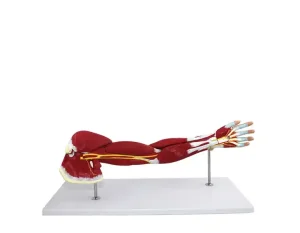
Eight Simulation-Ready Products From the Yulin Medical Range
Real, quotable items from our live catalogue — anatomy models, prepared slides, respiratory teaching aids, nebulizers, trolleys and ENT workstations that nursing and clinical skills departments order most often.
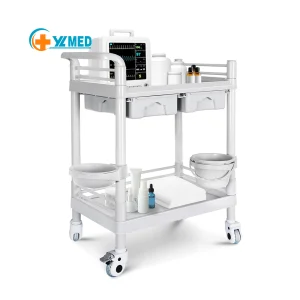
Wholesale Hospital Dental Clinic Medical 2 floor 2 drawer trolley, rotating wheels, heavy medical practical trolley Quotes, Service
View Product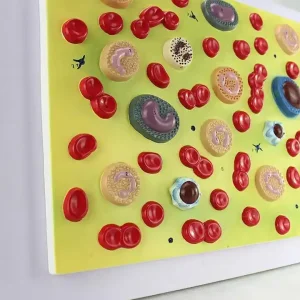
ODM Human medical blood cell model Anatomical blood cell model research display teaching medical model Pricelist, Quotes
View Product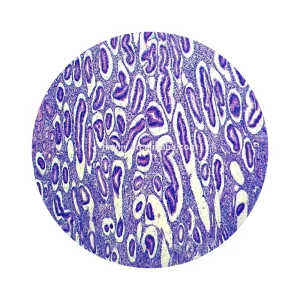
China 20pcs human oral histology slides, university standard, human histology slides wholesale supplier Factory, Quotes
View Product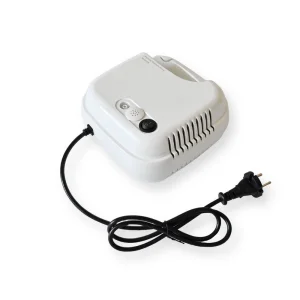
ODM Household Medical Portable Nebulizer Machine for Compressor Baby Inhalator Manufacturer, Quotes
View Product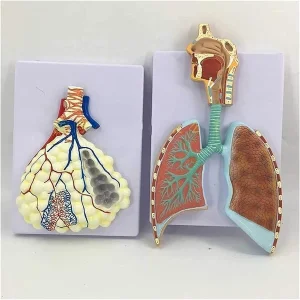
ODM Medical teaching with human respiratory system human alveolar enlargement model Manufacturer, Service
View Product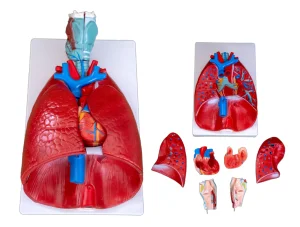
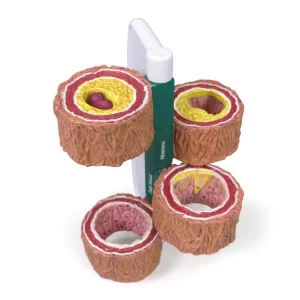
China Anatomicals - 4-Piece Artery Model, Replica of an Artery with Plaque for Human Anatomy and Physiology Education, Anatomy Model for Doctor's Offices and Classrooms, Medical Learning Resources Factory, Quotes
View Product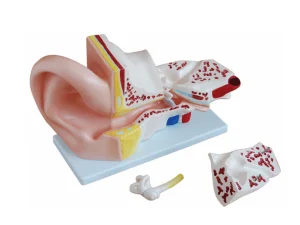
Decoding the Query: “China Nursing School Simulator Manufacturers & Factories”
This is not a retail query. It sits at the top of a B2B decision funnel that ends in specification sheets, sample evaluation, tender documents and a container booking.
When a procurement officer, distributor or nursing college dean types this phrase, three intent layers are stacked inside a single search box. Google’s Search Quality Rater Guidelines treat clinical and educational training content as a YMYL-adjacent topic, because poor hardware decisions eventually affect patient safety. That is why a genuinely useful page must demonstrate first-hand manufacturing experience, verifiable certification and category-level expertise — not a generic list of suppliers. Our information gain comes from the details most trading companies cannot supply: mould ownership, tooling tolerances, batch inspection routines, packaging engineering and export documentation workflows.
Transactional Intent
“Manufacturers”, “factories”, “quotes”, “pricelist” and “wholesale” signal a buyer who wants factory-direct pricing, a named contact and a MOQ — not a reseller markup. These visitors convert fastest when a specification and a reply window are visible immediately.
Commercial Investigation
ISO 9001 status, AHA alignment, lead time, spare-part availability and OEM capability are comparison criteria. Buyers shortlist three to five factories and eliminate on documentation and consistency, not on price alone.
Educational / Informational
“Which manikin fits an OSCE station?”, “do I need an ACLS simulator or a basic torso?”, “how many anatomy models per cohort?” — this intent must be answered before a quotation has any meaning, so it belongs on the same page as the product grid.
What a “Nursing School Simulator” Actually Includes
In tender language, “simulator” is an umbrella term. Underneath it sit five distinct product families, each with its own inspection routine and course mapping.
Where These Simulators Actually Run — Six Deployment Patterns
The same catalogue is configured differently in Manila, Nairobi, São Paulo or Rotterdam. These are the six configurations our export team builds most frequently.
Nursing College Skills Labs & OSCE Stations
A 40-station OSCE lab typically needs eight to twelve adult CPR manikins, two neonatal units, suture pads per station, and a full anatomy shelf. Modular kits let the lab scale one bay at a time as enrolment grows.
Hospital Resuscitation & ACLS Recertification
In-service training centres run quarterly recertification cycles. Manikins with objective feedback reduce instructor subjectivity and produce an auditable record of compression quality per cohort.
Pre-Hospital & Community AED Programmes
Municipal first-aid programmes pair an AED trainer with a lightweight torso and a spine board so volunteers practise scene assessment, extrication and defibrillation as one continuous drill.
Vocational & Secondary Health Education
Lower-budget programmes start with general teaching models, a single CPR torso and prepared slides. The same supplier can then upgrade the lab two years later without changing the packaging or documentation format.
Distributor Showrooms & Mobile Demonstrations
Private-label distributors use our ODM packaging as a display asset. Lightweight anatomy models travel to hospital roadshows, while trolleys and ENT workstations anchor a permanent showroom corner.
Low-Resource & Remote Training Sites
Where electricity and storage are unreliable, buyers favour passive anatomy models, dry suture pads and folding spine boards over powered simulators. Ruggedised export packing is specified at quotation stage.
Technology Roadmap & Future Outlook, 2025–2030
Simulation hardware is moving from “looks realistic” to “measures objectively”. This is the trajectory our engineering team is building against.
Digital Feedback Becomes Standard
Compression depth, rate and ventilation sensors move from premium models into mid-tier CPR manikins. Traffic-light feedback replaces instructor guesswork during large cohort drills.
Modularity & Replaceable Skins
Interchangeable airway heads, swappable face skins and field-replaceable chest springs extend service life and cut consumable cost per student contact hour.
AI-Assisted Skill Scoring
On-device scoring converts raw sensor streams into structured performance reports, giving schools an objective rubric that can be exported into their learning management system.
AR Overlay & Blended Teaching
Anatomy models pair with marker-based AR overlays so a single physical torso supports layered, self-paced study — high value where lab space is the binding constraint.
Cloud Cohort Analytics
Multi-station labs consolidate results into cohort dashboards, enabling interprofessional simulation that links nursing, emergency medicine and respiratory therapy in one scenario.
China Factory Supply Chain Resilience & Efficiency Advantages
Why the Chinese manufacturing base still wins on total landed cost for simulation hardware — and what buyers should verify before trusting a quotation.
Medical teaching models are a hybrid product: part injection-moulded plastic, part hand-painted artwork, part electronics, part printed consumable. No single process dominates, which is exactly why cluster geography matters. Henan anchors the moulding, painting and assembly capacity; Guangdong supplies electronics and small appliances; Jiangsu and Zhejiang contribute precision slides and instrument work. A manufacturer embedded in this network can consolidate a mixed-category order into one container with one bill of lading, which is where real savings appear on a nursing college tender.
Resilience is not only about capacity; it is about load balancing across a stable partner network. When one moulding line is saturated before a tender deadline, sister factories absorb the overflow under the same specification and the same inspection standard. In practice that means a mixed order of anatomy models, prepared slides and examination furniture can ship together instead of arriving in three unsynchronised deliveries — and it means a repeat order eighteen months later still matches the first shipment in colour, finish and packaging.
The Global Commercial & Industrial Landscape for Nursing Simulation
Demand is structural rather than cyclical. Three forces are pulling simulation hardware into mainstream capital budgets.
Workforce Pressure
Health systems across Europe, the Gulf and Southeast Asia continue to report nursing shortfalls. Simulation lets colleges raise cohort throughput without increasing clinical placement hours — the single hardest constraint to expand.
Accreditation Requirements
Nursing accreditation bodies increasingly expect documented skills practice before clinical exposure. That converts simulation hardware from a “nice to have” into a line item that survives procurement scrutiny.
Tender & Private-Label Channels
Public tenders value documentation and predictable delivery; private-label distributors value packaging design and margin. A factory that serves both must keep its OEM workflow separate from its tender documentation workflow — ours does.
Regionally, North American and European buyers prioritise feedback accuracy, spare-part longevity and CE-related documentation. Middle East and African markets are expanding fastest in basic life support training, where durability and price per unit dominate. Latin American and Southeast Asian distributors increasingly request private-label packaging to build local brands rather than resell a factory logo. Each of these profiles maps to a different configuration of the same catalogue — which is why our export team asks for the target market before quoting, not after.
Why Henan Yulin Edu. Project Co., Ltd. Is a Lead Candidate
Founded in 1958, we integrate scientific research, production and sales of educational and medical training equipment under one roof in Xinxiang, Henan.
With registered capital of RMB 120 million and more than 200 professional employees, we manage product development, manufacturing, inspection and export from No. 8 Daoqing Road, Industry Park, Hongqi District, Xinxiang. Our quality management system has been ISO 9001 certified since 2008, and our operating motto is simple: quality first, service first. For one-stop orders we also coordinate a stable network of long-term partner factories, so a single purchase order can cover ten product categories without ten separate risk profiles. Our specialists also publish hands-on guidance — for example on how to handle, focus and store biological prepared slides correctly — because a product only performs well when the user knows how to use it.
Localization Support & Compliance Assurance for Overseas Buyers
A factory order is only successful when the goods clear customs, match the tender file and can be serviced two years later. These six controls make that happen.
Documentation Package
ISO 9001 certificate, product specification sheets, packing lists and, on request, product-specific documentation to support tenders and import registration in your country.
Language & Labelling
English and Chinese as standard, with private-label artwork, multilingual carton marking and region-specific warning labels prepared by our in-house design team.
Voltage & Plug Adaptation
Powered items such as nebulizers, sealing machines and vacuum-forming units are configured to your destination voltage and plug standard before production, not after arrival.
Export Packing Engineering
Foam-in-carton protection for fragile anatomical models, moisture barriers for slides, and corner reinforcement for furniture — specified per SKU rather than applied uniformly.
Spare Parts & After-Sales
Replaceable springs, airway assemblies, face skins and electronic feedback modules can ship with the original container so a training centre can self-service minor faults.
Seven-Day Response Window
Our export team is online seven days a week and typically replies within 24 hours with catalogues, specifications, lead times and shipping options for your destination port.
A Transparent Five-Step Process for Overseas Buyers
Every stage has a named contact and a clear deliverable, so stock planning, tender submission and training schedules stay aligned.
Share Requirements
Product types, quantities, target market, tender clauses and any certification the buyer must satisfy.
Catalog & Proposal
Matched models, specifications, packaging options, MOQ guidance and a shipping plan for your port.
Sample Evaluation
Test samples with instructors or clinicians before bulk production, including feedback accuracy checks.
Production & QC
Manufacturing and inspection follow the ISO 9001 quality management system we have held since 2008.
Export & Support
Protective export packing, delivery coordination and responsive after-sales documentation support.
Frequently Asked Questions From Importers & Nursing Schools
Direct answers to the questions procurement managers raise most often before a first order.
Is Yulin Medical a manufacturer or a trading company?
We are a manufacturer. Henan Yulin Edu. Project Co., Ltd. was founded in 1958 and operates its own factory in Xinxiang, Henan, China, with more than 200 professional staff. For one-stop orders we also coordinate a stable network of long-term partner factories, which lets a single purchase order cover ten product categories.
What quality certification do you hold?
Our quality management system has been ISO 9001 certified since 2008. Product-specific documentation can be provided on request to support tenders and import registration in your country.
Do you support OEM, private label and custom packaging?
Yes. Our in-house design team develops private-label packaging and product presentation for distributors, helping increase shelf appeal and resale value in your market without changing the underlying product specification.
How do I choose the right CPR training manikin?
Start with the learner group — adult, child or neonatal. Then check that real-time feedback covers compression depth, compression rate and ventilation volume; confirm alignment with current AHA resuscitation guidelines; and decide whether your courses need AED trainer integration. For advanced life-support programmes, an ACLS simulator with embedded scenarios offers far more assessment value than a basic torso.
How many simulators does a new nursing skills lab actually need?
A practical starting point is one CPR manikin per three to four students working in rotation, one neonatal unit per cohort, and one suture pad per OSCE station. Anatomy models are usually specified per classroom rather than per student, while prepared slides are consumables and should be budgeted for replacement.
Can one order combine anatomy models, slides and hospital furniture?
Yes. Mixed-category consolidation is one of our practical advantages: models, slides, manikins and furniture can be packed for a single shipment with one point of contact, reducing inbound handling and documentary risk for the buyer.
What is the typical lead time and minimum order quantity?
MOQ and lead time depend on the SKU mix, artwork requirements and destination. Send your target quantities and market, and our export team will return a consolidated quotation with production timing and a shipping plan — typically within 24 hours.
How quickly will I receive a reply?
Our export team is online seven days a week and usually replies within 24 hours with catalogues, specifications and shipping options.
Need Specifications, a Price List or a Tender Package? We Reply Within 24 Hours.
Tell us your target market, quantities and certification requirements. Our product specialists will recommend suitable models, share detailed specifications and propose the most economical shipping plan for your nursing school simulator project.
Clinical, Dental & Diagnostic Equipment From the Same Factory Floor
The equipment side of the catalogue — ENT workstations, dental sealing and pressing machines, pathology slides, transport stretchers and anatomical teaching models that complete a simulation lab.
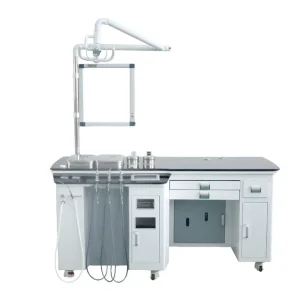
China Medical Equipment High Quality Hospital Medical Surgical ENT Instruments Operating Workstation Unit Manufacturers, Factories
View Product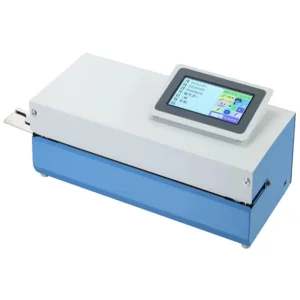
ODM Medical Dental Sealing Machine Automatic 7 "Color LCD Touch Screen Sealing Machines Dental Sterilization Pouch Sealing Machine Manufacturers, Factory
View Product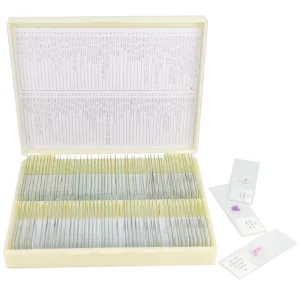
ODM Medical science human pathology microscope prepared slides for teaching and learning Manufacturer, Service
View Product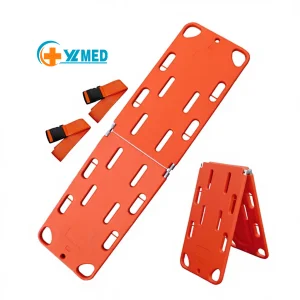
ODM Foldable Spine Board Stretcher with Backboard Straps for Patient Transport Factories, Quotes
View Product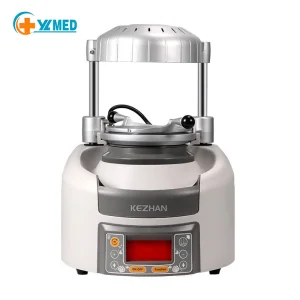
Wholesale Dental pressing machine Oral intelligent full-automatic vacuum forming machine Dental braces orthodontic retainer film pressing Manufacturers, Service
View Product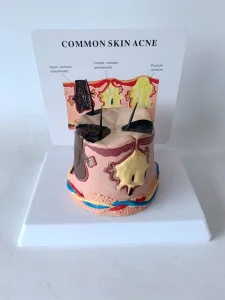
Wholesale Best Selling Anatomical Human Structure Skin Model for Teaching Model Quotes, Service
View Product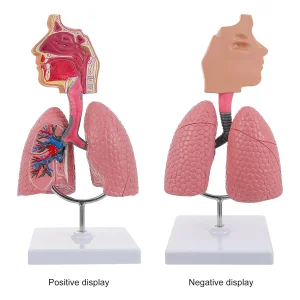
Wholesale Human Nasal Cavity Throat Anatomy Model Human Lung Model Respiratory System Lung Model Teaching Tool for Students Study Display Manufacturers, Factories
View Product