Factory Range · 1 / 2
Featured Products from Our Manufacturing Network
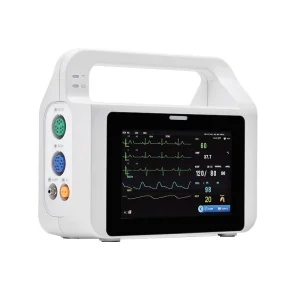
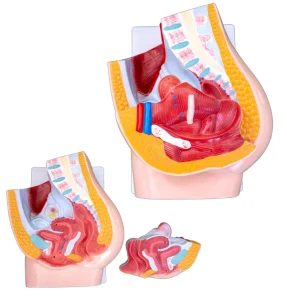
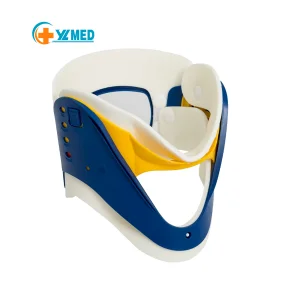
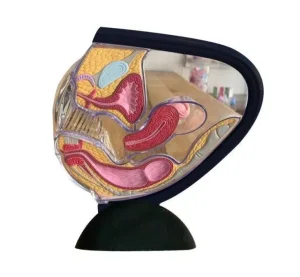
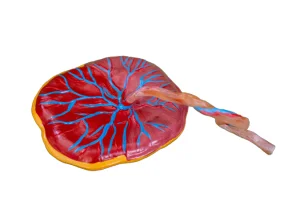
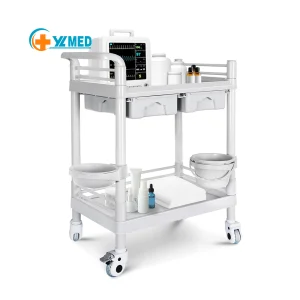
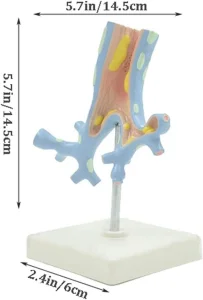
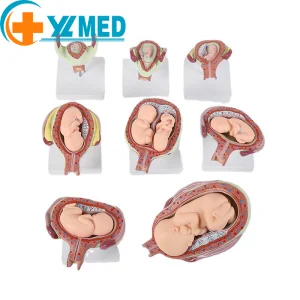
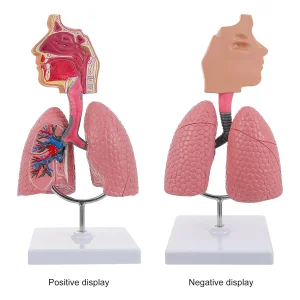
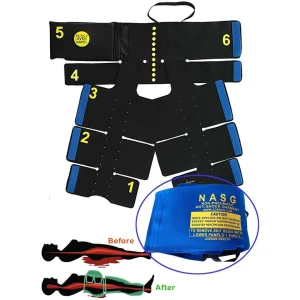
The same ISO 9001 process discipline that governs our glove, consumable and clinical sourcing also supports the medical teaching and hospital ranges below — inspected, documented and consolidated into a single shipment for distributors, universities and hospitals.
Executive Framing
Buying Latex Gloves Is a Specification Problem Before It Is a Price Problem
Natural rubber latex remains one of the most specified — and most misunderstood — categories in medical and industrial procurement. The price on a quotation is only meaningful when it is attached to a defined thickness, a defined surface finish, a defined protein ceiling and a defined conformity route.
Between 2020 and 2023 the global glove market experienced one of the sharpest supply shocks in the history of disposable medical consumables. Prices for examination-grade gloves rose several multiples within a single quarter, dozens of new dipping lines were commissioned worldwide, and a large volume of product reached hospital docks with incomplete technical files. When the correction came, buyers who had purchased on price alone discovered that the true cost of a cheap glove is measured in rejection rates, staff complaints and audit findings — not in the invoice.
The lessons that survived are practical rather than dramatic. Procurement teams now ask for the water-tightness AQL before they ask for the unit price. They want the accelerated-ageing tensile report, not just the CE mark. They want to know which latex concentrate grade and which accelerator system the factory actually runs, because a glove is a formulation, not a commodity. And increasingly, they want a second source that is not a reseller of the same three factories everyone else is quoting.
This guide is written from the position of a manufacturer and exporter that has supplied educational, clinical and hospital buyers since 1958 and has held ISO 9001 certification since 2008. It sets out how the global latex glove business currently behaves, where Chinese factories genuinely outperform, which application scenarios still favour latex over nitrile and vinyl, what global buyers are now demanding in writing, and how to decompose a quotation so that the comparison you make is a real one.
- Speak in specifications, not adjectives. Palm thickness in millimetres, AQL level, protein ceiling, surface finish, cuff type, packing configuration.
- Separate material, conversion and logistics. A quotation that merges all three cannot be benchmarked and cannot be renegotiated.
- Verify the conformity route, not the logo. Ask for the technical file summary, the test report numbers and the notified body identification where applicable.
- Plan for a second source before you need one. Dual qualification costs a sample order; a supply interruption costs a tender.
Market Conditions
The Global Latex Glove Market in 2025: Three Structural Shifts
Demand for disposable gloves is no longer driven by a single pandemic curve. It is driven by infection-control regulation, ageing populations, laboratory throughput, food-safety enforcement and industrial hygiene programmes — a much steadier, more predictable base.
Nitrile Took Volume; Latex Kept the Value Niches
Nitrile now dominates high-volume examination glove tenders in North America and Western Europe, largely on the back of allergy awareness and chemical-resistance marketing. Latex has not disappeared — it has consolidated into applications where elasticity, tactile feedback and cost per unit still decide the outcome: surgical and procedure gloves, dental and oral care, physiotherapy and manual therapy, food handling under colour-coding schemes, and price-sensitive public-sector tenders across Africa, South Asia, Latin America and parts of Eastern Europe.
Dual-Sourcing Replaced Just-in-Time
The 2020–2022 disruption permanently changed inventory doctrine. Hospital groups and distributors that once ran three-week glove inventory now hold eight to twelve weeks and qualify two geographically separated suppliers. For Chinese factories this created a durable structural opportunity: buyers no longer want the cheapest single source, they want a credible second source that can be audited, documented and activated quickly. Factories that invested in documentation and traceability captured this demand; those that competed on price alone did not.
Regulation Became the Largest Hidden Cost Line
Under the EU Medical Device Regulation, examination gloves generally sit in Class I while sterile surgical gloves require notified-body conformity assessment — a distinction that changes the entire cost structure of a product line. In the United States, examination gloves fall under 21 CFR 880.6250 and, although 510(k)-exempt, still require establishment registration and device listing. Add the EU PPE Regulation for protective gloves, UKCA, NMPA in China and country-specific import registration, and the compliance dossier is now a genuine differentiator between otherwise identical factories.
USD 10–14 bnIndicative global disposable glove market value, industry estimates for 2024
30–35%Approximate latex share of examination-glove volume in price-sensitive markets
15–30 daysTypical repeat-order production window at a mature Chinese dipping plant
0.10–0.20 mmStandard palm-thickness control band for examination-grade latex gloves
Factory Economics
China's Factory Efficiency Advantage: Six Mechanisms That Reach Your Unit Price
China's cost position in latex gloves is frequently described as "cheap labour". That explanation is a decade out of date. The real advantage is a tightly integrated supply chain in which latex concentrate, compounding chemicals, ceramic formers, packaging, testing and export logistics sit within a few hundred kilometres of the dipping line.
Integrated Raw-Material Access
Natural rubber concentrate from Hainan and Yunnan, together with locally produced sulphur, zinc oxide, accelerators, antioxidants and release agents, shortens the material pipeline considerably. Compounding can be tuned batch by batch instead of waiting on imported pre-blends, which directly reduces cure-cycle variation — one of the main causes of tensile failure in finished gloves.
In-House Former and Tooling Capability
Porcelain formers determine fit, finger taper, cuff bead geometry and surface texture. Chinese plants that machine and glaze their own formers can move from a smooth to a textured-finger design, or from a standard to an ergonomic hand-specific shape, in weeks rather than months. For private-label buyers this shortens the path from concept to a saleable SKU.
High-Speed Continuous Dipping Lines
Modern multi-tier chain conveyors with automated former loading, post-dip leaching, polymer coating and brush-roll stripping run at throughputs that spread fixed overhead across very large volumes. Higher line utilisation is what converts capital investment into a lower conversion cost per thousand pieces — the number that actually moves your landed price.
Energy and Thermal Engineering
Dipping is thermally intensive: ovens, leaching tanks and drying tunnels dominate energy cost. Chinese factories have invested heavily in heat recovery from exhaust air, condensate return, and in some regions biomass or gas-fired steam generation. Every percentage point recovered from the drying tunnel lands directly in the conversion cost of the glove.
Dense Post-Processing Labour
Water-tightness testing, visual inspection, cuff rolling, printing and packing remain partly manual at every price point in the world. China's advantage is not low wages but the depth of trained inspectors and the supporting ecosystem of printing, carton and pouch suppliers within a short radius — which keeps rework loops short and changeovers fast.
Cluster-Based Supply Depth
Latex glove production clusters around Hebei (Baoding, Shijiazhuang), Shandong, Jiangsu (Yangzhou), Zhejiang and Guangdong. Within these clusters a buyer can source the glove, the printed inner box, the poly bag, the shipping carton, the pallet and the third-party test report through one coordinator — collapsing the administrative cost of a mixed container.
The practical consequence for an overseas buyer is that China is rarely the cheapest per-unit option and frequently the cheapest total-cost option. A Chinese factory that offers both latex examination gloves and a complementary clinical or educational range can consolidate a mixed order into one container, one set of export documents and one quality dossier. That consolidation is worth more to most distributors than a marginal cent per glove, because it removes an entire supplier relationship from their administrative load.
Regional Benchmark
Sourcing Region Comparison: China, Malaysia and Thailand
No single region wins on every dimension. The comparison below reflects how buyers typically describe the trade-offs when qualifying a latex glove source for a specific market and price band.
Dimension
China
Malaysia
Thailand
Cost structure
Competitive conversion cost; deep local supply of latex compound, formers and packaging
Largest global scale; strong R&D investment spreads across very high volume
Moderate scale; regional advantages within ASEAN trade flows
Latex-specific depth
Strong — natural rubber access plus long experience in dipped latex goods
Historically stronger in nitrile than in latex examination lines
Solid latex base with strong surgical and specialty capability
MOQ flexibility
High — one 20ft container is often workable; printed packaging feasible at low volume
Typically higher minimums on branded lines
Medium, driven by line scheduling
Certification coverage
CE (MDR), ISO 13485, FDA listing, NMPA, plus EN/ASTM test reports
CE, FDA, ISO — very mature documentation culture
CE, FDA, ISO — mature for surgical gloves
Repeat-order lead time
15–30 days typical for established SKUs
20–35 days
20–35 days
Best fit
Value-engineered examination gloves, colour-coded food gloves, private label and mixed containers
Global brand programmes and very large nitrile tenders
Regional sourcing with ASEAN tariff advantages
Figures above are indicative ranges drawn from repeated buyer feedback and public trade data, not a contractual benchmark. Always re-validate against current quotations, current freight rates and current tariff schedules for your destination country before you fix a landed-cost model.
Material Selection
Latex, Nitrile or Vinyl? Matching Material to Application
Material substitution is the most common source of hidden cost in glove procurement. Specifying nitrile for a task that only needs vinyl, or latex for a task that involves solvents, generates either overspend or failures.
Natural Rubber Latex
Polyisoprene from Hevea brasiliensis, compounded with sulphur-based vulcanisation systems. Unmatched elasticity and tear resistance, excellent wet and dry grip, high tactile sensitivity through a thin film, and the lowest material cost of the three for examination-grade products. It is also a renewable, biologically derived polymer.
Use it for: surgical and procedure gloves, dental work, physiotherapy, food handling, general examination, and any task where fit and feel drive compliance with wearing. Constraints: Type I protein allergy, Type IV accelerator allergy, poor resistance to oils, solvents and ozone, and a finite shelf life under adverse storage.
Nitrile Butadiene Rubber
Fully synthetic, protein-free and highly resistant to a broad range of chemicals and puncture events. The trade-off is a stiffer feel, lower elongation and a material cost tied to acrylonitrile and butadiene markets that have been volatile since 2021. Surface treatments have narrowed the tactile gap but not closed it.
Use it for: clinical environments with declared latex allergy policies, laboratory work with chemical exposure, automotive and industrial maintenance, and any application where puncture resistance outranks feel. Constraints: higher unit cost, reduced dexterity in thin gauges, and weaker grip when wet unless specifically textured.
Polyvinyl Chloride
The lowest-cost option and completely free of natural rubber protein. Vinyl is loose-fitting by nature, offers limited elasticity and minimal barrier integrity under sustained flexing, which makes it unsuitable for clinical infection control regardless of marketing claims.
Use it for: short-duration, low-risk tasks — light cleaning, hair and beauty services, food preparation where barrier integrity is not critical, and handling of dry, non-hazardous materials. Constraints: poor fit, high micro-perforation risk, plasticiser migration concerns, and non-acceptance in clinical tenders.
Protein control deserves separate attention because it is the single technical issue that most often derails a latex programme. Airborne latex protein from powdered gloves is the primary driver of sensitisation, which is why powder-free chlorinated or polymer-coated gloves dominate institutional purchasing. Verify the claim with data: ASTM D5712 quantifies aqueous-extractable protein, while ASTM D7427 measures antigenic protein by immunoassay. A supplier who cannot produce either report is asking you to accept an assertion rather than evidence.
Application Mapping
Localized Application Scenarios: Where Latex Still Wins
The commercial case for latex is not universal — it is situational. These are the scenarios in which buyers consistently return to natural rubber latex after testing alternatives.
Hospitals & Surgical Services
Sterile, hand-specific latex surgical gloves remain the reference standard for tactile precision in open and minimally invasive procedures. Sizing from 5.5 to 9, curved finger design, and reliable sterility assurance under ISO 11135 or ISO 11137 keep latex firmly embedded in surgical formularies.
Dental & Oral Care
Dentistry demands micron-level feedback through the glove while manipulating instruments in a wet field. Textured fingertips, thin palm gauges and high elongation make latex the preferred choice for many clinicians, provided the practice has a documented allergy protocol and powder-free supply.
Clinical & Analytical Laboratories
Routine handling of biological samples is a natural latex fit. Where solvents, acids or aggressive disinfectants are involved, however, latex degrades quickly — those benches should be specified in nitrile with a declared chemical breakthrough rating under EN ISO 374-1 rather than assumed protection.
Food Processing & Catering
HACCP-driven facilities use colour-coded latex gloves to separate raw, cooked and allergen zones. Blue and purple shades dominate because they contrast with most food surfaces, making a torn fragment immediately visible. Powder-free grades are essential to avoid contamination of product surfaces.
Industrial, Cleaning & Janitorial
Heavier latex gauges of 0.15–0.30 mm, sometimes chlorinated for a smoother donning surface, serve maintenance and janitorial teams where grip and flexibility matter more than chemical resistance. Cost per pair, not per box, is the deciding metric in this segment.
Elderly Care, Home Health & Veterinary
Care homes and veterinary clinics favour latex for its conformability during prolonged contact tasks. Reusable household rubber gloves — a separate, non-medical product line — remain a steady export category alongside disposable examination grades, particularly in price-sensitive markets.
Forward View
Six Industry Trends That Should Shape Your 2025–2030 Contracts
Contract terms written in 2020 are being renewed now, and several structural changes should be reflected in the specification annex rather than discovered at the first audit.
Powder-Free and Low-Protein Become Default
Powdered gloves are effectively excluded from most institutional purchasing in Europe and North America and are losing ground in Asia and Latin America. Chlorination or polymer coating, combined with post-dip leaching, is now the baseline process rather than a premium upgrade. Specify a protein ceiling and the test method that proves it.
Regulatory Files Replace Certificates
Auditors increasingly ask for the technical documentation behind the mark: risk analysis, biocompatibility evaluation, shelf-life justification, and the notified body certificate number where applicable. Buyers who accept a scanned logo as evidence inherit the compliance risk of the factory behind it.
Tariff Re-Routing and Regionalisation
Trade measures have reshaped glove flows. The United States Section 301 review scheduled a staged increase on medical gloves to 25% from 2025 and 50% from 2026, which pushes North American buyers toward multi-country sourcing models. Contracts now need origin-change clauses, not just price clauses.
Machine-Vision Quality Control
Automated pinhole detection and defect classification are moving from photography-based manual inspection to inline vision systems with statistical reporting. The operational benefit to buyers is not merely fewer rejects — it is a machine-readable quality record per batch, which is far easier to audit than a paper log.
Sustainability Claims Get Audited
Latex's renewable origin is a genuine advantage, but it is not a licence for vague claims. Buyers now request water-recycling data, chlorination reduction plans, and packaging compliance under EU extended producer responsibility rules. Vague statements collapse under a customer questionnaire.
Premiumisation of Surgical Latex
As nitrile absorbs examination volume, the remaining latex demand concentrates in higher-value sterile surgical and procedure gloves, where hand-specific fit, coating consistency and sterility assurance justify premium pricing. Small-batch customisation and colour or sizing extensions are increasingly part of the SKU conversation.
Verification Checklist
What Global Buyers Actually Require: A 2025 Verification Checklist
Four categories of evidence decide whether a quotation survives due diligence. Each should be requested with the quotation, not after the order is placed.
Conformity & Legal Status
CE Declaration of Conformity under MDR 2017/745 for medical gloves, or EU PPE Regulation 2016/425 for protective gloves. FDA establishment registration and device listing for the United States. ISO 13485 certification. NMPA registration where China is the destination.
Test Reports
Water-tightness per ISO 11193-1 or ASTM D3578, physical properties per EN 455-2 with before-and-after ageing values, protein reports per ASTM D5712 or D7427, and biocompatibility evaluation including ISO 10993-5 cytotoxicity.
Batch Traceability
Lot numbers linked to a production date, a dipping line identifier and a raw-material batch. Ask to see the sample record, not just be told that records exist. Traceability is what makes a recall survivable and a tender defensible.
Commercial Terms
Shelf life confirmation per EN 455-4, packaging integrity test methods, storage conditions, Incoterms, payment structure, and a written statement of the factory's own change-control procedure for formulation or former changes.
Inspection Parameter
Method / Reference
Typical Acceptance
What It Protects
Water tightness
ISO 2859-1 sampling, pinhole test
AQL 1.5 widely specified for medical grades
Barrier performance and clinical safety
Tensile & elongation
ASTM D3578 / EN 455-2, before and after ageing
Minimum retained values after 7 days at 70 °C
Shelf-life and tear failure complaints
Protein content
ASTM D5712 (extractable), ASTM D7427 (antigenic)
Low-protein declaration, powder-free grade
Type I allergy risk and staff compliance
Dimensions
Length, palm width, thickness, cuff bead
Per agreed specification drawing
Fit, donning and user acceptance
Sterility (surgical)
ISO 11135 (EO) or ISO 11137, SAL 10⁻⁶
Validated cycle with release testing
Patient safety and regulatory validity
Packaging integrity
Seal strength and dye penetration tests
Per agreed pouch specification
Sterile barrier until point of use
Quote Engineering
How to Read a China Latex Glove Quotation Line by Line
Two quotations that differ by three percent can differ by thirty percent in true landed cost. The difference is almost always in what is excluded, not in what is written.
A credible latex glove quotation can be decomposed into five cost blocks. When a supplier will not break the price down, you are negotiating against a single number with no leverage points. The indicative distribution below reflects how a powder-free examination-grade latex glove typically splits at the factory gate.
Freight is not part of the product. An FOB quotation ends at the port of loading; a CIF quotation adds cost, insurance and freight but still leaves import duties and destination handling with you; a DDP quotation absorbs everything and hides the most negotiation leverage. For comparable tenders, convert every offer to the same Incoterm before you rank them.
Watch for the costs that appear after the order is confirmed: minimum-order surcharges when quantities fall below the stated MOQ, one-off former or printing-plate charges on private label, peak-season container surcharges, currency adjustment clauses, and demurrage when documents are late. A written quotation that does not name these is incomplete, not competitive.
The strongest negotiation position is not the lowest price you can extract from one factory — it is having two technically qualified factories whose quotations you genuinely understand. That is what converts a price conversation into a specification conversation, and a specification conversation is where a serious buyer wins.
Provenance & Methodology
How This Guide Was Produced
Experience, expertise, authority and trustworthiness are not claims to be printed on a page — they are the traceable method behind the content.
Who Wrote It
Compiled by the sourcing and export team of Henan Yulin Edu. Project Co., Ltd., a manufacturer and exporter operating from Xinxiang, Henan, China since 1958 and ISO 9001 certified since 2008. Our procurement specialists handle dipped latex goods, clinical consumables, anatomy models and hospital equipment for distributors, universities and hospitals worldwide.
Evidence Base
Technical references are drawn from published standards (ASTM D3578, D6319, D5712, D7427; EN 455-1 to -4; ISO 11193-1; ISO 2859-1; ISO 10993-5), from EU MDR 2017/745 and EU PPE Regulation 2016/425, from 21 CFR 880.6250, and from our own factory audit and quotation records. Market figures are indicative industry ranges, not audited statistics.
Update Policy
This guide is reviewed whenever a relevant standard, tariff schedule or conformity route changes. Buyers should always confirm current requirements with their own regulatory advisor and re-validate prices against live quotations, current freight rates and destination-country duties before contracting.
Buyer FAQ
Frequently Asked Questions from Importers
Direct answers to the questions that come up most often before a first latex glove order is placed.
What is the typical MOQ for latex examination gloves from a Chinese factory?
For standard powder-free examination grades, most mature factories will quote from one 20ft container upward, with the best pricing typically at one 40HQ. Private-label orders with printed inner boxes usually require a higher minimum per size and per colour because of printing setup and line scheduling. Ask explicitly whether the MOQ is per SKU or per container — the distinction often changes the total by a large margin.
How long does production and delivery take?
Repeat orders for established SKUs typically run 15–30 days from deposit and artwork approval. New SKUs that require former changes, new printing plates or formulation adjustments should be planned at 35–50 days including sample approval. Add ocean transit of roughly 20–40 days depending on destination port and routing, and allow for customs clearance at both ends.
Which certifications should I request together with the quotation?
At minimum: ISO 13485 certificate, CE Declaration of Conformity under MDR 2017/745 for medical examination or surgical gloves (or EU PPE Regulation 2016/425 for protective gloves), FDA establishment registration and device listing if you sell in the United States, and current test reports covering water tightness, physical properties before and after ageing, and protein content. Confirm that the certificate holder name matches the legal entity on the invoice.
Why does latex protein content matter, and how is it verified?
Natural rubber latex contains proteins that can trigger Type I immediate hypersensitivity. Powdered gloves aerosolise those proteins, which is why powder-free manufacturing dominates institutional purchasing. Verification should be by test report rather than assertion: ASTM D5712 measures aqueous-extractable protein and ASTM D7427 measures antigenic protein by immunoassay. A low-protein, powder-free specification is the practical control point.
Can Chinese factories supply sterile surgical latex gloves as well as examination gloves?
Yes, but the compliance route is different. Sterile surgical gloves are classified higher than examination gloves under the EU MDR and require notified-body conformity assessment, plus validated sterilization under ISO 11135 or ISO 11137 and sterility assurance at SAL 10⁻⁶. Buyers should treat surgical and examination lines as separate supplier qualifications, not as variants of the same purchase order.
How do I compare two quotations that look identical?
Normalise four things first: the Incoterm, the agreed AQL level, the packaging configuration, and the specification (thickness, finish, protein ceiling, cuff type). Then compare the document pack — if one supplier's price excludes test reports, printing plates or a private-label setup fee, the gap usually disappears. A quotation you cannot decompose is a quotation you cannot benchmark.
Do you support OEM branding, private label and custom packaging?
Yes. Our in-house design team develops private-label packaging, printed inner boxes and product presentation that support resale value in your market. Because we also manufacture and coordinate medical teaching models and hospital equipment, mixed-category containers can be consolidated with one point of contact and one export document set.
How quickly will I receive a reply?
Our export team is online seven days a week and typically replies within 24 hours with catalogs, specifications, test documentation and shipping options. Send your target market, estimated annual volume, required certification and packaging preference in the first message and you will usually receive a usable quotation rather than a generic price list.
Send Your Specification — Get a Decomposed Quotation in 24 Hours
Tell us the glove type, thickness, AQL, protein ceiling, packaging format, target volume and destination port. We will return a line-by-line quotation with the test documentation and conformity route attached, not just a number.
Factory Range · 2 / 2
More Products Available for Consolidated Shipment
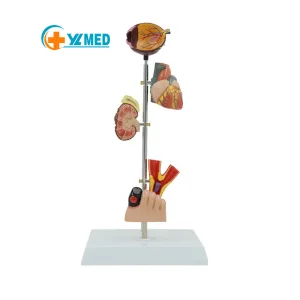
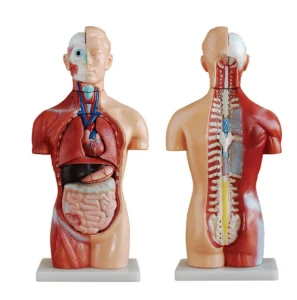
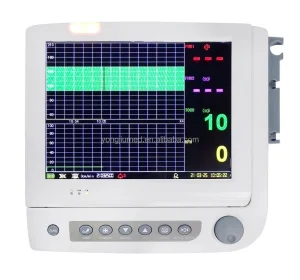
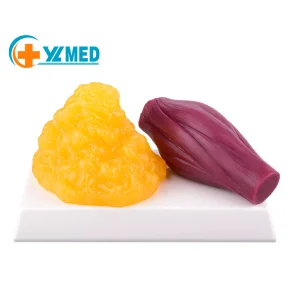
Clinical instruments, teaching models and hospital equipment that distributors regularly combine with consumable glove orders — produced and inspected under the same ISO 9001 quality system.