
Hospital, Emergency & Teaching Equipment for Combined Incubator Orders
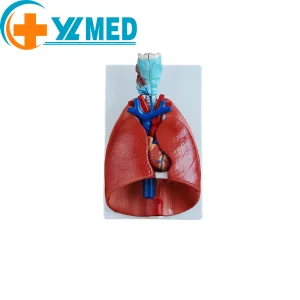
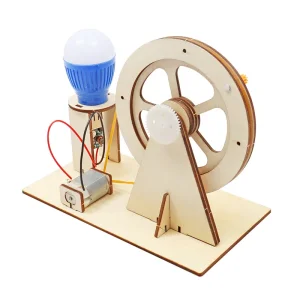
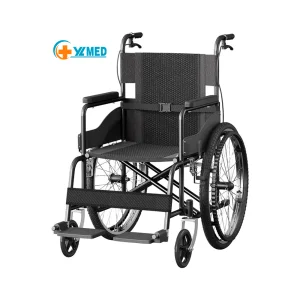
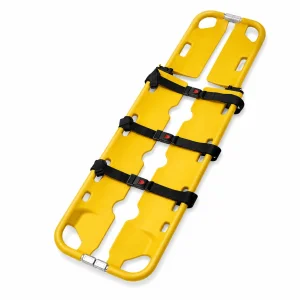
Automatic infant incubator requests rarely arrive alone. A distributor opening a neonatal unit usually needs stretchers, wheelchairs, diagnostic devices and teaching models in the same container. The eight products below are produced and inspected under the same ISO 9001 system and can be consolidated with your incubator order into one shipment, one invoice and one point of contact.
What Buyers Actually Compare When They Request an Automatic Infant Incubator Pricelist
An automatic infant incubator is a Class II neonatal thermal-care device. It holds a premature or low-birth-weight newborn inside a closed, heated compartment and continuously adjusts air temperature and skin temperature through a servo controller, so the infant stays inside its thermoneutral zone without manual intervention. Buyers who search for a China automatic infant incubator pricelist are rarely shopping for the cheapest heated box. They are comparing total cost of ownership across a decade: thermal stability, servo accuracy, sensor drift, acoustic noise, cleaning access, spare-part availability, documentation quality, and how fast the supplier answers while a tender window is open.
Search-intent note. Demand around China automatic infant incubator pricelist & service splits into two distinct intents. Price intent — "infant incubator price", "NICU incubator cost", "China incubator pricelist" — is triggered during budgeting, tender preparation and distributor margin planning. Service intent — "incubator supplier service", "after-sales support", "spare parts" — is triggered by equipment-availability risk, warranty negotiation and operational safety. A supplier that answers both intents in one conversation earns repeat orders; a supplier that answers only one usually wins a single transaction.
Who publishes this guide. Henan Yulin Edu. Project Co., Ltd. (Yulin Medical) is an ISO 9001 certified manufacturer and exporter founded in 1958 and based at No. 8, Daoqing Road, Industry Park, Hongqi District, Xinxiang, Henan, China. With registered capital of RMB 120 million and more than 200 professional employees, the company integrates research, production, inspection and export across ten medical and educational product lines. The same export infrastructure that ships anatomy models, CPR manikins and hospital furniture is used to coordinate neonatal thermal-care equipment, emergency stretchers and clinic devices into consolidated shipments for buyers who prefer one accountable partner instead of five separate vendors.
Global Enterprise Procurement Demand for Automatic Infant Incubators
Neonatal thermal care is one of the few medical device categories where demand is structurally, rather than cyclically, driven. Four forces keep purchase orders flowing into Chinese manufacturing clusters year after year.
Neonatal Ward Expansion
Preterm birth complications remain a leading cause of neonatal mortality worldwide. Ministries of health and private hospital groups continue to add level-II and level-III NICU beds, and every new bed implies at least one incubator, one radiant warmer or a combined platform.
Equipment Replacement Cycles
Incubators in busy units typically serve 7–10 years before controller drift, gasket ageing and discontinued spare parts force replacement. Fleet renewal in mature markets is as important a demand driver as new construction in emerging ones.
Private Maternity Investment
Private maternity hospitals and paediatric clinic chains want hospital-grade thermoregulation at a price point that still supports a serviceable margin. This is the segment where OEM and private-label programmes deliver the greatest value.
Tender & Humanitarian Channels
Government procurement agencies, UN-linked programmes and national NGOs specify IEC 60601-2-19 alignment, calibration documentation and local service response times — factors that disqualify trading companies without factory traceability.
What procurement teams score. A practical evaluation matrix used by hospital groups and distributors normally weights four dimensions: thermal performance (dual air and skin sensors, humidity servo, temperature uniformity, warm-up speed), clinical functionality (tilting bassinet, X-ray cassette tray, tubing ports, integrated blue light, built-in scale), regulatory compliance (IEC 60601-1, IEC 60601-2-19, CE-MDR pathway, FDA 510(k) pathway where applicable, national registration), and service capability (response time, spare-part guarantee, installation, on-site training). A pricelist that does not answer all four is a pricelist that delays the order.
From a Single Device to a Complete NICU Thermal-Care Solution
Experienced buyers no longer purchase incubators as isolated units. They purchase a thermal-care system that must interoperate with phototherapy, monitoring, transport and staff training workflows. These four solution layers define how a modern neonatal department is configured.
Care-Level Configuration
Level-II units typically deploy double-wall servo incubators with humidity control; level-III NICUs require integrated weighing, data export and alarm history. Matching configuration to care level prevents both overspend and clinical shortfall.
Intra-Hospital Transport
Transfer incubators with battery operation, shock-absorbing chassis and ambulance or aircraft fixation allow temperature stability to be maintained between delivery room, NICU, imaging department and referral hospital.
Integrated Phototherapy
Jaundice management is frequently delivered inside the incubator. LED blue-light modules mounted in the hood, with calibrated irradiance and low heat load, reduce handling of the newborn and shorten treatment cycles.
Training & Simulation
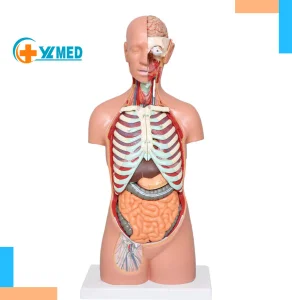
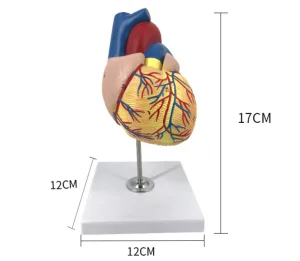
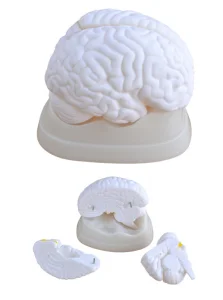
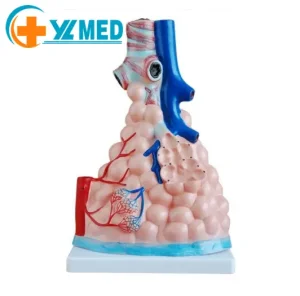
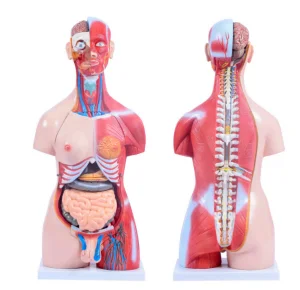
A device is only as safe as the team operating it. Neonatal anatomy models, CPR manikins and nursing simulators let hospitals rehearse thermoregulation protocols, emergency intubation and resuscitation without risk to patients.
Typical ward planning ratio (indicative). One incubator per NICU bed plus 10–20% for peak load and maintenance rotation; one transport incubator per referral network node; one LED phototherapy unit per three neonatal beds; and a consumable buffer of sensors, door gaskets, fans and control boards sized to the local service lead time.
Automatic Infant Incubator Technology Roadmap & Future Outlook, 2024–2030
Chinese neonatal equipment engineering has moved from mechanical thermostat control to servo-managed microclimates in roughly fifteen years. The next five years will be defined less by hardware than by data, connectivity and lifetime service economics.
2024–2026: Precision & Quiet
Dual-zone servo control with independent air and skin sensors, servo humidity, acoustic levels at or below 45 dB, and modular sensor boards that can be replaced in minutes rather than returned to the factory.
2026–2028: Connectivity
Telemetry into hospital networks, HL7 and FHIR data exchange with electronic medical records, remote firmware updates, and predictive alarm algorithms that flag sensor drift before it becomes a clinical event.
2028–2030: Closed-Loop Care
Adaptive thermal models that learn an individual infant's response, digital-twin ward simulation for staff training, and battery-coupled transport cycles that maintain the same microclimate from delivery room to referral centre.
Cross-Cutting: Sustainability
Recyclable ABS hoods, low-GWP components, energy-efficient fans and design-for-disassembly principles. Buyers are already writing these criteria into tenders, especially in EU and Scandinavian procurement.
Global Commercial & Industrial Status of Neonatal Thermal-Care Manufacturing
China supplies a substantial share of the world's mid-range and entry-level incubator volume, while the premium segment remains contested by European, Japanese and North American brands. The competitive gap has narrowed fastest in servo control, humidity management and enclosure design — and it has narrowed slowest in software ecosystem and long-term clinical evidence.
Manufacturing is clustered across Henan, Jiangsu, Guangdong and Shandong. Buyers benefit from a deep local supply chain for compressors, sensors, ABS mouldings, brushed and brushless fans, and control boards, which keeps component lead times short and allows tooling changes within weeks. The trade-off is that quality variance between factories is real: two suppliers quoting a visually identical incubator can differ by a factor of two on sensor grade, gasket material and burn-in testing duration. This is why factory audit, certification traceability and aging-test records matter more than the quotation sheet.
Risk factors buyers should flag early. Certification mismatch between the factory's certificate scope and the destination market; spare-part discontinuation within five years; undocumented firmware changes; unclear Incoterms; and payment structures that leave no leverage for pre-shipment inspection. Each of these is negotiable — but only before the purchase order is signed.
China Automatic Infant Incubator Pricelist — How the Cost Is Structured
Published price bands are a planning tool, not a quotation. The table below shows the configuration-to-price relationship that most overseas distributors and tender teams work with when they build a 2025–2026 budget.
| Configuration Tier | Indicative FOB China Range (USD) | Key Features | Typical Buyer |
|---|---|---|---|
| Entry Level | 1,800 – 3,200 | Single-wall hood, air-temperature servo control, manual humidity, mechanical tilting | Secondary hospitals, clinics, first-time distributors |
| Standard Level | 3,200 – 6,500 | Double-wall hood, dual air and skin sensor servo, servo humidity, low-noise fan, optional LED blue light | Public hospital NICU, private maternity hospitals |
| Advanced Level | 6,500 – 12,000 | Double wall plus built-in electronic scale, tilting bassinet, X-ray cassette tray, data export, alarm history log | Level-III NICU, university teaching hospitals |
| Transport Model | 4,000 – 9,000 | Battery operation, shock-absorbing chassis, ambulance and aircraft fixation, rapid warm-up | Referral networks, emergency and neonatal transfer teams |
| High-End Platform | 12,000 – 25,000 | Integrated monitoring, remote telemetry, custom software configuration, full service agreement | Large hospital groups, academic medical centres |
- Price variables. Order quantity, certification scope (CE-MDR, FDA 510(k) or national registration support), packaging grade, Incoterms (FOB versus CIF), payment terms and exchange-rate timing all move the final figure.
- Excluded costs. Ocean or air freight, insurance, import duty, VAT, destination port charges and local registration fees are not included in the indicative ranges above.
- Volume and OEM. Orders above ten units normally qualify for tiered discounts. Private-label tooling, custom colour, custom manual and multilingual packaging are quoted separately.
- Response commitment. Every enquiry receives a formal quotation pack within 24 hours, including the datasheet, declaration of conformity, packing dimensions and a recommended consolidation plan for mixed-category orders.
Localised Support & Compliance Assurance for Overseas Buyers
Neonatal equipment fails a tender for documentary reasons far more often than for technical ones. The four layers below are what turn a factory quotation into an auditable, registrable, serviceable medical device in your market.
Quality Management System
ISO 9001 certification held continuously since 2008, with documented incoming inspection, in-process checks, 100% burn-in aging of powered devices, and pre-shipment sampling. Records are retained for traceability on repeat orders.
Product Safety Standards
Electrical and thermal design aligned with IEC 60601-1 and IEC 60601-2-19. EMC pre-compliance testing is performed before shipment. CE-MDR and FDA 510(k) pathways are supported on request, subject to configuration and project scope.
Registration Document Pack
User manual, service manual, circuit diagrams, calibration certificates, declaration of conformity, packing list, certificate of origin, insurance certificate and testing reports — delivered as a single package for your local registration agent.
After-Sales & Spare Parts
Online support seven days a week with typical replies inside 24 hours. Standard 12-month warranty, spare-part availability committed for five years or more, and structured remote diagnosis so field engineers can isolate faults before parts ship.
For tender and procurement teams. Send your specification sheet at the RFQ stage. Our engineers return a line-by-line compliance matrix, an explicit deviation list, and alternative configurations where the specification is over-engineered for the target care level — usually within the same 24-hour response window.
Diagnostics, Mobility & Clinical Teaching Products for Complete Ward Set-Up
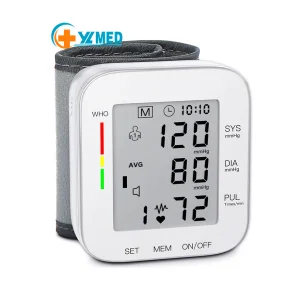
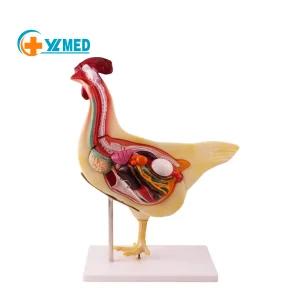
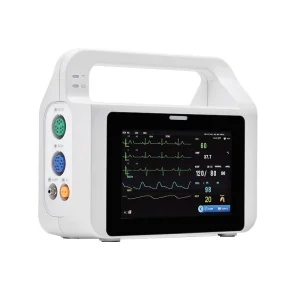
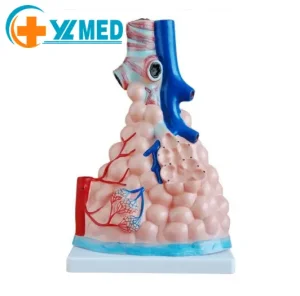
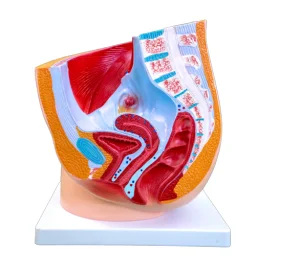
The second group of eight covers the diagnostic and rehabilitation layer of a neonatal or paediatric department: blood pressure monitoring, emergency immobilisation, patient mobility and anatomical teaching resources. Ordered together with thermal-care equipment, they reduce total freight cost and simplify customs clearance.

Frequently Asked Questions About Chinese Automatic Infant Incubators
Straight answers to the questions procurement managers, distributors and tender teams ask most often before a first order.
What does an automatic infant incubator from China typically cost?
Is Yulin Medical a manufacturer or a trading company?
What quality certifications do you hold?
What is the minimum order quantity for an incubator order?
How long is production and shipping?
Do you support OEM, private label and custom packaging?
What warranty and spare-part support is included?
Can you help prepare tender documentation?
How quickly will I receive a reply?
Send Your Requirement — Get a Pricelist and a Tender-Ready Specification Within 24 Hours
Tell us your destination market, target quantity, care level and certification requirement. Our product specialists will match a configuration, share the full datasheet, recommend a consolidation plan for mixed-category orders, and propose the most economical shipping route.