
Product Showcase · Part 1
Infant Airway Training Models & Core Factory Product Range
Eight best-selling lines from our Henan factory, quoted factory-direct with full specifications, packing data and lead times. Click any item to request the current pricelist.
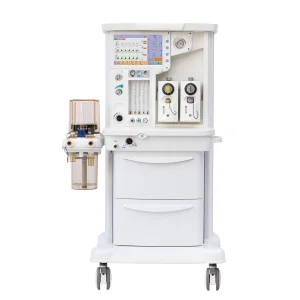
OEM Human Multifunctional Icu Anesthesia Machine General Anesthesia Machine Mobile Anesthesia Trolley Cart Manufacturer, Quotes
View Price & Specs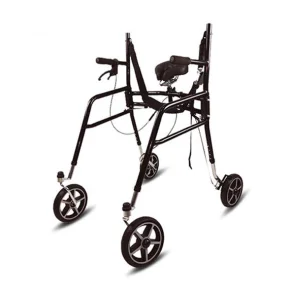
Wholesale Lightweight Adult Walker Height Adjustable Deluxe Walker Rollator Anodized Aluminum Durable Walker for Disabled Manufacturer, Quotes
View Price & Specs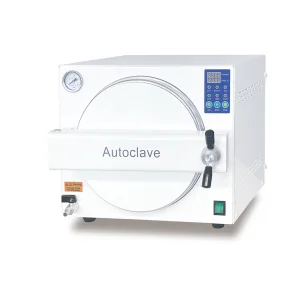
China Professional Small Capacity Clinic Desktop Dental Autoclave Table Top Steam Sterilizer Class N Autoclave Pricelist, Service
View Price & Specs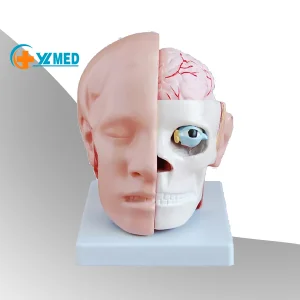
ODM Teaching human head anatomy with cerebral artery model Factory, Pricelist
View Price & Specs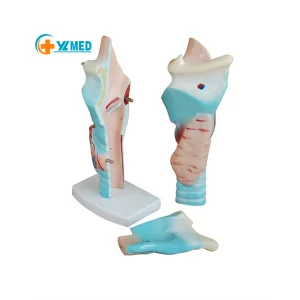
China Best selling Advanced Larynx Structure and Function Model human Larynx Anatomical model 3 times enlarged Quotes, Service
View Price & Specs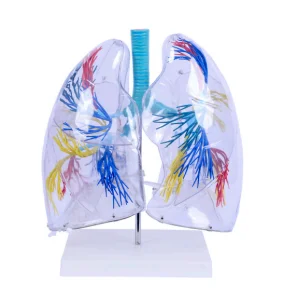
OEM Clear lung segment model Manufacturers, Quotes
View Price & Specs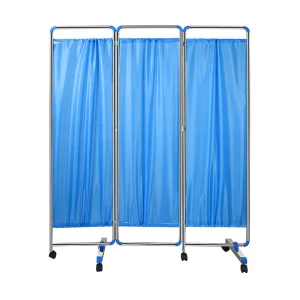
China Durable Medical Hospital Screen with Stainless Steel Hinge Waterproof Fabric and Blackout Feature Can Be Folded Manufacturer, Pricelist
View Price & Specs
Executive Summary
Why an Infant Model of Airway Infarction Has Become a Strategic Sourcing Category
Paediatric airway emergencies are rare per hospital, but they are unforgiving for clinicians who have never rehearsed them. That gap between rarity and consequence is exactly what a dedicated infant airway obstruction model is built to close.
For procurement teams across medical education, hospital simulation centres and pre-hospital emergency services, the sourcing decision behind an infant model of airway infarction is no longer a minor line item. It sits at the intersection of three converging pressures: accreditation bodies demanding documented competency assessment, curricula shifting toward simulation-first teaching, and budget holders asking suppliers for evidence of anatomical accuracy rather than simply the lowest quotation.
China has become the single most important manufacturing base for this category over the past two decades. Clusters in Henan, Guangdong, Jiangsu and Zhejiang now produce anatomical models at a price-to-fidelity ratio that European and North American brands struggle to match at equivalent volumes. Yet "made in China" is not a quality statement in itself — it is a sourcing landscape with an extremely wide dispersion between factories. Understanding how to read that landscape is the difference between a training programme that produces confident clinicians and a storeroom full of models nobody trusts.
Information gain note: This guide is written from the manufacturing floor outward. Every benchmark below — airway transparency, lung compliance targets, spare-part ratios, packing data, MOQ logic — reflects what our engineering and export teams actually specify when a distributor asks a single question: how do we buy an infant airway model that still teaches correctly after 500 training cycles?
Years Manufacturing
Professional Staff
Product Lines
Reply Commitment
Technical Definition
What Exactly Is an Infant Model of Airway Infarction?
In international catalogues you will see this product listed under several names: infant airway obstruction model, baby choking training model, infant foreign-body airway obstruction simulator, or infant airway management manikin. They all describe the same core engineering concept.
Transparent Airway Assembly
The defining component. A removable, optically clear airway path lets learners physically see where a foreign body lodges — oral cavity, pharynx, laryngeal inlet or trachea — instead of guessing. This visibility is the single largest differentiator between a genuine airway infarction model and a generic infant torso.
Compliant Lung Reservoir
A calibrated lung bag reproduces infant thoracic compliance and tidal volume. Under-stiff or over-stiff lungs teach the wrong ventilation feel, which is worse than no training at all — learners carry that false muscle memory into the resuscitation bay.
Replaceable Obstruction Module
Interchangeable foreign bodies — grape-sized, coin-sized, nut-sized — sized to real paediatric choking hazards. Consumable by design: the module is expected to be replaced, and a factory that does not stock spares has effectively sold you a disposable product at capital-equipment prices.
Articulated Head, Neck and Mandible
Head-tilt/chin-lift must produce realistic tissue resistance. Advanced versions add jaw-thrust capability, replaceable tongue and epiglottis inserts, nasal and oral access routes, and a suction port so the airway can be cleared as part of the scenario rather than reset by hand.
Clinically, the model supports the full chain of paediatric airway competence: recognising the signs of complete versus partial obstruction, delivering back blows and chest thrusts in the correct sequence for an infant, integrating obstruction relief into a CPR cycle, and progressing to bag-mask ventilation, suction and — in advanced configurations — intubation rehearsal.
It is important to state clearly for procurement and regulatory purposes: these are educational and training devices, not medical devices. They are not used for diagnosis, treatment or patient contact, and they are therefore typically classified outside the scope of medical device directives in most export markets. Importers should still confirm local education-equipment regulations, labelling requirements and material compliance obligations before tender submission.
Market Intelligence
Global Commercial & Industrial Status: Supply, Demand and Pricing Benchmarks
Understanding where the category sits today helps buyers negotiate with evidence rather than instinct.
The global healthcare simulation market has expanded at a double-digit compound rate for more than a decade, and paediatric and neonatal simulation is one of its fastest-growing sub-segments — largely because it started from a far smaller installed base. Hospitals that own a dozen adult resuscitation manikins frequently own two or three infant units, and those units wear out faster because they are used in high-frequency certification courses rather than occasional drills.
On the supply side, the landscape is fragmented. At the top end sit global simulation brands with sensor-rich, software-integrated platforms that cost several thousand US dollars per unit. At the bottom end sit generic anatomical model producers whose infant products are visually plausible but functionally limited — no compliant lung, no transparent airway, no replaceable obstruction. Between those poles is a wide, poorly documented middle band where most institutional buyers actually operate, and where the quality difference between two factories quoting the same USD figure can be enormous.
Demand is being pulled forward by regulation and by insurance logic rather than by clinical enthusiasm alone. A growing number of jurisdictions mandate paediatric first-aid and choking-response certification for childcare workers, teachers, sports coaches, lifeguards and airline crew. Every one of those certification pathways requires an assessable training artefact. That is the structural demand driver behind this product category, and it is not cyclical in the way hospital capital spending is.
China's manufacturing clusters supply the majority of the world's mid-market educational anatomy models. Henan province in particular has built concentrated expertise around teaching models, anatomical models and hospital training equipment, supported by mature mould-making, PVC and silicone processing, and packaging supply chains within a short logistics radius. The practical implication for buyers is straightforward: the competitive advantage is no longer availability — it is specification discipline.
Buyer type 1 — DistributorsNeed stable MOQ, private-label packaging, spare-part kits and predictable lead times to protect margin across a catalogue of 200+ SKUs.
Buyer type 2 — Education tendersNeed full documentation packs: technical specifications, material declarations, packing lists, warranty statements and delivery schedules that match tender annexes exactly.
Buyer type 3 — Hospitals and EMSNeed durability under repeated certification cycles, replaceable consumables, and models that integrate with existing adult and neonatal manikin families.
Buyer type 4 — NGOs and public health programmesNeed low unit cost, high field repairability, minimal tooling dependency and training materials in local languages.
Industry Trends
Six Trends Reshaping the Infant Airway Simulation Category
Where the category is heading between now and the end of the decade — and what each trend means for a sourcing decision made today.
1. Feedback-Integrated Simulation
Compression depth, rate, recoil and ventilation volume are migrating from instructor eyeball assessment to embedded sensing. Expect the mid-market to adopt simplified sensor feedback long before full software platforms become affordable.
2. Modularity and Consumable Logic
Buyers increasingly evaluate total cost of ownership rather than unit price. Replaceable airways, lung bags and skin covers convert a one-off purchase into a managed consumable line — good for distributors, better for programme sustainability.
3. From Price Competition to Specification Competition
Tender documents have become more precise. "Infant choking model" is being replaced by measurable requirements for airway transparency, lung compliance ranges, cycle durability and spare-part availability.
4. Guideline Alignment in Course Design
Models are increasingly sold as part of a curriculum package. Alignment with current paediatric basic life support guidance, and clear labelling of what a model can and cannot assess, has become a purchasing criterion.
5. Material Compliance and Sustainability
Phthalate-free formulations, REACH and RoHS declarations, recyclable packaging and reduced PVC dependency are appearing in distributor questionnaires. Factories that cannot document material composition are being filtered out at pre-qualification.
6. Hybrid and Digital Blended Learning
Video and screen-based scenarios are absorbing the cognitive layer of airway training, leaving physical models to carry the psychomotor layer. The result is fewer, better-specified models per programme — not fewer models overall.
Localised Applications
Who Actually Deploys These Models — and How the Requirement Changes by Setting
The same product category behaves very differently depending on where it is installed. Matching configuration to setting is the single most effective way to avoid over-buying or under-specifying.
Paediatric & Neonatal Clinical Skill Centres
Priority is anatomical precision and repeatability under certification volume. Buyers typically specify replaceable airway modules, a documented compliance rating and a structured annual spare-part allowance.
Medical Schools and Nursing Colleges
OSCE station design drives the requirement. Models must be identical across stations to keep assessment fair, which makes batch consistency and colour-matched sets more important than any single unit's premium features.
Pre-Hospital Emergency Services (EMS)
Field teams rehearse rapid sequence decisions under pressure. Ruggedised skin, integrated suction ports and a transport-friendly carry case matter more than fine anatomical labelling detail.
Childcare, Schools and Community Programmes
High learner-to-model ratios and tight budgets dominate. Simplified single-airway configurations, low unit cost and laminated multilingual instruction cards deliver the best training return per dollar.
Red Cross, Red Crescent and Public Health NGOs
Field repairability is decisive. Programmes specify models that can be serviced locally with a screwdriver and a spare-parts kit, avoiding return-to-factory logistics that can take a unit out of service for months.
Distributors Building Regional Stock
Private-label packaging, mixed-container consolidation, barcode-ready cartons and a documented spares programme turn a factory relationship into a defensible local catalogue rather than a one-time import.
Technology Roadmap
Technical Roadmap & Future Outlook (2025–2032)
How the infant airway infarction model is expected to evolve across four generations, and which investments are worth making now.
Anatomically Faithful Passive Models
Optically clear airways, calibrated lung reservoirs, replaceable obstruction modules, PVC and silicone skin. The engineering focus is repeatability: every unit in a batch must behave identically, because assessment fairness depends on it.
Embedded Sensing at Mid-Market Pricing
Compression depth, rate and ventilation volume captured by low-cost sensors moulded directly into the torso. Feedback via local indicators rather than cloud platforms, keeping unit cost inside tender budgets.
Scenario Libraries and Pathology Modules
Swap-in modules representing different obstruction types and severity levels, enabling a single manikin to support a graded curriculum from partial obstruction through complete airway compromise.
Blended Simulation Ecosystems
Physical models paired with instructor-side digital consoles that record performance and generate competency evidence automatically — turning a teaching artefact into an accreditation record.
For buyers, the practical implication is a question of timing. Institutions that need ten years of reliable service from a single procurement should buy Phase 1 hardware from a factory that has already engineered for Phase 2 — in other words, a supplier with an in-house mould shop, a documented spare-parts catalogue and the engineering capability to redesign a component when a course changes. Institutions that plan to refresh hardware every three to four years can legitimately buy at a lower specification and redeploy the savings into instructor training, which historically produces a larger outcome improvement per dollar than hardware upgrades.
Macro Solutions
Macro-Level Industry Solutions: From Single-Unit Purchase to Programme Delivery
Mature buyers have moved away from buying a model and toward buying a functioning training programme. Here is what that package actually contains.
Hardware setInfant airway infarction models sized to the annual learner cohort, plus a 10–20% buffer for simultaneous OSCE stations.
Consumable programmeAirway modules, lung bags and skin covers specified as an annual replenishment schedule so that models never fall out of service mid-term.
Documentation packTechnical specifications, material declarations, packing data, warranty terms and multilingual labels — prepared to match tender annexes rather than requiring rewrites.
Instructor enablementScenario guides, assessment rubrics and train-the-trainer materials so that the equipment is used at its designed capability from day one.
Logistics consolidationMixed-category orders — airway models, anatomical models, hospital furniture, diagnostic equipment — consolidated into one shipment with one point of contact.
After-sales structureA named export contact, a defined response window and a documented route for replacement parts, so that a damaged unit does not become a budget problem in year three.
Pricelist Guide
How to Read an Infant Airway Model Pricelist Correctly
Two quotations with identical headline numbers can differ by 40% in real cost once consumables, spare parts and documentation are included. These are the variables that matter.
Quotation Basis
Confirm whether the price is EXW, FOB, CIF or DDP. EXW looks cheapest until inland haulage, export documentation and terminal handling are added. For tender budgets, always request a landed-cost projection.
Configuration Tiers
Most factories offer three tiers: basic torso, transparent airway with replaceable obstruction, and advanced with suction and intubation access. Specify the tier explicitly in the enquiry — never assume a quoted unit includes the transparent airway.
Consumable Ratio
Ask for the annual replacement assumption per unit. A model needing two airway modules per year carries a very different lifetime cost from one needing one every two years, and the difference often exceeds the unit-price gap.
Minimum Order Quantity
MOQs on this category typically range from one unit for catalogue models to several hundred for private-label production runs. Tooling amortisation, carton printing and label artwork are the usual drivers of a step change.
Certification and Documentation
ISO 9001 certification of the quality management system, plus material declarations and product photographs for the tender annex. Ask for the documents before you ask for the price — the answer tells you how the factory is organised.
Lead Time and Packing
Request production lead time, carton dimensions, gross weight and container loadability. A model that is 8 cm too wide for a standard export carton can add meaningful freight cost across a 500-unit order.
Common sourcing mistakes worth avoiding. First, buying on photographs alone — an infant airway model is judged by how it behaves in a learner's hands, not by how it looks on a white background. Second, ordering a single unit for evaluation without ordering the corresponding spare-parts kit, which makes it impossible to assess the consumable cost that will dominate total ownership. Third, treating all factories as interchangeable: the dispersion in airway clarity, lung compliance and mould finish between Chinese producers is one of the widest of any educational equipment category. Fourth, ignoring packaging language — for public health programmes, a model that arrives with no local-language instruction is a model that gets shelved.
Manufacturer Profile
Why Global Distributors Source Infant Airway Training Models From Yulin Medical
Henan Yulin Edu. Project Co., Ltd. — a manufacturer, not a trading intermediary.
Founded in 1958, ISO 9001 since 2008More than six decades of continuous manufacturing in Xinxiang, Henan, with a quality management system certified under ISO 9001 for over fifteen years.
200+ professional staff, RMB 120 million capitalAn integrated operation covering research, mould making, production, inspection, packing and export from No. 8 Daoqing Road, Hongqi District, Xinxiang.
Ten specialised product linesAnatomy models, biology prepared slides, dental tools, general teaching models, hospital furniture, hospital machines, medical instruments, nursing models, skeleton models and suture kits — one accountable supplier, one shipment.
In-house design and private-label packagingOur design team develops OEM packaging and product presentation that raises shelf appeal and resale value in your market, without outsourcing artwork to a third party.
24/7 responsive export serviceOur team is online seven days a week and typically replies within 24 hours with catalogues, specifications, spare-part data and shipping options.
Stable partner supply chainFor mixed one-stop orders, we coordinate a long-standing network of partner factories so that procurement teams deal with one contract, one inspection standard and one shipping document set.
Product Showcase · Part 2
Complete Factory Range — Request the 2025 Pricelist
The remaining eight lines from our catalogue. Every product below is produced or coordinated under the same ISO 9001 quality management system and can be consolidated with your infant airway model order.
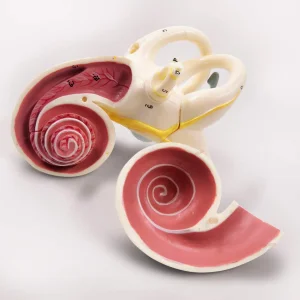
ODM Inner Ear Labyrinth Model 2 Part 8X Cochlea Semicircular Canal Vestibule Open PVC Medical Anatomical Study for Schools Hospitals Manufacturer, Service
View Price & Specs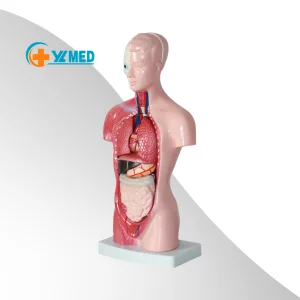
China Human body 28cm medical trunk model Anatomy doll 15 detachable parts Education organs Teaching learning class student model Factories, Service
View Price & Specs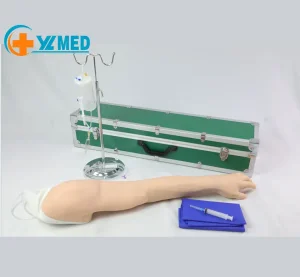
China Intravenous infusion Intravenous incision and intramuscular injection arm model Long arm complete adult hand teaching model Manufacturers, Factories
View Price & Specs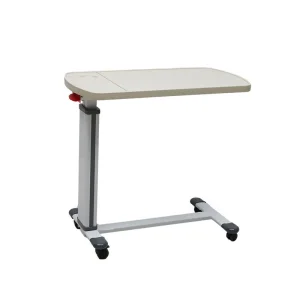
Wholesale Medical Adjustable Overbed Bedside Table With Wheels Home Care Adjustable Height OverBed Table Quotes, Service
View Price & Specs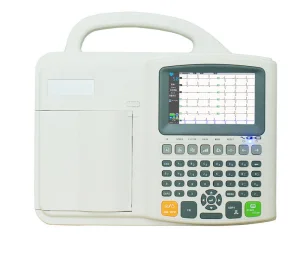
China 6 Channel ECG Machine Portable Ecg Monitoring Automatic Electrocardiograph 5'' Color LCD Screen ECG Machine Factories, Service
View Price & Specs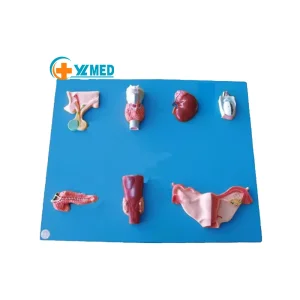
ODM Educational Adhesive Medical Science Anatomical Model Human Endocrine Organ Hypophysis Thyroid Testis Science Demonstrations Manufacturers, Quotes
View Price & Specs
OEM Medical science Human bladder model Natural large prostate model genitourinary system anatomical model Manufacturer, Manufacturers
View Price & Specs
OEM Medical Sputum Aspirator Suction Unit Pump Portable Phlegm Suction Unit Manufacturer, Quotes
View Price & Specs
Buyer FAQ
Frequently Asked Questions — Infant Airway Infarction Models & Pricelist
Straight answers to the questions our export team receives most often from distributors, procurement officers and simulation centre managers.
What exactly is an infant model of airway infarction used for?
It is a training device for rehearsing the recognition and relief of infant airway obstruction — including back blows, chest thrusts, airway positioning, suction and, in advanced configurations, bag-mask ventilation and intubation rehearsal. It is an educational artefact, not a medical device, and it is never used for patient contact or diagnosis.
How is this different from a standard infant CPR manikin?
A standard infant CPR manikin centres on compressions and ventilations. An airway infarction model adds three things a CPR torso cannot provide: a transparent, removable airway so learners can see obstruction and clearance; an interchangeable foreign-body module sized to real paediatric choking hazards; and a head and neck that reproduce realistic tissue resistance during head-tilt/chin-lift and jaw-thrust manoeuvres.
Are you a manufacturer or a trading company?
We are a manufacturer. Henan Yulin Edu. Project Co., Ltd. was founded in 1958 and operates its own factory in Xinxiang, Henan, China, with more than 200 professional staff and registered capital of RMB 120 million. For one-stop orders we also coordinate a stable network of long-term partner factories, but the commercial relationship, inspection standard and shipping documents all run through one accountable supplier.
What quality certification do you hold?
Our quality management system has been ISO 9001 certified since 2008. Product-specific documentation — material declarations, dimensional drawings, packing data and warranty terms — can be provided on request to support tenders and import registration in your country.
Do you support OEM, private label and custom packaging?
Yes. Our in-house design team develops private-label packaging and product presentation for distributors, helping to increase shelf appeal and resale value in your market. Carton artwork, instruction leaflets in local languages and barcode labelling can all be incorporated into the production run.
What is included in your infant airway model pricelist?
The pricelist states the quotation basis (EXW, FOB, CIF or DDP), configuration tier, minimum order quantity, production lead time, carton dimensions and gross weight, spare-part references, documentation pack contents and warranty terms. We include consumable assumptions per unit so you can calculate total cost of ownership rather than just the headline unit price.
What are the usual MOQ and lead time?
MOQ varies by configuration and packaging. Standard catalogue units can be supplied in small quantities, while private-label runs with custom artwork and tooling typically require a larger order to amortise set-up costs. Production lead time is confirmed against your final specification, quantity and packaging requirements — our export team will provide a firm schedule with the quotation.
How do I choose between the basic, standard and advanced configurations?
Match the configuration to what you intend to assess. If the goal is choking-response awareness in a community programme, the basic configuration is sufficient. If you run OSCE stations that assess airway positioning and suction, specify the standard configuration with a transparent airway and replaceable obstruction module. If your curriculum includes bag-mask ventilation and intubation rehearsal, the advanced configuration with full head and neck access is the correct choice.
Can I combine this model with other products in one shipment?
Yes. We operate ten specialised product lines covering anatomy models, biology prepared slides, dental tools and equipment, general teaching models, hospital furniture, hospital machines and tools, medical apparatus and instruments, medical nursing models, skeleton models, and suture pads and kits. Mixed-category orders are consolidated into one shipment with one point of contact.
How quickly will I receive a reply?
Our export team is online seven days a week and typically replies within 24 hours with catalogues, specifications, spare-part data and shipping options.
Talk to Our Export Team
Request the 2025 Infant Airway Model Pricelist, Specification Sheet or Tender Package
Tell us your target market, expected annual learner volume, configuration preference and any certification or documentation requirements. Our product specialists will recommend the correct tier, share detailed specifications and propose the most economical shipping plan for your order.