
What Are the Top Hospital Machines and Tools in 2026?

Time:2026-11-27 Author:Mason
0%

In 2026, hospitals depend on equipment that supports diagnosis, treatment, monitoring, and safe daily care. The range stretches from bedside monitors and infusion pumps to MRI scanners, ventilators, and surgical systems. Each tool has a distinct role. A monitor may reveal a falling oxygen level, while an infusion pump delivers carefully measured medication. Behind every reading are trained staff, maintenance checks, and protocols that help reduce avoidable errors. Technology matters. But it is not the whole story.

This overview explores the Hospital Machine and tools most relevant to modern hospitals and explains what each category does. It looks at imaging, life-support equipment, laboratory analyzers, sterilization systems, and common point-of-care devices. For example, an imaging suite also depends on trained operators, room design, and dependable power. The guide also considers practical factors, including reliability, user training, service access, and compatibility with clinical workflows. Those details can shape whether a sophisticated device helps in real conditions. A newer model is not automatically the better choice. Needs vary by department, patient population, staffing, and available infrastructure. No machine works alone. This overview offers an informed starting point, not a substitute for clinical judgment or manufacturer instructions. Equipment specifications and availability can change, so readers should verify current details with qualified clinical and technical teams.
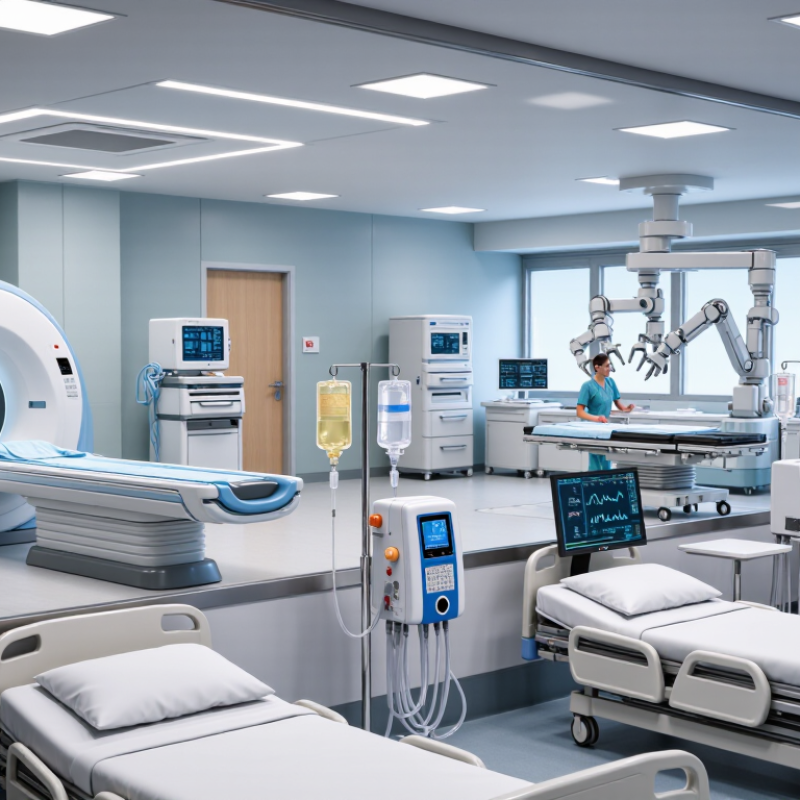
What Are the Top Hospital Machines and Tools in 2026?

Core Categories of Hospital Machines and Tools in 2026

Hospital machines in 2026 fit several core categories: imaging, bedside monitoring, laboratory diagnostics, life support, surgical equipment, sterilization, and patient mobility. The World Health Organization’s medical-device fact sheet estimates around 2 million device types worldwide, grouped into more than 7,000 generic categories. That breadth makes clinical fit more useful than a long equipment list.

Imaging includes X-ray, CT, MRI, and ultrasound systems; monitors track oxygen levels, heart rhythm, and blood pressure. OECD’s Health at a Glance 2023 reported averages of about 28 CT scanners and 17 MRI units per million people across member countries, using 2021 data. Those averages are context, not targets. A scanner is only useful when trained staff, maintenance, and patient access are in place.

Operating rooms also depend on anesthesia systems, surgical lights, infusion pumps, and reliable sterilization equipment. In intensive care, ventilators and bedside monitors need clear alarms and dependable backup power. Fit matters most. A small ward may need portable ultrasound more than another large imaging system. Procurement plans can miss that practical detail; I would review device use, repair delays, and staff feedback before adding equipment.

Diagnostic Imaging and Laboratory Equipment

In 2026, hospital imaging departments rely on tools that answer different clinical questions. Digital X-ray systems can capture a chest image within seconds, while CT scanners produce detailed cross-sectional views for urgent assessment. MRI offers strong soft-tissue detail, but scans take longer and require careful screening and patient preparation. Ultrasound adds real-time views at the bedside, though image quality depends partly on the operator and the patient’s condition. No single machine tells the whole story.

Laboratories depend on hematology analyzers, clinical chemistry systems, microscopes, and molecular testing equipment. A blood sample may pass through several checks before results reach a care team. Automated analyzers can improve consistency and speed, but they still need calibration, quality-control materials, and trained staff who can investigate unexpected readings. Small details matter. A mislabeled tube or delayed sample can affect interpretation, even when the equipment works correctly.

Choosing equipment is not only a question of technical performance. Hospitals also need to consider room space, staff training, service access, and how results connect with clinical records. These practical limits are easy to underestimate. Imaging and laboratory tools support decisions, but they do not replace clinical judgment; an unclear scan or surprising result may need review, repeat testing, or a different diagnostic approach.

Patient Monitoring and Life-Support Machines

What Are the Top Hospital Machines and Tools in 2026?
Patient Monitoring and Life-Support Machines

Bedside monitors, ventilators, infusion pumps, and defibrillators support rapid decisions when a patient’s condition changes. A monitor can show heart rhythm, oxygen saturation, and blood pressure at a glance. A ventilator supports breathing, while an infusion pump delivers controlled medication or fluids. These machines work best when staff can interpret readings and respond quickly. A clear display alone is not enough.

Alarms need careful management. The AAMI Foundation’s 2011 Clinical Alarm Management Summit report described intensive care units with 150–400 alarms per patient each day; many were nonactionable. That volume can make urgent signals harder to recognize. Still, reducing noise must not mean turning off clinically important alerts. Teams should set alarm limits for each patient, check sensors for secure contact, and review trends alongside the bedside assessment. A clean waveform can reassure—but it can also mislead.

Tips: Check alarm settings at handover. Confirm that sensors and cables are connected properly. Keep emergency ventilation and resuscitation equipment accessible, then follow the facility’s maintenance and response procedures. Small checks matter. One imperfect reality: busy teams may miss them, so simple, repeated checks can help catch problems early.

What Are the Top Hospital Machines and Tools in 2026? — Patient Monitoring and Life-Support Machines
Machine or Tool Primary Function Common Measurements or Support Typical Clinical Setting Important Use Considerations
Multiparameter Patient Monitor Displays several vital signs continuously or at set intervals. ECG heart rate, non-invasive blood pressure, oxygen saturation, respiratory rate, and temperature; additional channels may be available. Intensive care, emergency departments, operating rooms, and monitored hospital wards. Readings require clinical interpretation. Incorrect sensor placement, movement, or poor signal quality can cause inaccurate values or alarms.
Electrocardiograph (ECG/EKG) Machine Records the heart’s electrical activity for rhythm and waveform assessment. Electrical signals from multiple leads, commonly recorded as a 12-lead ECG. Emergency care, cardiology, inpatient units, and pre-operative assessment. An ECG supports assessment but does not, by itself, establish every cardiac diagnosis. Electrode placement and patient condition affect the tracing.
Pulse Oximeter Estimates arterial oxygen saturation non-invasively. Peripheral oxygen saturation (SpO₂) and pulse rate. Bedside monitoring, recovery areas, emergency care, and selected home-care settings. Motion, low perfusion, nail products, and other factors can affect readings. SpO₂ is an estimate and does not measure carbon dioxide or ventilation directly.
Capnograph Measures carbon dioxide in exhaled breath and displays a waveform. End-tidal carbon dioxide (EtCO₂), respiratory rate, and exhaled CO₂ waveform. Anesthesia, procedural sedation, emergency care, and ventilation monitoring. Interpretation depends on airway setup, breathing pattern, and circulation. EtCO₂ may not equal arterial carbon dioxide.
Mechanical Ventilator Provides respiratory support by delivering controlled or assisted breaths. Set ventilation parameters may include tidal volume or pressure, respiratory rate, oxygen concentration, and positive end-expiratory pressure. Intensive care, operating rooms, emergency transport, and other settings requiring ventilatory support. Requires trained clinical management. Settings and alarms must be individualized and reviewed as the patient’s condition changes.
Infusion Pump Delivers fluids or prescribed medications at a controlled rate. Infusion rate and volume; some systems can provide dose limits and occlusion alerts. Inpatient wards, intensive care, oncology, and perioperative care. Correct programming, compatible supplies, line checks, and independent verification where required help reduce medication-delivery errors.
Defibrillator with Cardiac Monitor Analyzes cardiac rhythm and, when indicated, delivers an electrical shock; many units also support synchronized cardioversion and pacing. ECG rhythm, delivered energy, and selected pacing parameters. Emergency departments, resuscitation areas, intensive care, and hospital transport. Use follows current resuscitation protocols and requires trained personnel. A shock is not appropriate for every cardiac rhythm.
Hemodialysis Machine Circulates blood through a dialyzer to remove waste products and excess fluid when kidney function is inadequate. Blood and dialysate flow, treatment time, fluid removal, and pressure-related safety indicators. Dialysis units, selected intensive care settings, and other supervised treatment areas. Requires prescribed treatment settings, vascular access checks, and monitoring for complications such as low blood pressure or access problems.

Surgical, Therapeutic, and Rehabilitation Tools

What Are the Top Hospital Machines and Tools in 2026?
Surgical, Therapeutic, and Rehabilitation Tools

In 2026, surgical care depends on coordinated tools, not one impressive machine. Operating-room lights, anesthesia workstations, patient monitors, and endoscopic systems each support a different part of a procedure. A monitor may show oxygen levels and heart rhythm, while the anesthesia workstation helps clinicians manage breathing and anesthetic delivery. These tools need routine checks and trained operators. Small setup errors matter.

Therapeutic equipment supports patients through treatment and recovery. Infusion pumps deliver prescribed fluids or medicines at controlled rates, while ventilators assist breathing when a patient cannot breathe adequately alone. Therapeutic ultrasound and electrical stimulation may also be used in selected rehabilitation plans. Their usefulness depends on the patient’s condition and clinical assessment; a device is not a substitute for that judgment.

Rehabilitation tools make progress visible in practical ways. Parallel bars provide support during early standing practice, and adjustable gait trainers can help patients work on balance and walking. Occupational therapy may use everyday objects, such as cups or buttoned clothing, to practise daily tasks. Progress can be slow, and equipment does not guarantee a quick return to independence. Staff should adjust exercises to comfort, ability, and safety, then record what changes over time. Even good equipment has limits. A quiet, well-fitted aid can sometimes help more than a complex machine.

Safety, Digital Integration, and Equipment Selection in 2026

Choosing hospital machines in 2026 means looking beyond speed, screen size, or a long feature list. Safety depends on reliable alarms, clear controls, and surfaces that staff can clean without guesswork. Equipment should also fit the care setting: a monitor used beside a noisy emergency bay needs visible alerts and controls staff can reach quickly. Small details matter.

Digital integration can reduce repeated data entry, but only when devices exchange information accurately with hospital systems. Before purchase, teams should test how readings appear in patient records, what happens during network outages, and who can access device data. Plan for updates and staff training, too. A connected device is not automatically a safer device.

Selection works best when clinicians, infection prevention staff, biomedical engineers, and IT teams review equipment together. Compare total ownership costs, including maintenance, consumables, servicing, and downtime—not just the initial price. Check whether the device suits actual workflows and whether support is available when it fails. There is no perfect checklist; teams may still overlook a daily frustration. Pilot testing in a real ward can reveal problems that a demonstration cannot.

FAQS

Which imaging tools answer different clinical questions?

Digital X-rays capture images quickly, while CT provides detailed cross-sectional views. MRI shows soft tissue well but takes longer. Ultrasound offers real-time bedside views. No single machine tells the whole story.

What can affect the quality of an imaging result?

MRI requires screening and preparation. Ultrasound quality can depend on the operator and patient condition. An unclear scan may need review or another approach.

Which tools are commonly used in hospital laboratories?

Laboratories use hematology analyzers, clinical chemistry systems, microscopes, and molecular testing equipment. Samples may pass through several checks. Small details matter.

Do automated laboratory analyzers remove the need for staff oversight?

No. They can improve speed and consistency, but still require calibration, quality controls, and trained staff. A surprising reading may need investigation.

What equipment supports care in an operating room?

Operating-room lights, anesthesia workstations, patient monitors, and endoscopic systems support different parts of a procedure. Routine checks and trained operators are essential. Small setup errors matter.

How do infusion pumps and ventilators support treatment?

Infusion pumps deliver prescribed fluids or medicines at controlled rates. Ventilators assist patients who cannot breathe adequately alone. Clinical assessment still guides their use.

Which tools can help during rehabilitation?

Parallel bars can support early standing practice, while adjustable gait trainers help patients work on balance and walking. Cups and buttoned clothing can help practise daily tasks.

What should hospitals consider when choosing equipment?

Consider room space, staff training, service access, and connections to clinical records. It is easy to overvalue technical features. Practical limits matter too.

Conclusion

In 2026, Hospital Machine and tools encompass a broad range of equipment that supports diagnosis, treatment, and recovery. Diagnostic imaging systems help clinicians examine the body, while laboratory equipment analyzes samples to inform care decisions. Patient monitoring devices track vital signs and alert staff to changes, and life-support machines assist patients who need help maintaining essential bodily functions. Together, these technologies contribute to timely, informed clinical care.

Surgical and therapeutic tools support procedures and ongoing treatment, while rehabilitation equipment helps patients regain strength and mobility. Safety features, reliable maintenance, and staff training are essential across all equipment categories. Digital integration can help care teams access and coordinate information, but equipment selection should be guided by clinical needs, usability, compatibility, and dependable support. Choosing appropriate tools enables healthcare facilities to use resources effectively while prioritizing patient safety and quality of care.

Mason

Mason

Mason is a seasoned marketing professional with a deep expertise in the company's offerings and a passion for driving brand awareness. With a strong background in digital marketing strategies, he has an innate ability to connect with diverse audiences and effectively communicate product benefits.......